The short answer
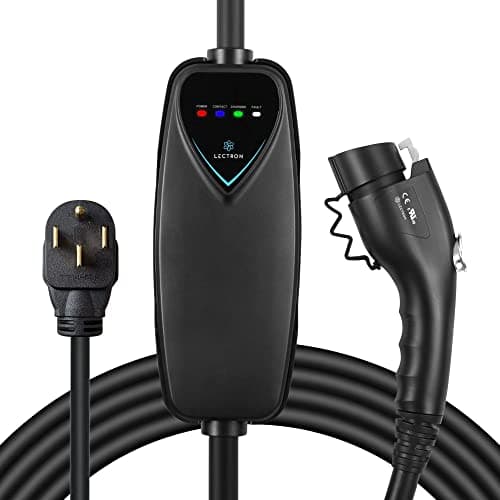
Park the car where it will live, note the charge port position, measure from the intended mounting point to the port along the route the cable will take, and add three to five feet of slack so the cable loops clear of the floor. Compare that total to the charger's cable length: factory cables run from 16 ft to 25 ft, and that range decides more purchases than any feature.
How to measure, properly
- Park the car exactly as it will park. Nose in or reverse in, whichever you actually do. This matters more than anything else on the list.
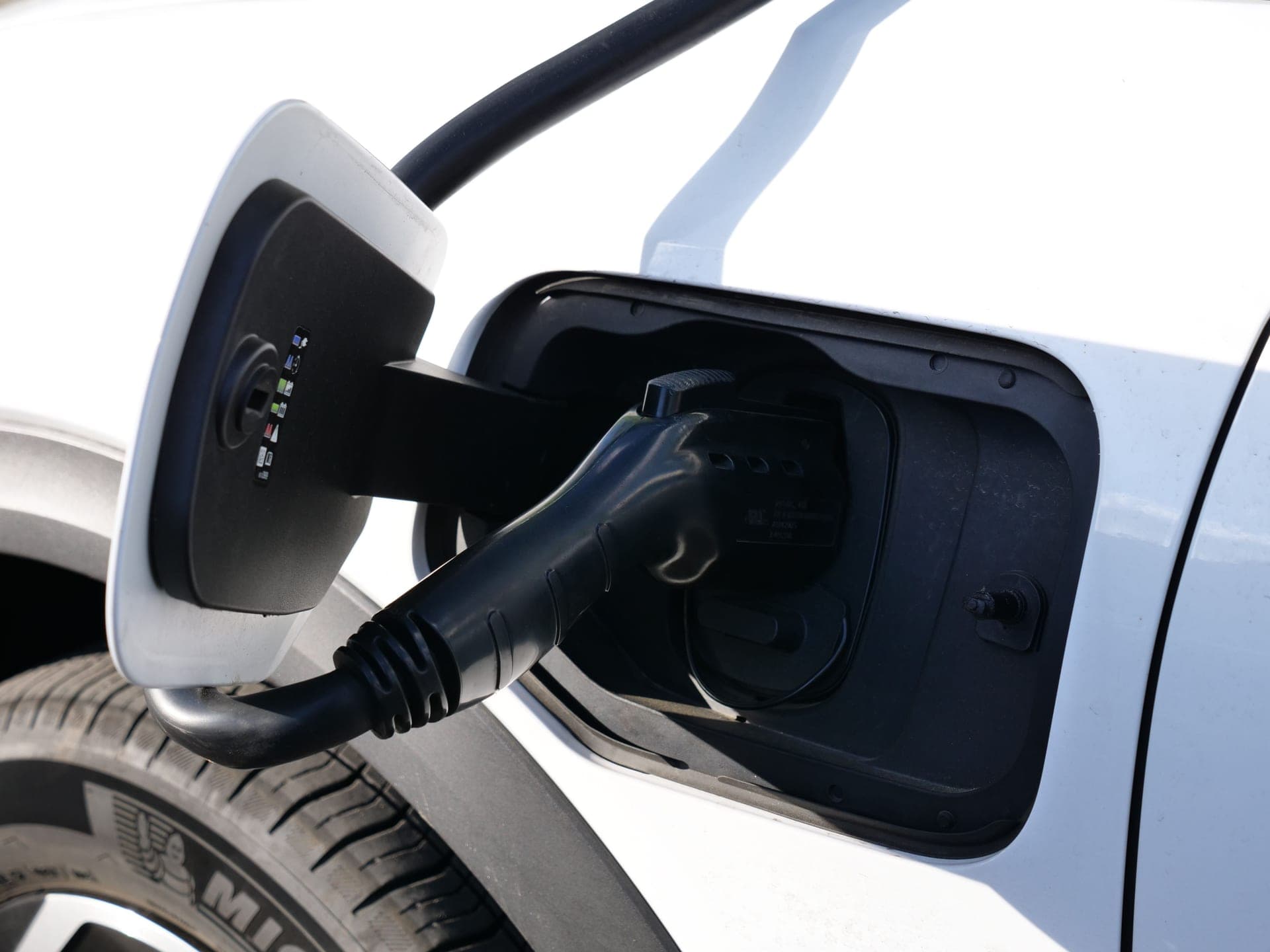
- Find the charge port. Walk round and look. Do not assume.
- Mark the proposed mounting point on the wall in pencil, at roughly 42-48 inches above the floor.
- Measure along the cable's actual route, not the straight line. The cable goes down from the charger, across, and up to the port — it does not fly diagonally.
- Add 3 to 5 feet. This is the slack that lets the cable hang in a loop with its lowest point clear of the floor, rather than stretching taut.
- Then add a margin for the day you park badly. A foot or two of forgiveness is worth having.
Charge port position, which decides the wall
This is the part people skip, and it is the part that most often means the charger ends up on the wrong side of the garage.
| Make | Typical position | Consequence |
|---|---|---|
| Tesla | Rear left | Nosing in puts the port at the back of the bay |
| Ford | Front left | Nosing in puts the port at the front |
| Rivian | Front left | Same, on a longer vehicle |
| Hyundai / Kia | Rear right on several models | Opposite side from a Tesla |
| BMW | Rear right on several models | Opposite side from a Tesla |
| Chevrolet | Front left on several models | — |
If two cars with ports on opposite sides share a garage, the options are: mount centrally with the longest cable available, mount for the car that charges more often, or fit a dual-cable charger. EV charger splitters and dual chargers covers the last option.
What each cable length actually covers
| Cable | Chargers | Realistically reaches |
|---|---|---|
| 18 ft | Leviton 32 A and 48 A | A port within about 13-15 ft of the mounting point |
| 20 ft | Siemens VersiCharge, Tesla Mobile Connector | About 15-17 ft |
| 23 ft | ChargePoint Home Flex | About 18-20 ft |
| 24 ft | Tesla Wall Connector, Universal Wall Connector, Grizzl-E Classic | About 19-21 ft |
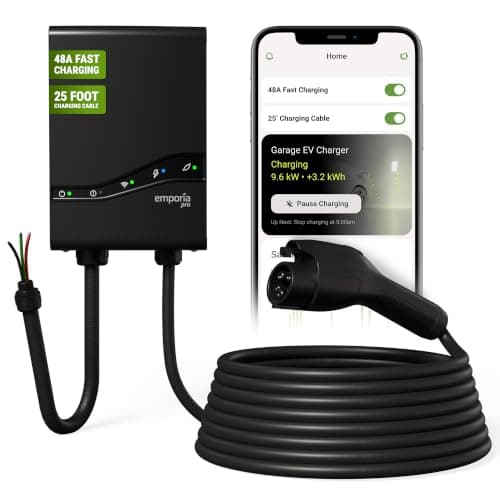
| 25 ft | Emporia Pro, Wallbox Pulsar Plus, EVIQO 48 A, Autel MaxiCharger | About 20-22 ft |
Why not just buy the longest cable?
Three genuine reasons, which is why this is a decision rather than a default:
- Weight and handling. 25 feet of 8 AWG EV cable is heavy. Coiling and uncoiling it twice a day is a real part of the ownership experience.
- Cold-weather stiffness. Every EV cable stiffens below freezing and the long ones stiffen most. A 25 ft cable at 10 degF is a wrestling match.
- Storage. More cable means a bigger loop, which means a bigger hook and more wall space.
The right answer is the shortest cable that comfortably reaches, not the longest available. A well-placed charger with a 20 ft cable is a nicer thing to live with than a badly placed one with 25 ft.
If your measurement is awkward
- Move the mounting point. The cheapest fix by a wide margin, and usually possible before the electrician arrives.
- Change how you park. Reversing in rather than nosing in can change the reach by the whole length of the car.
- Choose a charger with a longer cable. If you are still shopping this costs nothing. Best Level 2 chargers.
- Extend the supply side, with a 50 A NEMA 14-50 extension, if the charger plugs in — that puts the extra connection ahead of the charger's protection.
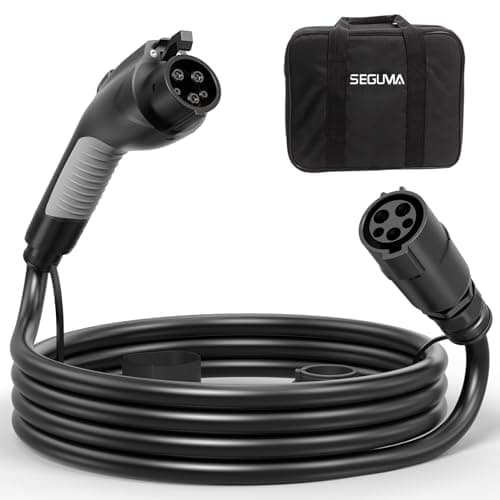
- A vehicle-side extension cable, last, and only with the caveats on are EV charger extension cords safe.
Cable management, which is not optional
However long your cable is, it needs somewhere to live that is not the floor. A handle on the ground gets stepped on, driven over, and sits in snow-melt and road salt — and the resulting damage is the failure a charger warranty is least likely to cover.
Where the cable and handle should live
A steel hook for the loop, because 25 ft of cable sags a plastic one, and a holster for the handle. Under forty dollars together.
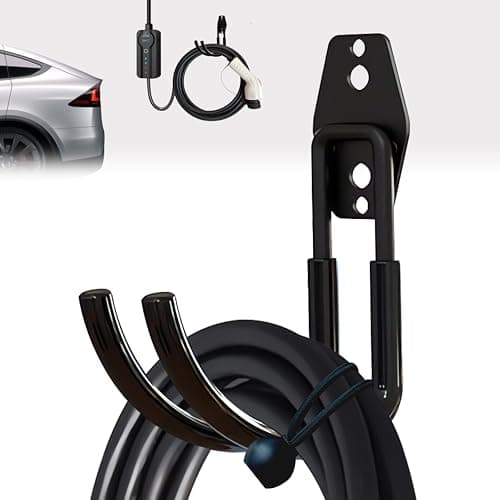
A heavy 25 ft cable that bends plastic hooks
Nexoroot Heavy-Duty Steel EV Cable J-Hook
Steel rather than plastic, which matters with 25 feet of 8 AWG cable hanging on it — the full loop of a premium charger's lead is heavier than people expect.
#ad Price as of October 5, 2026. How we make money
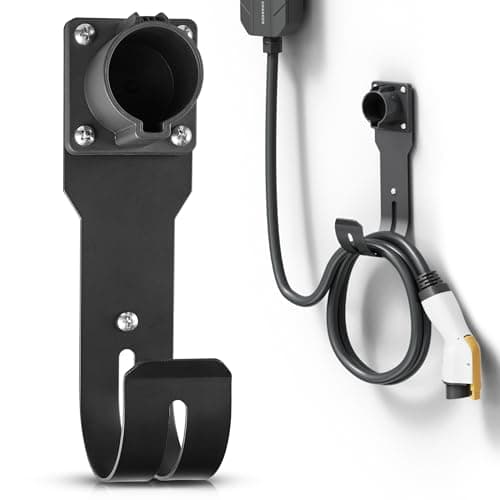
Getting the handle and the cable off the floor
MECMO J1772 Holster Dock and J-Hook
A holster for the handle plus a hook for the loop. The cheapest meaningful upgrade to any charging setup, because a handle that lives on the floor gets stepped on, driven over and eventually fails.
#ad Price as of October 5, 2026. How we make money
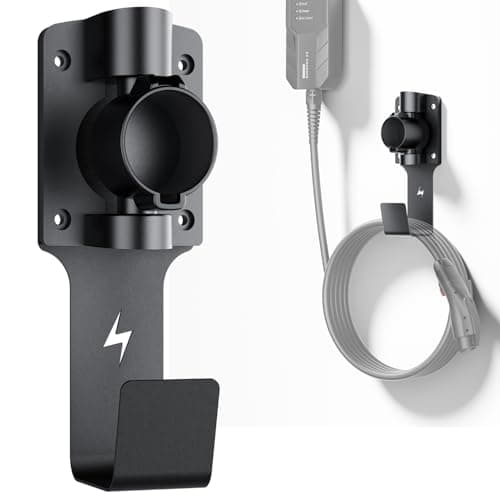
A tight wall where the handle needs to swing
FOCSPROD Rotating J1772 Holder with Metal J-Hook
A 180-degree rotating dock plus a metal hook. The rotation is the point: in a narrow garage the handle has to be able to point away from the car's path.
#ad Price as of October 5, 2026. How we make money
We earn commission on qualifying purchases at no cost to you. Affiliate disclosure.