Skip to content
EV & Charger

Our picks

Best EV Charging Cables

Replacement cables, portable cordsets, and the three specifications that actually decide whether a cable is right for you.

By Mike M.Published Last verified

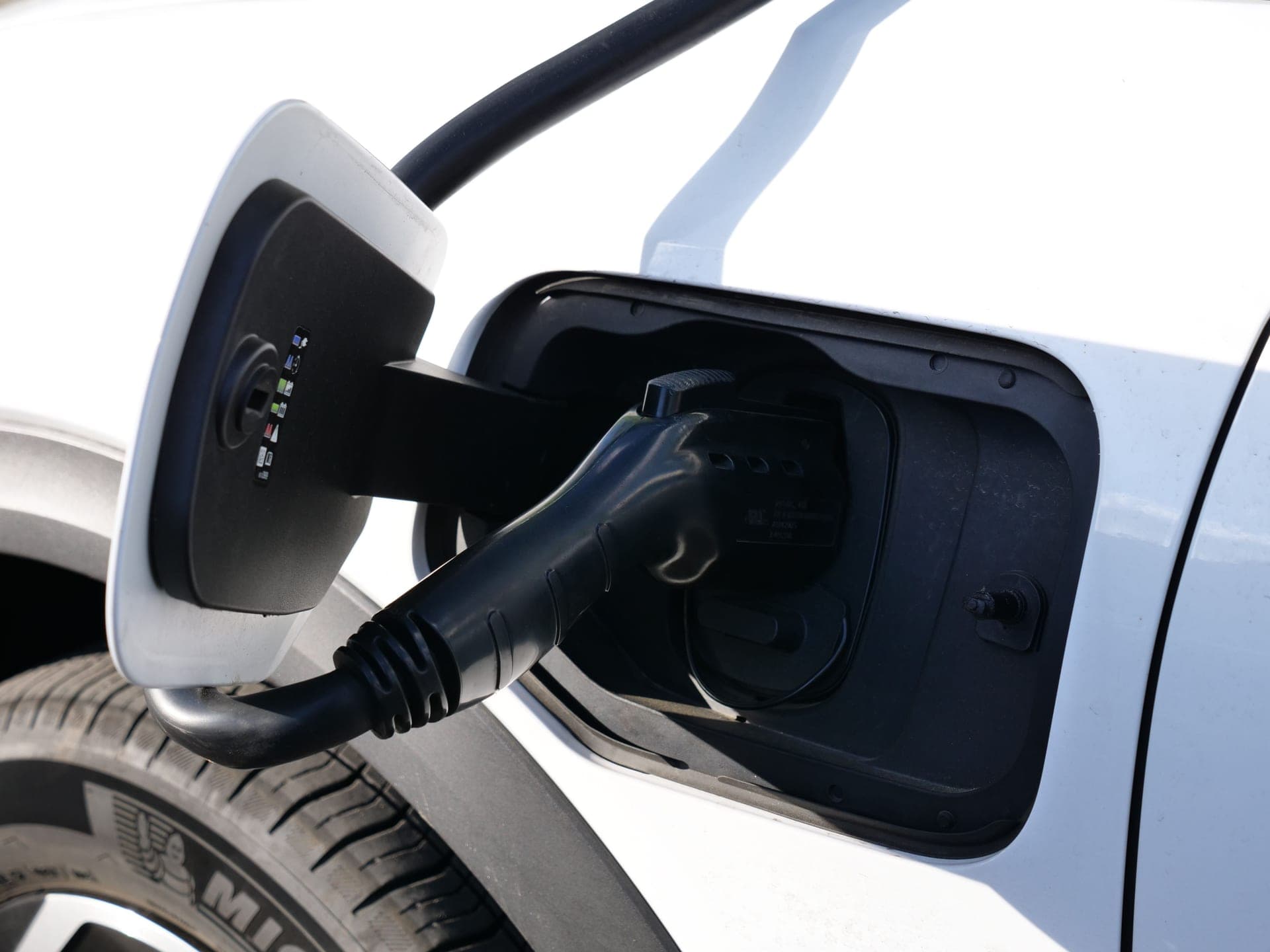
Close-up of an EV charging connector plugged into a vehicle charge port in sunlight

The short answer

If your charger's cable has failed, the first call is the manufacturer — a cable failing from normal use may be covered, and a manufacturer-matched cable is always the better part. For a portable cordset rather than a replacement, the Lectron 40 A is our pick at 9.6 kW with ETL certification. The three specifications that matter are length, amp rating and certification — in that order of how often they decide a purchase.

Quick picks

Ranked by fit for the stated use case first, then price, then warranty and support. Tap any row to jump to the full assessment. Commission rate plays no part in the order.

#ProductBest forScorePrice
1
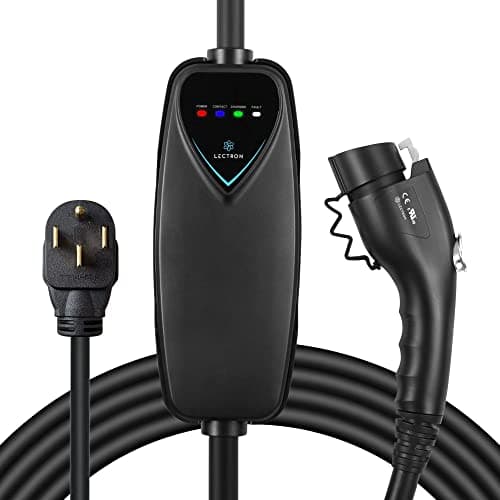
Lectron Level 2 EV Charger (40 A, NEMA 14-50)
Lectron Level 2 EV Charger (40 A, NEMA 14-50)A 40 A ETL-certified portable charger for roughly half what the smart units cost.
The cheapest charger worth owning7.9
2
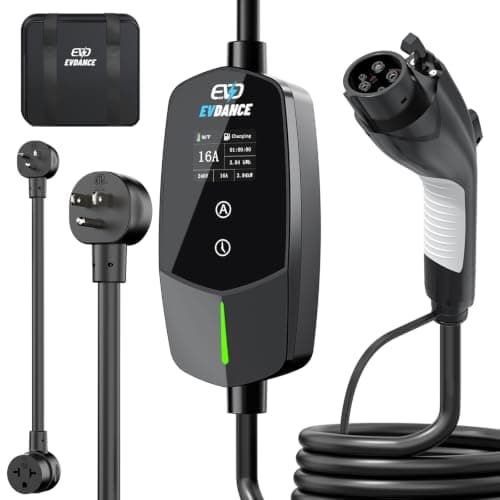
EVDANCE Level 1 & 2 Portable EV Charger (16 A)
EVDANCE Level 1 & 2 Portable EV Charger (16 A)A dual-voltage 16 A cordset.
A renter with access to a 240 V outlet7.6
3
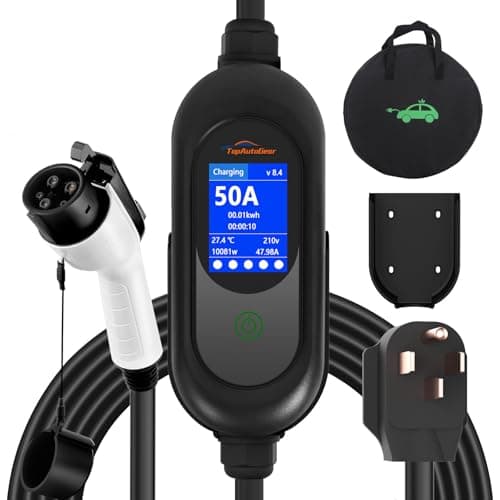
TopAutoGear Portable Level 2 EV Charger (50 A)
TopAutoGear Portable Level 2 EV Charger (50 A)A portable cordset at up to 50 A, which is unusual — most portables stop at 40.
A renter who has a real 14-50 outlet7.4
$242.76View on Amazon

$255.54 list · 5% off

4
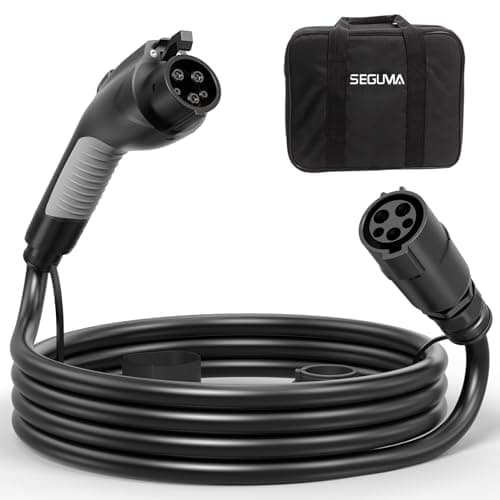
SEGUMA J1772 Extension Cable (21 ft, 50 A, UL listed)
SEGUMA J1772 Extension Cable (21 ft, 50 A, UL listed)50 A rated and UL listed, which is the combination to insist on: the rating has headroom over a 48 A charger and the listing means something tested it.
The extension to pick if you must use one8.4
5
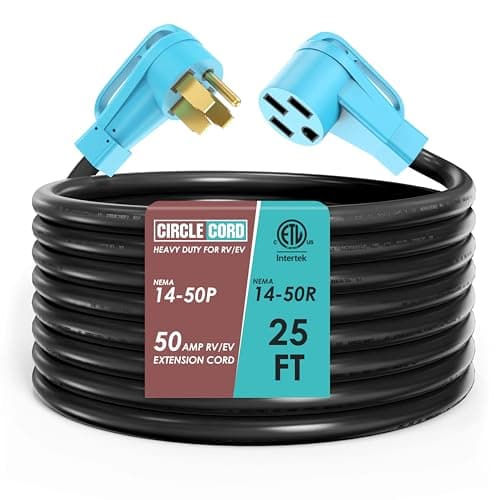
CircleCord 50 A NEMA 14-50 Extension Cord (25 ft)
CircleCord 50 A NEMA 14-50 Extension Cord (25 ft)A 50 A NEMA 14-50 extension — the better place to add length than the J1772 side, because it sits before the charger's own protection rather than after it.
Extending the supply side, not the vehicle side7.8
$92.99View on Amazon

$99.00 list · 6% off

If your charger's cable has failed

  1. Check the warranty first. A cable failing from normal use may be covered. A cable damaged by being driven over almost certainly is not — see our warranty comparison.
  2. Check whether your charger takes a replacement cable at all. Most home units have the cable permanently attached. Some — Autel, for example — sell a replacement lead.
  3. Buy the manufacturer's part if one exists. The pilot signal, pin arrangement and conductor sizing are matched to the unit, and a generic cable is not.
  4. If no replacement exists, you are replacing the charger. Which is the moment to fit a holster so it does not happen again.

The three specifications that matter

1. Length — the one that decides most purchases

Factory cables run from about 16 ft to 25 ft, and that range is wider than people expect. Measure before you buy anything: park the car where it will live, note the charge port position, measure to the mounting point along the cable's route, and add three to five feet of slack so the cable loops rather than stretches.

Charge port positions, which decide the measurement
MakeTypical port position
TeslaRear left
FordFront left
RivianFront left
Hyundai / KiaRear right on several models
BMWRear right on several models
ChevroletFront left on several models
Positions vary by model and year — check your own car rather than relying on the make. The point is that it varies enough to change which wall the charger belongs on, and therefore how long a cable you need. Mounting height and position.

2. Amp rating — with headroom

Match or exceed your charger's output. A 40 A cable on a 48 A charger is wrong; a 50 A cable on a 48 A charger has useful margin and runs cooler. Longer cables at higher current also carry more voltage drop, which is another reason to buy the shortest length that works.

3. Certification

A UL listing on an extension cable or a UL 2594 / ETL listing on a portable cordset means a nationally recognized laboratory tested it for this job. The US DOE's own guidance recommends safety-certified equipment tested by one. Most EV extension cables on the market are not listed, which is why we name the ones that are.

Portable cordsets, by charge rate

What each portable option delivers
OptionCurrentPowerNeeds
EVDANCE 16 A dual-voltage16 Aabout 3.8 kWAny 120 V or 240 V outlet
Lectron 40 A40 A9.6 kWA dedicated, GFCI-protected NEMA 14-50
TopAutoGear 50 A40 A (circuit-limited)9.6 kWA dedicated, GFCI-protected NEMA 14-50
Note the last row: a 50 A-capable portable on a NEMA 14-50 is still limited to 40 A continuous, because a circuit carries only 80% of its rating under NEC 625.42's continuous-load classification. Any receptacle used for EV charging also needs GFCI protection under NEC 625.54.

Cable handling, which determines how long one lasts

  • Never let the handle rest on the floor. It gets stepped on, driven over, and sits in road salt. A holster is the single cheapest improvement to any charging setup.
  • Loop the cable on a hook, and use a steel hook — plastic sags under 25 ft of 8 AWG cable.
  • Keep it uncoiled while charging. A coiled cable carrying 40 A cannot shed heat.
  • Expect stiffness in the cold. Every EV cable stiffens below freezing and the long ones stiffen most, which is an argument for a well-placed charger and a shorter cable rather than a long one.
  • Cap the connector outdoors. A silicone dust cap keeps grit and road salt out of the contacts.

What makes a cable last

Under forty dollars between them, and they address every common cause of cable and handle damage.
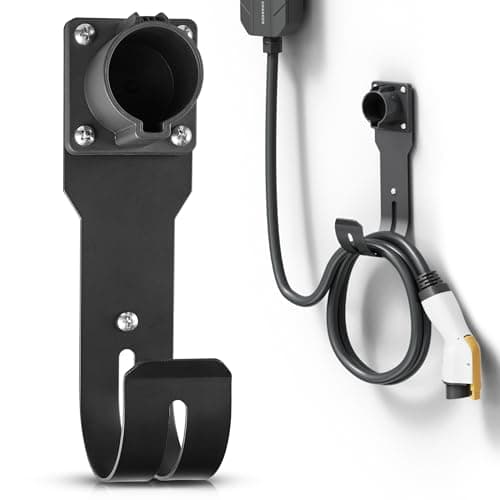
MECMO J1772 Holster Dock and J-Hook

Getting the handle and the cable off the floor

MECMO J1772 Holster Dock and J-Hook

A holster for the handle plus a hook for the loop. The cheapest meaningful upgrade to any charging setup, because a handle that lives on the floor gets stepped on, driven over and eventually fails.

$16.99View on Amazon

#ad Price as of October 5, 2026. How we make money
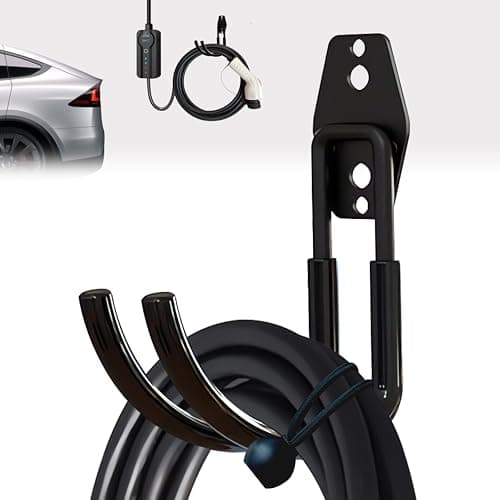
Nexoroot Heavy-Duty Steel EV Cable J-Hook

A heavy 25 ft cable that bends plastic hooks

Nexoroot Heavy-Duty Steel EV Cable J-Hook

Steel rather than plastic, which matters with 25 feet of 8 AWG cable hanging on it — the full loop of a premium charger's lead is heavier than people expect.

$8.99View on Amazon

#ad Price as of October 5, 2026. How we make money
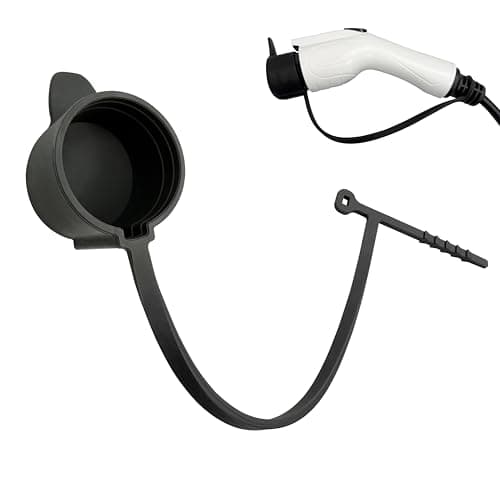
Nexoroot J1772 Waterproof Dust Cap

An outdoor handle that sits idle all day

Nexoroot J1772 Waterproof Dust Cap

A silicone cap over the contacts. Trivially cheap, and it addresses the one thing that genuinely degrades an outdoor J1772 handle: grit and salt in the pins.

$9.99View on Amazon

#ad Price as of October 5, 2026. How we make money

We earn commission on qualifying purchases at no cost to you. Affiliate disclosure.

How we picked

Every part here is currently purchasable and, where we recommend it for a high-amperage application, carries certification to an actual EV coupler standard — UL 2251 or UL 2252 — rather than a generic electrical mark. We verified each one's published ratings against the manufacturer's own material on the date at the top of this page. We verify specifications; we do not bench-test — see our methodology. Ranking is fit for the stated use first, then rating headroom, then certification, then price. Commission rate plays no part in it.
In detail

Every pick, assessed

Top pick · The cheapest charger worth owning

Lectron Level 2 EV Charger (40 A, NEMA 14-50)

Lectron Level 2 EV Charger (40 A, NEMA 14-50) charger

7.9/ 10

$269.99View on Amazon

#ad Price as of October 5, 2026. How we make money

Our verdict

A 40 A ETL-certified portable charger for roughly half what the smart units cost. It does one thing, it does it at 9.6 kW, and for a household charging overnight on a flat rate that is the whole job.

What works

  • By far the lowest cost per kW of anything we would actually recommend
  • Portable — it travels and it moves house
  • 40 A is enough for every PHEV and most overnight BEV charging

What doesn't

  • No scheduling, no app, no energy data; on a time-of-use tariff you schedule in the car or you overpay
  • Shorter total reach than the 24-25 ft units
  • Plastic enclosure, not metal — keep it out of direct weather
Lectron Level 2 EV Charger (40 A, NEMA 14-50) specifications
Max output40 A / 9.6 kW
InputNEMA 14-50 plug
Cable16 ft extension cord plus the J1772 lead
ConnectorJ1772
CertificationETL certified
GFCIRequired on the receptacle circuit — NEC 625.54

Specifications checked against Lectron Level 2 charger specifications. We verify published specifications; we do not bench-test hardware — how we assess products.

How it scored

Value
9.8
Charge rate
7.6
Portability
9.4
Smart features
2.5
Weather and build
6.4
Pick 2 · A renter with access to a 240 V outlet

EVDANCE Level 1 & 2 Portable EV Charger (16 A)

EVDANCE Level 1 & 2 Portable EV Charger (16 A) charger

7.6/ 10

$139.99View on Amazon

#ad Price as of October 5, 2026. How we make money

Our verdict

A dual-voltage 16 A cordset. On 240 V that is about 3.8 kW — roughly twice the Level 1 cordset that came with the car, from an outlet you may already be allowed to use.

What works

  • No installation, no landlord conversation, no permanent change to the property
  • Doubles Level 1 charging speed from a 240 V outlet
  • Fits in a boot and works anywhere

What doesn't

  • 16 A is slow — figure on overnight for a partial charge, not a full one
  • A 240 V outlet in a rental garage is often on a shared circuit; ask before you load it nightly
  • Not a substitute for a real Level 2 install if you own the home
EVDANCE Level 1 & 2 Portable EV Charger (16 A) specifications
Max output16 A, 120-240 V
Power at 240 VAbout 3.8 kW
ConnectorJ1772
InstallPlug-in, no mounting

Specifications checked against EVDANCE portable charger specifications. We verify published specifications; we do not bench-test hardware — how we assess products.

Pick 3 · A renter who has a real 14-50 outlet

TopAutoGear Portable Level 2 EV Charger (50 A)

TopAutoGear Portable Level 2 EV Charger (50 A) charger

7.4/ 10

$242.76View on Amazon

$255.54 list · 5% off

#ad Price as of October 5, 2026. How we make money

Our verdict

A portable cordset at up to 50 A, which is unusual — most portables stop at 40. If a rental genuinely has a 14-50 on its own circuit, this gets close to a wall charger without touching the wall.

What works

  • Near wall-charger speed with no installation
  • Moves with you at the end of the lease
  • NEMA 14-50 is the most common 240 V garage outlet

What doesn't

  • Drawing 40 A continuously through a plug you do not own is a real risk — have the receptacle checked first
  • No app, no scheduling
  • Generic brand; the certification claims are thinner than the mainstream units
TopAutoGear Portable Level 2 EV Charger (50 A) specifications
Max outputUp to 50 A, 240 V
InputNEMA 14-50 plug
ConnectorJ1772
InstallPlug-in

Specifications checked against Manufacturer listing specifications. We verify published specifications; we do not bench-test hardware — how we assess products.

Pick 4 · The extension to pick if you must use one

SEGUMA J1772 Extension Cable (21 ft, 50 A, UL listed)

SEGUMA J1772 Extension Cable (21 ft, 50 A, UL listed) charger

8.4/ 10

$175.99View on Amazon

#ad Price as of October 5, 2026. How we make money

Our verdict

50 A rated and UL listed, which is the combination to insist on: the rating has headroom over a 48 A charger and the listing means something tested it.

What works

  • 50 A rating leaves margin over a 48 A charger
  • UL listed — most extension cables in this category are not
  • Heavier conductor than the budget cables

What doesn't

  • Heavy and stiff in the cold
  • Still an extra connection in the path
  • Costs more than the unlisted cables
SEGUMA J1772 Extension Cable (21 ft, 50 A, UL listed) specifications
Rating50 A
Length21 ft
CertificationUL listed
ConnectorJ1772 both ends

Specifications checked against Manufacturer listing specifications. We verify published specifications; we do not bench-test hardware — how we assess products.

Pick 5 · Extending the supply side, not the vehicle side

CircleCord 50 A NEMA 14-50 Extension Cord (25 ft)

CircleCord 50 A NEMA 14-50 Extension Cord (25 ft) charger

7.8/ 10

$92.99View on Amazon

$99.00 list · 6% off

#ad Price as of October 5, 2026. How we make money

Our verdict

A 50 A NEMA 14-50 extension — the better place to add length than the J1772 side, because it sits before the charger's own protection rather than after it.

What works

  • Extends the supply side, where the charger's own GFCI and thermal protection still cover everything downstream
  • Heavy STW jacket suited to a garage floor
  • Also useful for an RV

What doesn't

  • A long cord on a 40 A continuous load gets warm; keep it uncoiled
  • Not a substitute for a correctly placed receptacle
  • Outdoor use needs the plug kept dry
CircleCord 50 A NEMA 14-50 Extension Cord (25 ft) specifications
Rating50 A, 125/250 V
Length25 ft
EndsNEMA 14-50P to 14-50R

Specifications checked against Manufacturer listing specifications. We verify published specifications; we do not bench-test hardware — how we assess products.

FAQ

Questions people actually ask

Can I replace my EV charger's cable?

On most home chargers the cable is permanently attached, so no — you replace the charger. A few units, such as some Autel models, sell a replacement lead. Check the warranty first: a cable failing from normal use may be covered.

How long should an EV charging cable be?

Measure from your intended mounting point to the car's charge port along the cable's route, then add three to five feet of slack so it loops rather than stretches. Factory cables run from 16 to 25 ft, and port positions vary enough by make to change which wall the charger belongs on.

What amp rating do I need on a charging cable?

Match or exceed your charger's output, with headroom if possible. A 40 A cable on a 48 A charger is wrong; a 50 A cable on a 48 A charger has margin and runs cooler.

Why does my EV charging cable feel stiff in winter?

Every EV cable stiffens below freezing and the longest ones stiffen most. It is a handling problem rather than a reliability one, and it is a reason to prefer a well-placed charger with a shorter cable over a long cable and a long reach.

Does a longer cable charge slower?

Marginally, through voltage drop, and the effect grows with length and current. The bigger practical issues with a long cable are weight, cold-weather stiffness and storage.

Sources

What we checked this against

Read next

Disclosure. Some links on this page are affiliate links. If you buy through one, we earn a commission at no extra cost to you. We are a participant in the Amazon Services LLC Associates Program. Prices come from Amazon's live data and are shown with the date they were checked; where no live price is available we say "check price" rather than show an old number. Commission rate plays no part in which products we recommend or in what order — see our methodology and our full affiliate disclosure.