The short answer
A 40 A charger's output cord is typically 8 AWG, which matches NEC Table 310.16's 50 A ampacity for 8 AWG copper at 75 degC. The relationship is simple: thicker conductor, lower resistance, less heat, higher safe current. On a cable you are buying, the gauge is a useful sanity check on the amp rating — a cable claiming 50 A with thin conductors is claiming something the physics does not support.
Gauge, in one table
| Gauge | 60 degC | 75 degC | 90 degC | Typical EV use |
|---|---|---|---|---|
| 12 AWG | 20 A | 25 A | 25 A | A 16 A portable charger |
| 10 AWG | 30 A | 35 A | 40 A | A 24 A circuit |
| 8 AWG | 40 A | 50 A | 55 A | A 40 A charger's output cord; a 40-50 A circuit |
| 6 AWG | 55 A | 65 A | 75 A | A 48 A charger's branch circuit |
| 4 AWG | 70 A | 85 A | 95 A | A 64 A circuit |
| 3 AWG | 85 A | 100 A | 110 A | An 80 A circuit |
Why the Grizzl-E publishes “8 AWG output cord”
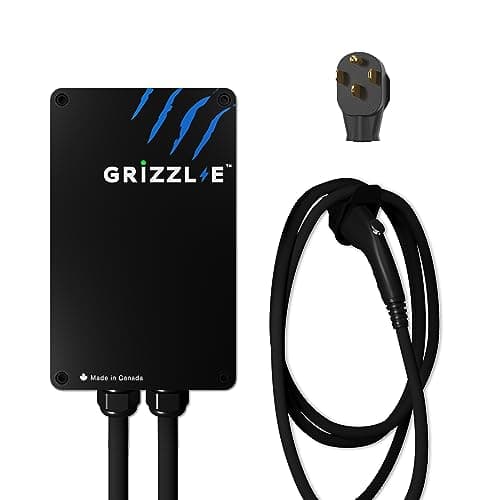
It is one of the few manufacturers that does, and it is a meaningful disclosure. The Grizzl-E Classic is a 40 A charger with a 24 ft, 8 AWG output cord — 8 AWG carries 50 A at 75 degC, so there is headroom over the 40 A the charger delivers.
Most manufacturers publish the cable's length and not its gauge, which is why the gauge is worth asking about on a cable you are buying separately.
The difference between a charger cord and building wire
Worth being clear about, because the same gauge numbers appear in both contexts and the products are not comparable.
| Charger output cord | Branch-circuit conductor | |
|---|---|---|
| Where | From the charger to the car | From the panel to the charger |
| Construction | Highly flexible, fine stranding, flexible jacket | Stranded or solid, fixed in place |
| Governed by | The charger's listing (UL 2594) | NEC Table 310.16 and Article 625 |
| Who chooses it | The manufacturer | Your electrician |
| Typical gauge at 40 A | 8 AWG | 8 AWG in conduit; 6/2 NM-B |
| Replaceable | Rarely | n/a |
Why gauge matters more on a long cable
Two separate effects, and both get worse with length:
- Heat. Resistance generates heat proportional to the square of the current. At 40 A continuous for eight hours, a thin conductor gets meaningfully warmer than a thick one.
- Voltage drop. A longer conductor drops more voltage, which means the car sees slightly less than 240 V and charges slightly slower. On a 25 ft charger cord it is negligible; on 25 ft of cord plus 30 ft of extension it is not.
That compounding is the real argument against long extension chains — see are EV charger extension cords safe.
What to look for when buying a cable
- A published amp rating with headroom over your charger's output. 50 A rated on a 48 A charger.
- A UL listing on an extension cable, or UL 2594 / ETL on a portable cordset. The US DOE's guidance recommends safety-certified equipment tested by a nationally recognized laboratory.
- A published gauge, if available. It is a sanity check: a cable claiming 50 A should have conductors capable of it.
- Weight. A heavier cable at a given length usually means thicker conductors, and in this category that is the right direction.
- A sensible jacket. It has to flex at 10 degF and resist being driven over.
What we would buy
Cables where the rating is backed by a listing
The SEGUMA extension is 50 A rated and UL listed, which is the combination that matters. The supply-side NEMA 14-50 extension is the lower-risk way to add length to a plug-in charger.

The extension to pick if you must use one
SEGUMA J1772 Extension Cable (21 ft, 50 A, UL listed)
50 A rated and UL listed, which is the combination to insist on: the rating has headroom over a 48 A charger and the listing means something tested it.
#ad Price as of October 5, 2026. How we make money
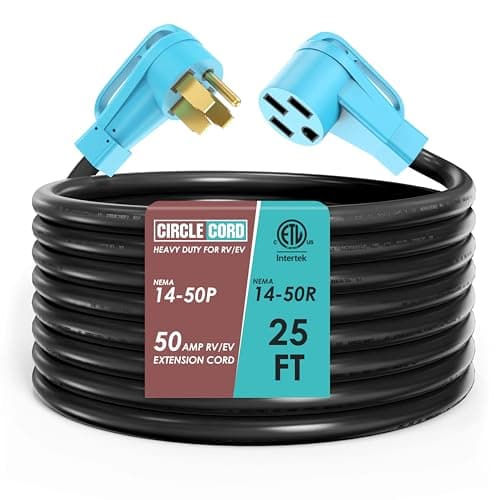
Extending the supply side, not the vehicle side
CircleCord 50 A NEMA 14-50 Extension Cord (25 ft)
A 50 A NEMA 14-50 extension — the better place to add length than the J1772 side, because it sits before the charger's own protection rather than after it.
We earn commission on qualifying purchases at no cost to you. Affiliate disclosure.