The short answer
A 50 A rated, UL listed EV extension cable, kept uncoiled and used on a charger at or below 40 A, is a manageable risk. An unrated cable, a coiled one, or an ordinary household extension cord is not. Most charger manufacturers advise against extensions entirely — and the reason is specific: every connection is a resistance point, and a 40-48 A continuous load finds the weakest one.
Why continuous load is the whole issue
A power tool draws heavily for thirty seconds. An EV draws 40 amps continuously for six to eight hours, every night, for years. NEC 625.42 recognizes this explicitly by classifying EV charging as a continuous load, which is why NEC 625.41 requires the circuit to be sized at 125% of it.
Connections behave differently under that duty cycle. A slightly loose or slightly oxidized contact has a small resistance; small resistance under 40 A for hours produces heat; heat accelerates oxidation; oxidation increases resistance. It is a feedback loop, and it runs for months before anything is visible.
Every extension adds two connections to that path.
What makes an extension acceptable
| Requirement | Why | What to avoid |
|---|---|---|
| 50 A rating | Headroom over a 48 A charger; a part at 100% of its rating runs hotter | A 40 A cable on a 48 A charger |
| UL listing | Something tested it for this application | Unlisted cables, which are most of the market |
| Purpose-built EV cable, J1772 both ends | Correct pin arrangement, pilot signal and conductor sizing | Any household extension cord, at any price |
| The shortest length that works | Less voltage drop, less weight, less heat | 30 ft when 20 ft would do |
| Heavy conductor | Lower resistance means less heat | Thin-gauge budget cables |
How to use one so the risk stays low
- Keep it uncoiled. A coiled cable carrying 40 A cannot shed heat, and this is the most commonly ignored rule. Lay it out; do not leave it in a loop on the floor.
- Check it in the first week. After an hour at full current, feel both connections and the cable's midpoint with the back of your hand. Warm is normal; hot is not. If anything is uncomfortable to hold, stop using it.
- Keep the connections dry and off the ground. A connection sitting in snow-melt is a different proposition from one in air.
- Reduce the charger's output. Dropping from 48 A to 32 A substantially reduces the heat at every connection, and on most cars costs you an hour overnight at most.
- Never daisy-chain two extensions.
- Re-check it every few months. Connections degrade, and the degradation is invisible until it is not.
Why manufacturers advise against them
Three reasons, and they are legitimate rather than liability-driven:
- They cannot control the quality of a third-party cable. A charger rated and tested as a system has an unknown component added to it.
- They cannot control how it is used. Coiled, wet, on a 48 A setting, daisy-chained — all of those happen.
- It moves the failure point outside their product. A charger that works correctly can be blamed for a cable that does not.
None of that means an extension is guaranteed to cause a problem. It means the manufacturer has no way to say it will not, and the honest position for us is the same: this is a risk you can manage, not one you can eliminate.
The better answers, in order
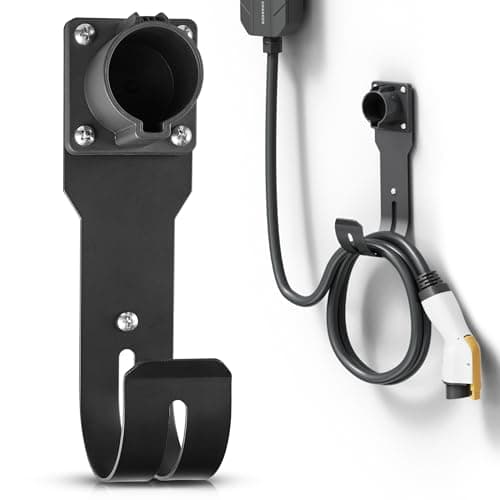
- Move the charger. Measure from where the car parks to where the port sits. This is the fix. Mounting height and position.
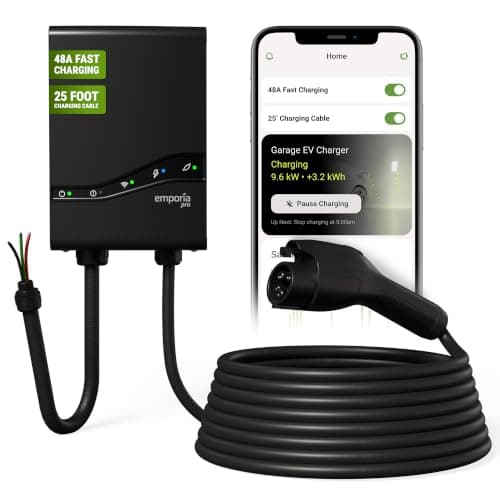
- Buy a charger with a longer cable if you are still shopping — they run from 16 ft to 25 ft and it costs nothing to choose well. Best Level 2 chargers.
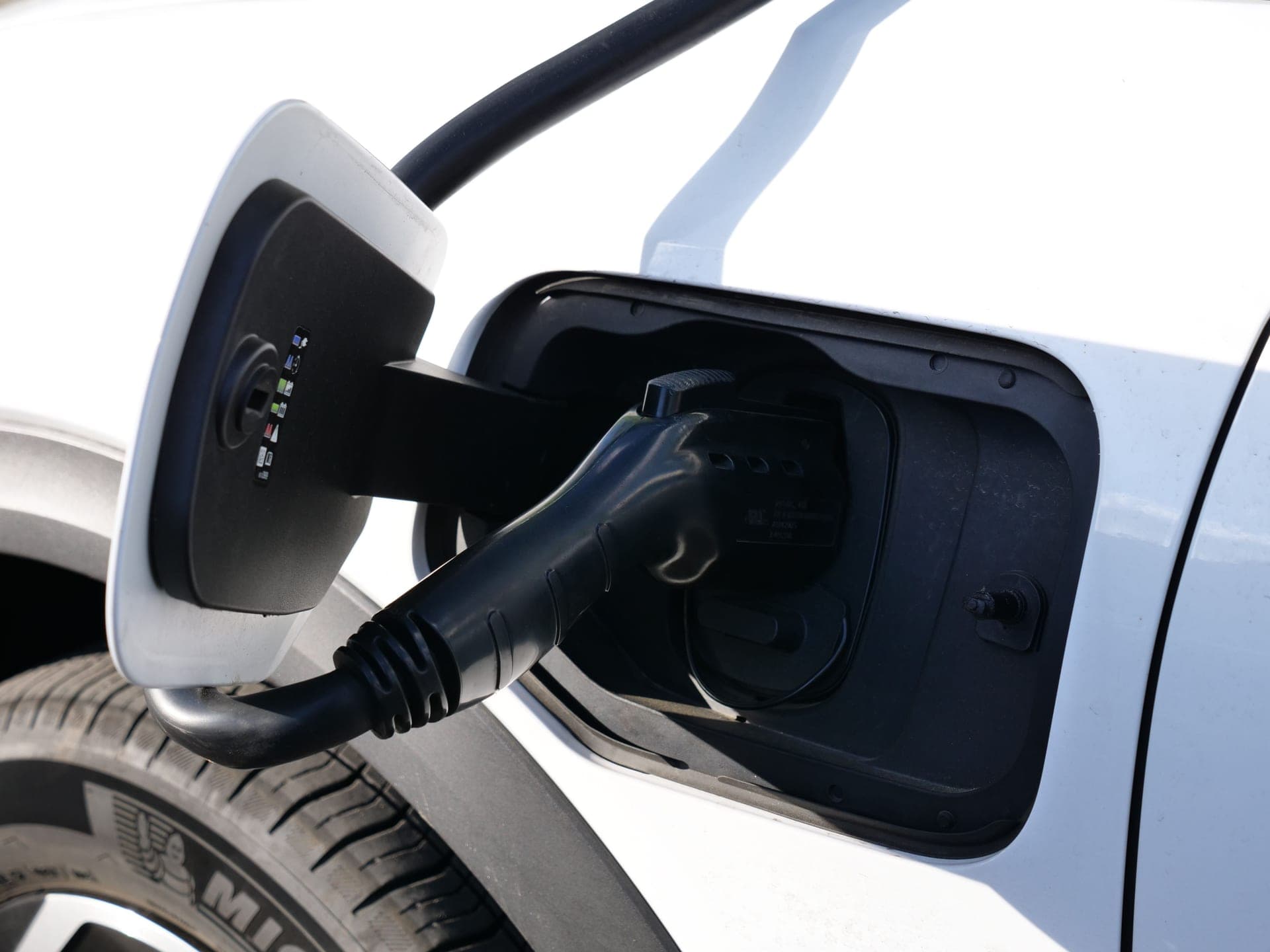
- Park the other way round. Charge port positions vary — Tesla rear left, Ford and Rivian front left, Kia rear right — and reversing in sometimes solves the reach entirely.
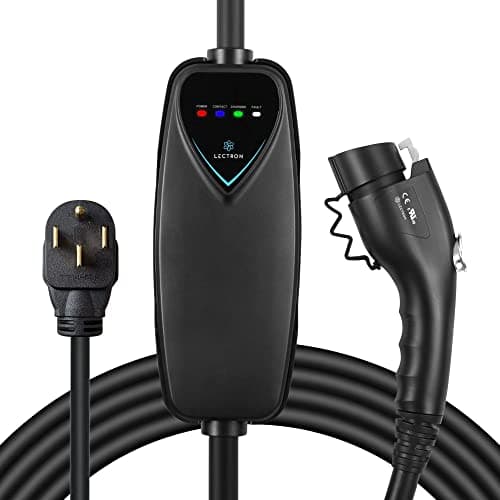
- Extend the supply side instead, with a 50 A NEMA 14-50 extension, if your charger plugs in. That puts the extra connection ahead of the charger's own GFCI and thermal protection rather than behind it.
- Then a vehicle-side extension cable, chosen and used as above.
If you are going to use one, these are the specifications
The SEGUMA is 50 A rated and UL listed, which is the combination that matters. The NEMA 14-50 extension is the lower-risk supply-side option for a plug-in charger.
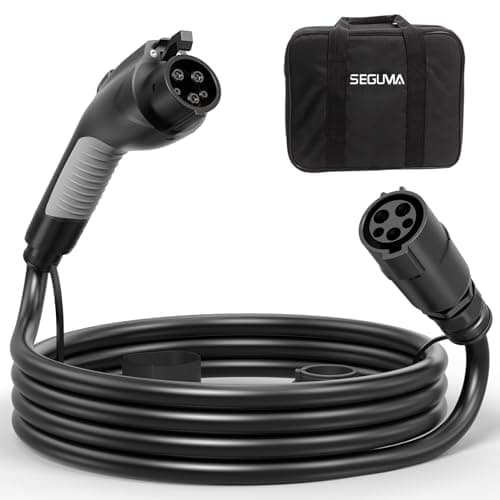
The extension to pick if you must use one
SEGUMA J1772 Extension Cable (21 ft, 50 A, UL listed)
50 A rated and UL listed, which is the combination to insist on: the rating has headroom over a 48 A charger and the listing means something tested it.
#ad Price as of October 5, 2026. How we make money
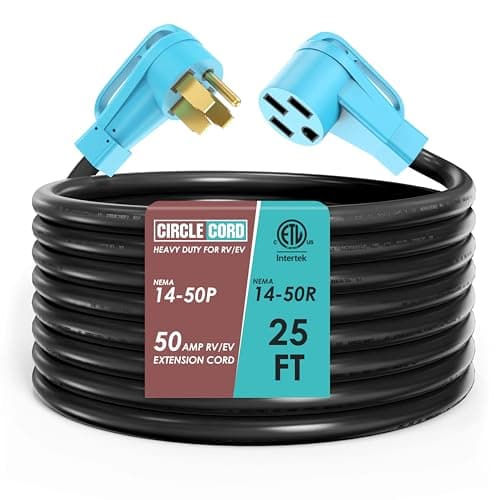
Extending the supply side, not the vehicle side
CircleCord 50 A NEMA 14-50 Extension Cord (25 ft)
A 50 A NEMA 14-50 extension — the better place to add length than the J1772 side, because it sits before the charger's own protection rather than after it.
We earn commission on qualifying purchases at no cost to you. Affiliate disclosure.