The short answer
A charging cable cannot make charging faster. It can only be rated high enough to carry what the equipment already delivers, or too low — in which case it is the limit. For home charging the cable is permanently attached to the charger and already sized for that unit's output, so there is nothing to upgrade. The "fast charging cables" you see on fast-charging stations are liquid-cooled DC assemblies that are part of the station, not an accessory. What you can actually buy is an extension cable, and its amp rating is the only specification that matters.
Three different things share the name
Most of the confusion in this search comes from three unrelated products being called a charging cable.
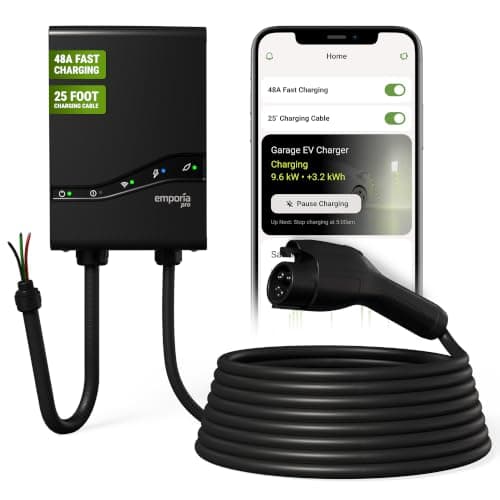
- The cable attached to your home charger. Part of the unit, sized by the manufacturer for its rated output — typically 8 AWG on a 40 A charger. You do not choose it separately; you choose it when you choose the charger's length, 18 to 25 ft.
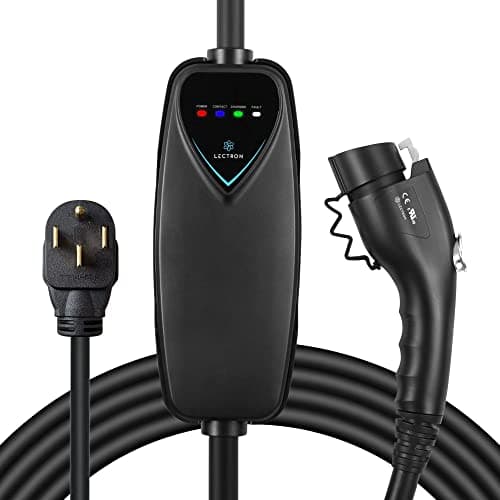
- A portable Level 2 cordset. A complete charger with a plug on one end, not just a cable. That is a portable charger, and its rating is the unit's rating.
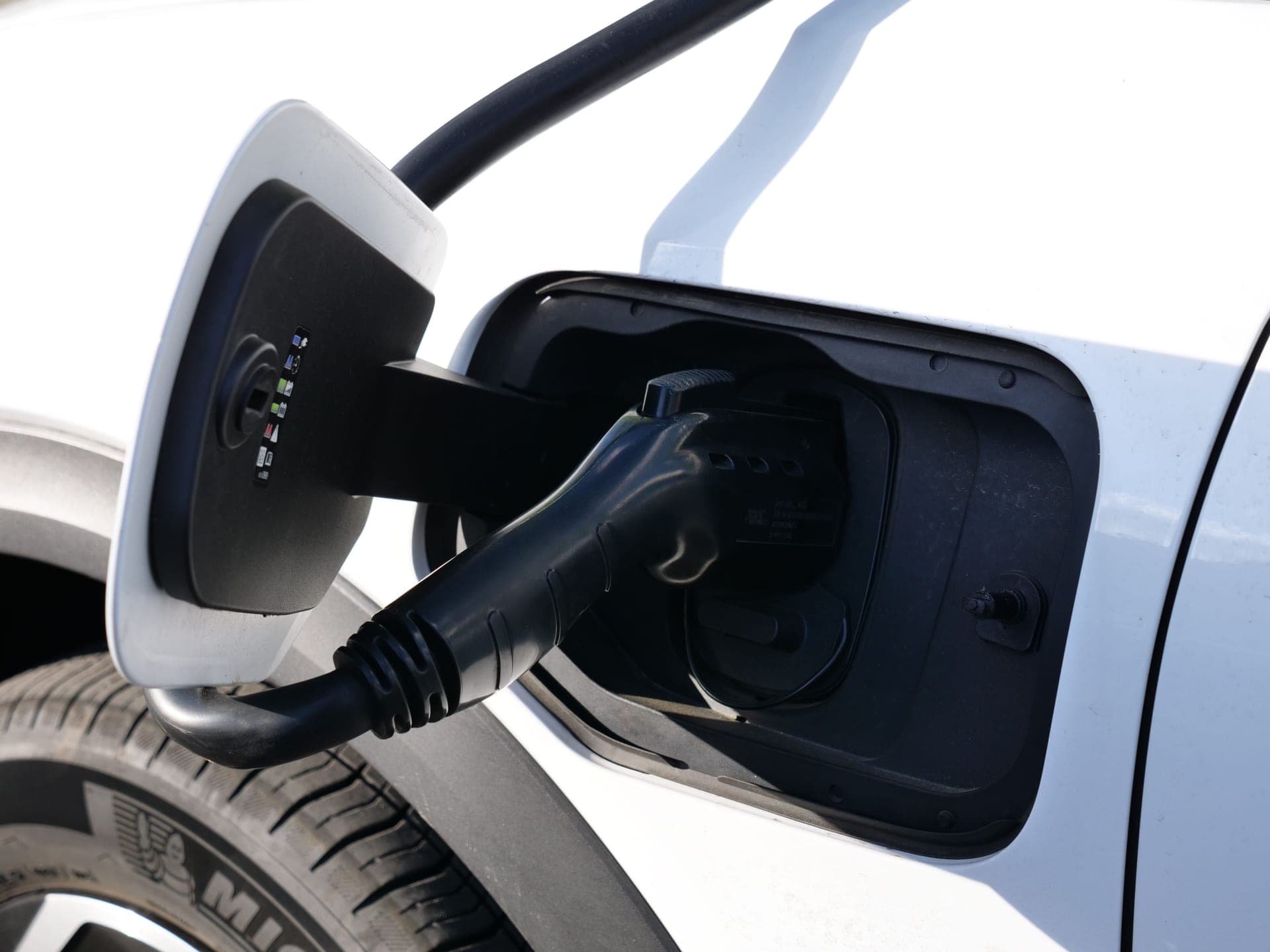
- A DC fast charging cable. The thick, often liquid-cooled lead on a highway charger. The US DOE describes DC fast charging as equipment with a three-phase AC input delivering power outputs up to 500 kW — cooling that cable is why it is engineering rather than an accessory, and why you cannot install one at home.
There is a fourth item people mean sometimes: a J1772 extension cable, which is the only one in this family you buy as a separate cable for home use.
Why a cable cannot speed anything up
Charging power is set by the lowest ceiling in the chain, and there are four ceilings: the circuit, the charger, the cable and the car. A cable rated above the charger's output simply is not the limit — it does not add capacity any more than a wider pipe adds water pressure.
min(circuit 50 A, charger 40 A, cable 50 A, car 32 A)
32 A — the car decides
A typical home example: the cable is the one component with headroom to spare. Raising the cable's rating changes nothing; the car's onboard charger is the ceiling in most households.
This is also why upgrading a cable is almost never the answer to slow charging. The exception is a damaged cable, which is a repair rather than an upgrade.
What the amp rating on a cable means
A cable's rating is a thermal limit: the current it can carry continuously without exceeding its insulation temperature. It comes from conductor size and insulation type, the same basis as the conductor sizing in your walls — NEC Table 310.16 territory. Two practical consequences:
- Match or exceed the equipment's output. A 40 A cable on a 40 A charger has no margin; a 50 A cable does. Margin is worth paying for on anything that will be used daily for years.
- Thicker cable is heavier and stiffer, especially in cold weather. A 50 A extension is noticeably harder to handle than a 40 A one, and handling is what determines whether a cable gets looked after.
| Equipment | Output | Cable requirement |
|---|---|---|
| 32 A Level 2 charger | 7.7 kW | 32 A minimum, 40 A preferred |
| 40 A Level 2 charger | 9.6 kW | 40 A minimum, 50 A preferred |
| 48 A Level 2 charger | 11.5 kW | Attached cable only — no extension rated for daily 48 A use |
| DC fast charger | Up to 500 kW | Station hardware, typically liquid-cooled |
Extensions: the honest position
An extension splits a connection designed to be continuous and adds two more contact pairs in the path, usually sitting on a garage floor. It is not the first answer to a reach problem — re-siting the charger or buying a unit with a longer attached cable is. Our are EV charger extension cords safe page sets out the risks in full, and several manufacturers explicitly discourage them.
The extensions worth considering
Two J1772 extensions and one supply-side cord. The UL-listed 21 ft unit is the one to pick if you must use an extension at all; the 20 ft option is 40 A rather than 50 A, which matters on a 40 A charger with no margin.

The extension to pick if you must use one
SEGUMA J1772 Extension Cable (21 ft, 50 A, UL listed)
50 A rated and UL listed, which is the combination to insist on: the rating has headroom over a 48 A charger and the listing means something tested it.
#ad Price as of October 28, 2026. How we make money
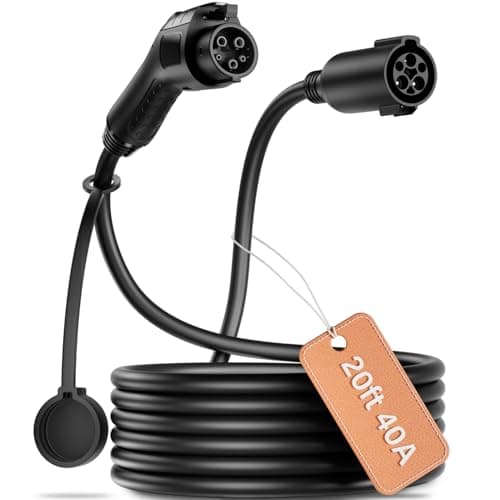
Bridging the last 20 feet at 40 A
VIVAVOLT J1772 EV Extension Cable (20 ft, 40 A)
A 40 A, 20 ft J1772 extension. Use it when the charger is mounted and the car parks further away than the lead reaches — and derate your expectations, not the cable.
Extending the supply side, not the vehicle side
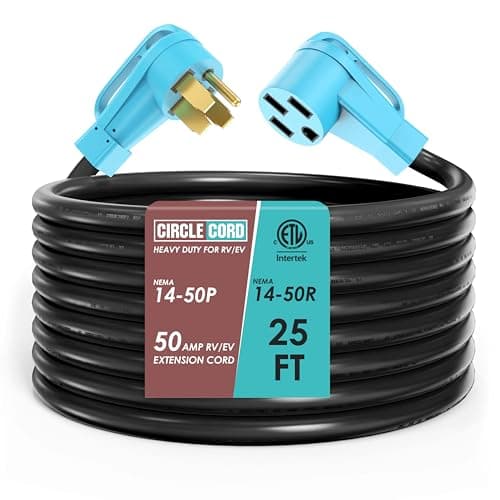
CircleCord 50 A NEMA 14-50 Extension Cord (25 ft)
A 50 A NEMA 14-50 extension — the better place to add length than the J1772 side, because it sits before the charger's own protection rather than after it.
#ad Price as of October 28, 2026. How we make money
We earn commission on qualifying purchases at no cost to you. Affiliate disclosure.
The SEGUMA 21 ft is rated 50 A and UL listed — the margin and the listing are both why it leads. The VIVAVOLT 20 ft is 40 A, which is adequate for a 32 A charger and tight on a 40 A one. The CircleCord 25 ft NEMA 14-50 cord extends the supply side instead of the vehicle side, which is a different trade: it keeps the J1772 connection intact but moves a 50 A plug connection out onto the floor. More options, ranked, in best J1772 extension cables.
What to buy instead of a cable, in most cases
- A charger with a longer attached cable. 25 ft is the maximum on mainstream home units and it solves most reach problems outright.
- A better mounting position. Measure the real cable route before anything is screwed to a wall — mounting height and cable length cover it.
- A holster and a steel hook. The cheapest reliability upgrade in the category: cable holders.
- An adapter, if the issue is the plug and not the length. NACS to J1772 and J1772 to NACS are different products from extensions and carry different risks.
And if what you are really asking is how to charge faster rather than further, the answer is upstream of the cable entirely: what amp EV charger do I need and EV onboard charger limits by model.