The short answer
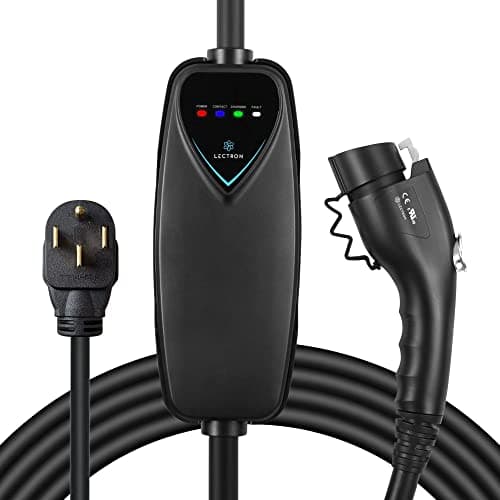
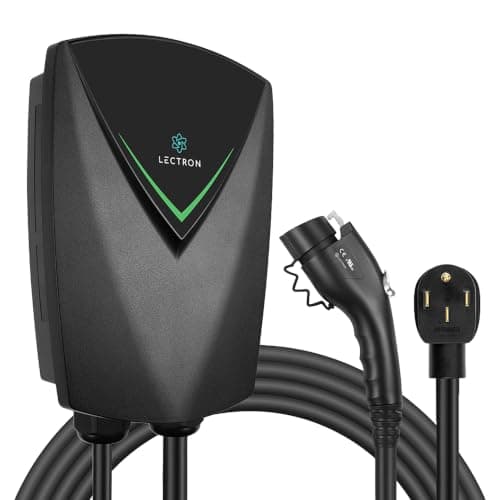
The Lectron Nexus is the cheapest wall-mounted home charger we are comfortable recommending, because it is ETL listed to UL 2594 — the actual EV supply equipment standard — rather than carrying a generic electrical mark. You get 40 A / 9.6 kW, a 23 ft cable, IP66 weatherproofing and a NEMA 14-50 plug. You do not get an app, or an amperage switch.
We verified this unit's published specifications against the manufacturer's own documentation on the date shown at the top of this page, and confirmed it is currently purchasable before writing a word of it. We verify specifications; we do not bench-test hardware — our methodology says so in plain terms, and anything in the "known issues" section below is labeled as owner reports rather than a finding of ours. Commission rate plays no part in the verdict or in which alternative we point you at.
Why the certification is the headline
Search for a cheap Level 2 charger and you will find dozens of units at roughly this money. Most of them list something like "CE, FCC, RoHS" or "UL-certified components". Those are not the same claim as a listing to UL 2594, which is the standard written specifically for electric vehicle supply equipment and the one NEC Article 625 expects the equipment on your wall to meet.
Lectron publishes conformance to UL 2594, UL 2231 and UL 2251, with the Nexus ETL listed and additionally ENERGY STAR and FCC certified. ETL is a Nationally Recognized Testing Laboratory mark, equivalent in standing to UL's own; what matters is that the unit was tested to the EVSE standards by a NRTL, not that a component inside it once was.
The specification, in full
| Item | Specification |
|---|---|
| Output | 40 A / 9.6 kW at 240 V |
| Input | NEMA 14-50 plug — plug-in, no hardwiring |
| Cable | 23 ft, 15.0 mm outside diameter |
| Connector | SAE J1772 |
| Enclosure | IP66, indoor or outdoor |
| Certification | ETL listed to UL 2594, UL 2231, UL 2251; ENERGY STAR; FCC |
| Protection | Over-temperature, overcurrent, voltage fault, ground fault |
| In the box | Wall-mount J-hook and plug holder |
| Smart features | None — no Wi-Fi, no app, no display |
The 23 ft cable is the quiet standout. At this price the usual cable is 16 to 20 ft, and 23 ft is within two feet of what a Tesla Wall Connector or an Emporia Pro gives you. Combined with the included J-hook and plug holder, it is a complete install rather than a box that needs accessories — our cable management guide covers why that matters more than people expect.
What this charger needs from your electrical system
| Item | Requirement | Basis |
|---|---|---|
| Charger output | 40 A / 9.6 kW | Manufacturer published |
| Breaker | 50 A, two-pole | NEC 625.41 — 125% of a continuous load; NEC 625.42 makes EV charging continuous |
| Copper conductor (conduit, 75 degC) | 8 AWG | NEC Table 310.16 |
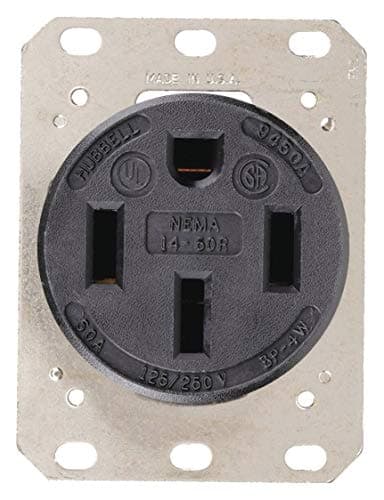
| Receptacle | NEMA 14-50, on its own circuit | Manufacturer published |
| GFCI breaker | Required — receptacle circuit | NEC 625.54 |
Two consequences of being plug-in. First, the receptacle quality genuinely matters: a 40 A continuous load on a cheap NEMA 14-50 is the most common cause of a scorched outlet, which is why we have a whole page on the right 14-50 receptacles and another on wiring the outlet itself. Second, NEC 625.54 requires GFCI protection on that circuit, and GFCI plus EVSE is the classic nuisance-tripping pairing — why, and what to do.
No amperage switch, and why that is the real limitation
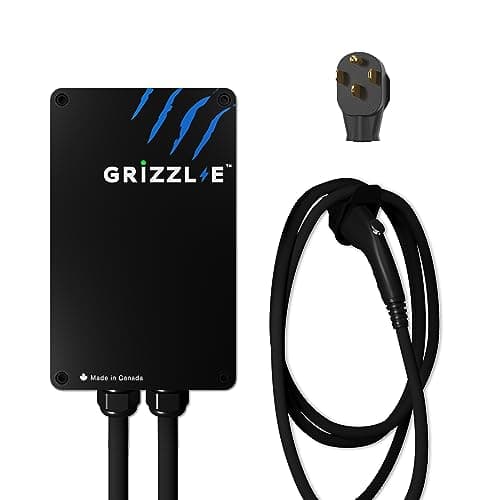
The Nexus is a fixed 40 A unit. There is no internal dip switch or commissioning step that lets you dial the output down to 32 A or 24 A, which the EVIQO, ChargePoint Home Flex and Grizzl-E units all offer in one form or another.
That matters in one specific situation and it is a common one: a panel that can only spare a 40 A circuit. A selectable charger can be commissioned at 32 A and installed on a 40 A breaker to code. The Nexus needs the full 50 A circuit its plug implies. Lectron's own guidance is to limit the current from the car's charging settings instead — which works for managing a draw, but it is a car-side preference, not a code-compliant way to put a 40 A charger on a smaller circuit. If your load calculation comes back at 40 A, buy a charger that can be set down rather than one you have to remember to turn down.
Who this is for
- A first EV, a 50 A circuit, and no appetite for spending $700. This is the case. 9.6 kW overnight is roughly 250 to 300 miles of range added in eight hours, which is more than most households use in three days.
- Anyone whose car tops out at 40 A or below. Several Teslas, most PHEVs, the Bolt. Paying for 48 A you cannot use is the most common overspend in home charging — see what amp EV charger do I need.
- A renter or a likely mover. It unplugs. The circuit stays with the house, the charger comes with you — our renter's guide covers the rest of that calculation.
- Anyone replacing a no-name charger. If the unit currently on your wall cannot name a NRTL and a standard, this is a cheap and large upgrade in the only dimension that really matters.
Who should buy something else instead
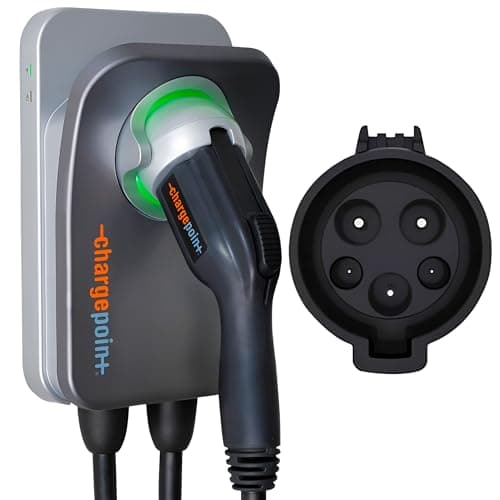
- Your panel can only spare a 40 A circuit. You need selectable output. The EVIQO 48 A has an internal 16/32/40/48 A switch and the ChargePoint Home Flex has six levels.
- Your car accepts 48 A and you want all of it. Step up to a 48 A charger — the circuit cost difference is 6 AWG instead of 8 AWG, and it is usually smaller than people fear.
- You want scheduling and energy data from the charger. The Nexus has no app at all. Start at best smart Wi-Fi EV chargers, or read what a smart EV charger actually does first — the answer may be that your car already does it.
- Your load calculation is marginal. The Emporia Pro ships with a whole-home energy monitor and manages against measured draw, which is the feature most likely to avoid a service upgrade.
- You want a portable cordset rather than a wall box. That is Lectron's other unit — see our Lectron Level 2 review.
- Your electrician is sourcing the equipment. A supply house will have Leviton on the shelf and not this; our Leviton EV charger review covers what that channel is worth.
- You have two EVs and one spare circuit. A dual-cable unit is the cheaper answer than two installs — see our Grizzl-E Duo Connect review.
No app: a real loss, or not?
It depends on one thing — whether your car can schedule its own charging. Every current BEV and nearly every PHEV can, and a schedule enforced by the car is more robust than one enforced by a charger: it survives a Wi-Fi outage, a router change, a dead app account and a new phone.
What you genuinely lose is per-session energy and cost reporting, which is useful if you are on a time-of-use rate and want to prove the shift is working. If that data matters to you, either buy a networked charger or add a separate energy monitor — the monitor is the cheaper route and it tells you about the whole house rather than one circuit.
Check the warranty before you buy
Known issues, from owner reports
Labeled as owner reports rather than tested findings.
- Support is email-first. Lectron's North American support record is shorter and thinner than ChargePoint's, Leviton's or Tesla's. On a budget unit that is part of what you are accepting.
- GFCI nuisance tripping on the 14-50 circuit. The general EVSE-and-GFCI interaction rather than a Nexus fault. A different GFCI breaker model is the usual fix; hardwiring is not an option here.
- The plug gets warm. Normal for any 40 A continuous load on a receptacle, and the reason the receptacle brand matters. Warm is expected; hot, discolored or smelling of plastic is a fault — stop and call an electrician.
- No display means no diagnostics. When something goes wrong you get an LED, not a code. Our post-install test guide is the substitute.
The verdict
A budget unit with a real UL file
Lectron Nexus Level 2 Charger (40 A)
A real UL 2594 file, 23 ft of cable, and IP66 — at the price where most units have none of the three.
#ad Price as of October 28, 2026. How we make money