The short answer
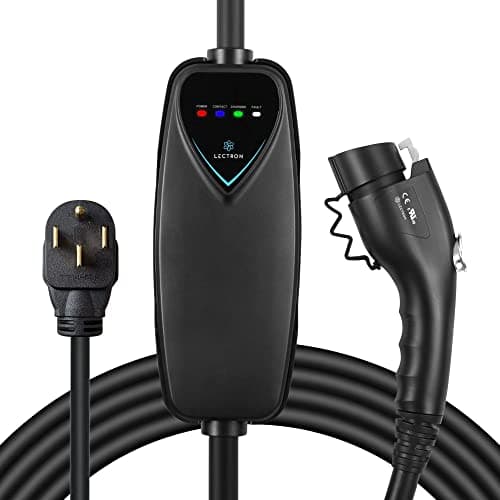
The Lectron 40 A is the cheapest charger we would recommend: 40 A / 9.6 kW, ETL certified, plugging into a NEMA 14-50 with a 16 ft extension cord plus the J1772 lead, at roughly half the price of the smart units. There is no app, no scheduling, no energy reporting and no load management. For a household with a garage, a flat electricity tariff and a car that schedules its own charging, none of that is a loss.
The reason this unit is on our lists at all is that the charging electronics in a cheap 40 A charger and an expensive one are nearly the same. What the premium buys is features — and a meaningful number of households do not need them.
Who this is for
- A flat electricity tariff, where there is nothing to schedule around.
- A car that schedules its own charging, which is most of them. Then a charger app is duplicate functionality you would be paying for twice.
- A plug-in hybrid or an entry-trim car. Every PHEV tops out at 32 A, so this unit's 40 A ceiling is above what the car can take anyway — see PHEV home charging.
- A renter, because it unplugs and travels. Our renter's roundup ranks it first for the same reason.
- A second charger for a second property, or a travel charger to keep in the car.
- A panel with clear headroom, where load management buys nothing.
Who should buy something else instead
- You are on a time-of-use tariff and your car cannot schedule. There is no timer here. A smart charger enforces the window.
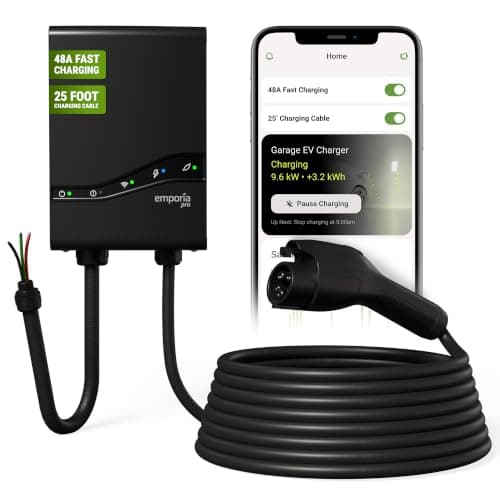
- Your panel is tight. No load management. The Emporia Pro's measured throttling is what avoids a service upgrade.
- You need 48 A. This is 40 A. On a Rivian, F-150 Lightning or Hummer EV the difference is real.
- It is going outdoors. The enclosure is plastic and this is a cordset rather than a weatherproofed wall unit. The Grizzl-E Classic's cast aluminum is the outdoor answer.
- You want a long single cable run. The 16 ft extension plus the J1772 lead is less total convenient reach than a 25 ft integrated cable.
What you actually give up
| Lectron 40 A | Emporia Pro 48 A | |
|---|---|---|
| Power | 9.6 kW | 11.5 kW |
| Certification | ETL certified | UL certified, ENERGY STAR |
| Enclosure | Plastic, indoor preferred | NEMA 4, indoor or outdoor |
| Cable | 16 ft extension plus the J1772 lead | 25 ft integrated |
| App and scheduling | None | Yes |
| Load management | None | Yes, with an energy monitor included |
| Install | Plug in, no electrician if the outlet exists | Hardwired or plug-in |
| Portability | Travels | Hardwired version does not |
| Price | About half | — |
Read the certification row carefully: ETL is a real certification, not a lesser mark. It is a nationally recognized testing laboratory listing, and the US DOE's own guidance recommends safety-certified equipment tested by one. What we would not accept is a generic electrical mark on a device like this, and this unit does not have that problem.
The 40 amp question
40 A delivers 9.6 kW against 48 A's 11.5 kW — about 20%, or roughly half an hour on replacing 100 miles on a typical EV. Whether that matters depends entirely on your car and your mileage:
| Vehicle (EPA trim) | kWh / 100 mi | Miles per hour at 40 A | Enough? |
|---|---|---|---|
| Jeep Wrangler 4xe (2026) | 68.0 | 11 — capped at the car's 32 A | Yes, the car's ceiling |
| Hyundai Ioniq 6 RWD 18in (2025) | 26.0 | 33 | Comfortably |
| Chevrolet Bolt EUV (2023) | 29.4 | 29 | Comfortably |
| Tesla Model Y Long Range AWD (2026) | 27.5 | 31 | Yes |
| Rivian R1T Dual Large (2026) | 44.4 | 19 | Tight on a high-mileage day |
| GMC Hummer EV Pickup 3X (2025) | 65.1 | 13 | No — buy 48 A |
What this charger needs from your electrical system
| Item | Requirement | Code basis |
|---|---|---|
| Charger output | 40 A / 9.6 kW | Manufacturer published |
| Breaker | 50 A, two-pole | NEC 625.41 — 125% of a continuous load; NEC 625.42 makes EV charging continuous |
| Copper conductor (conduit, 75 degC) | 8 AWG | NEC Table 310.16 |
| GFCI breaker | Required if plug-in; not required if hardwired | NEC 625.54 |
| Install type | plug-in | Manufacturer published |
Known issues, from owner reports
- No scheduling. The most common complaint, and it is a specification rather than a fault. Schedule in the car.
- Plastic enclosure. Keep it out of direct weather. It is a cordset, not a weatherproofed wall unit.
- Total reach is awkward. A 16 ft extension plus the J1772 lead is not the same as a single 25 ft cable for handling and storage.
- Support is email-first. Lectron's support exists and is reachable, which is why the brand passes our inclusion criteria, but it is not a dealer network.
- GFCI nuisance tripping, as with every plug-in charger on a receptacle circuit under NEC 625.54.
What the install needs, and where to spend the saving
A 50 A two-pole GFCI breaker and 8 AWG copper, per NEC 625.41 and 625.54. And — this is the important part — an industrial-grade NEMA 14-50 receptacle.
Where the saving is best spent
An industrial receptacle and a holster. Together they cost a small fraction of the premium charger you did not buy.
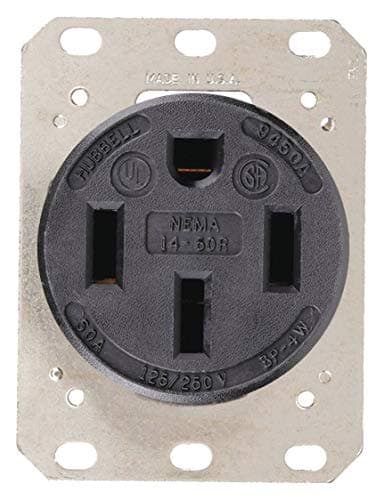
The one part not to save money on
Hubbell HBL9450A NEMA 14-50 Receptacle (industrial)
An industrial-grade 14-50 receptacle. An EV draws 40 A continuously for hours, which is a duty cycle the cheap builder-grade receptacles were never designed for — this is the part that stops a plug-in install from browning its own contacts.
#ad Price as of October 5, 2026. How we make money
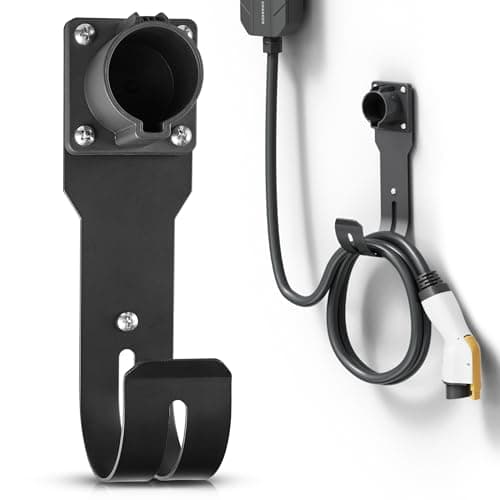
Getting the handle and the cable off the floor
MECMO J1772 Holster Dock and J-Hook
A holster for the handle plus a hook for the loop. The cheapest meaningful upgrade to any charging setup, because a handle that lives on the floor gets stepped on, driven over and eventually fails.
#ad Price as of October 5, 2026. How we make money
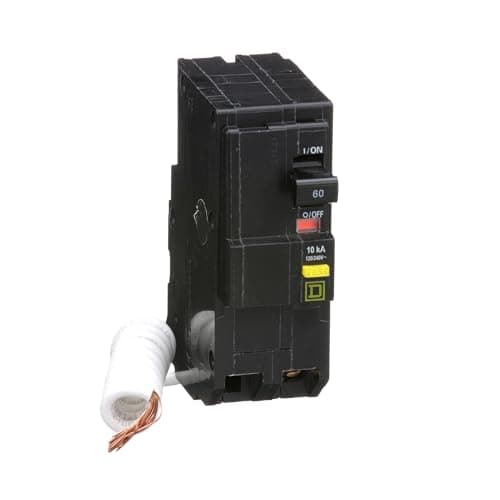
A plug-in charger on a 14-50 receptacle circuit
Square D QO260GFI 60 A 2-Pole GFCI Breaker
If your charger plugs into a receptacle, NEC 625.54 requires GFCI protection on that circuit, and this is the part that provides it. It is also the single most common cause of nuisance tripping in a home charging install.
We earn commission on qualifying purchases at no cost to you. Affiliate disclosure.