The short answer
Model year decides this. 2022 and 2023 Bolt EV and EUV models carry an 11.5 kW / 48 A onboard charger; earlier cars are 7.2 kW. Either way, a 40 A charger is the sensible buy: the Bolt is efficient (EPA 28.1-29.4 kWh per 100 miles) with a modest battery, and EPA's published 240 V charge time is just 7.5 hours.
The Bolt is the car where the whole "do I need 48 amps" debate deflates. It is efficient, its battery is small by current standards, and its EPA charge time at 240 V is shorter than almost anything else on this site. A 40 A charger finishes the job with hours to spare.
The constraint: what this car accepts
Everything else on this page follows from one number. The Chevrolet Bolt EV and EUV's onboard charger accepts a maximum of 11.5 kW, which is 48 amps at 240 volts. No wall charger can exceed it, and a charger rated above it delivers no extra speed.
| Specification | Value | Source |
|---|---|---|
| Maximum AC power accepted | 11.5 kW | Bolt EV/EUV 2022-2023 onboard charger, 11.5 kW |
| Maximum AC current at 240 V | 48 A | Bolt EV/EUV 2022-2023 onboard charger, 11.5 kW |
| Connector | J1772 | Chevrolet electric vehicle charging information |
| EPA range (2023 Bolt EUV) | 247 mi | US DOE / EPA fueleconomy.gov |
| EPA efficiency | 29.4 kWh / 100 mi (115 MPGe) | US DOE / EPA fueleconomy.gov |
| EPA published 240 V charge time | 7.5 hours | US DOE / EPA fueleconomy.gov |
A second trim worth knowing about: EPA lists the 2023 Bolt EV at 28.1 kWh per 100 miles, 259 miles of range, and 7.5 hours at 240 V. That spread is why the trim matters as much as the model when you are sizing a circuit.
The consequence: the circuit you actually need
Take the car's 48 A ceiling and work backwards. NEC 625.42 classifies EV charging as a continuous load, and NEC 625.41 requires overcurrent protection at not less than 125% of the maximum load — so a 48 A charger needs a 60 A two-pole breaker and 6 AWG copper at the 75 degC column of NEC Table 310.16.
| Item | This car | Why |
|---|---|---|
| Charger output | 48 A | Matches the car's 48 A ceiling exactly |
| Power delivered | 11.5 kW | The lower of the charger's output and the car's limit |
| Breaker | 60 A, two-pole | NEC 625.41 — 125% of a continuous load |
| Copper conductor (conduit, 75 degC) | 6 AWG | NEC Table 310.16 |
| A bigger charger would | deliver nothing extra — this is already the car's ceiling | The lower of the two numbers always wins |
Charge times, with the arithmetic shown
EPA rates the 2023 Bolt EUV at 29.4 kWh per 100 miles. That single figure lets you calculate any charge time you like, and it is why we show the formula rather than asserting a number.
hours = (miles x 29.4 / 100) / (kW x 0.9)
At 11.5 kW, this car gains about 35 miles of range per hour
The 0.9 allows for AC-to-DC conversion losses in the onboard charger — roughly 10% of what your meter records never reaches the battery. EPA efficiency figure from the US DOE / EPA fueleconomy.gov service, 2023 Bolt EUV, queried 2026-10-05.
| Charger | Miles added per hour | Hours to add 100 miles |
|---|---|---|
| 16 A (3.8 kW) | 12 | 8h 36m |
| 24 A (5.8 kW) | 18 | 5h 38m |
| 32 A (7.7 kW) | 24 | 4h 15m |
| 40 A (9.6 kW) | 29 | 3h 24m |
| 48 A (11.5 kW) | 35 | 2h 50m |
For context, EPA's own published figure for a full charge at 240 V on this trim is 7.5 hours.
What to buy for a Chevrolet Bolt EV and EUV
Our picks for the Chevrolet Bolt EV and EUV
Both are 48 A units that reach this car's full 11.5 kW. The top pick is the cheapest charger worth owning; the alternative is there because an outdoor install, and anyone who distrusts apps.
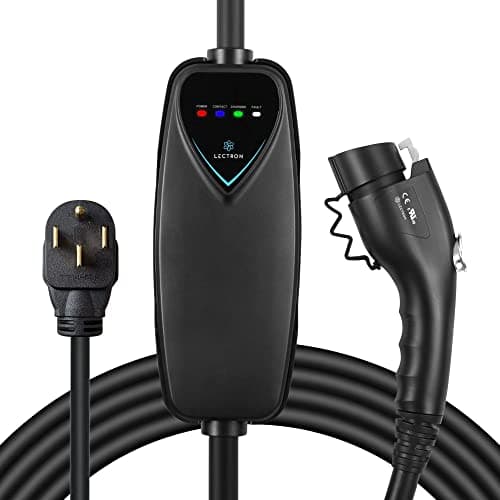
The cheapest charger worth owning
Lectron Level 2 EV Charger (40 A, NEMA 14-50)
A 40 A ETL-certified portable charger for roughly half what the smart units cost. It does one thing, it does it at 9.6 kW, and for a household charging overnight on a flat rate that is the whole job.
#ad Price as of October 5, 2026. How we make money
An outdoor install, and anyone who distrusts apps
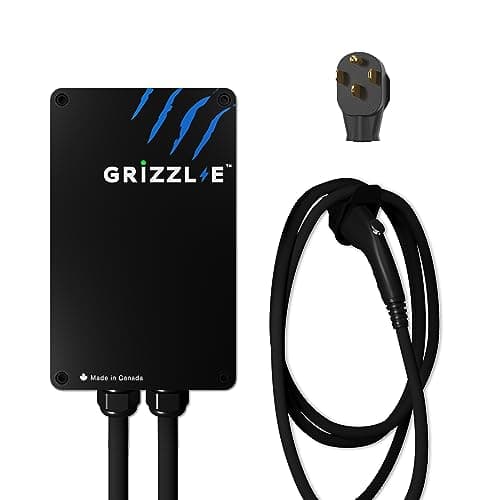
Grizzl-E Classic
A cast-aluminum 40 A charger with dip switches instead of a cloud account. Nothing about it is clever, which is exactly why it is the unit to buy for a driveway post in a cold climate.
We earn commission on qualifying purchases at no cost to you. Affiliate disclosure.
Connector and adapters
The Chevrolet Bolt EV and EUV uses a J1772 port for AC charging, which is what the large majority of home chargers in the US have. No adapter is needed for a J1772 charger.
You need a NACS to J1772 adapter only if you intend to use a Tesla Wall Connector, a Tesla Destination charger or a Tesla Mobile Connector. Rated headroom matters on a part carrying 48 A for eight hours — see best NACS to J1772 adapters.
A J1772 car on a Tesla Wall Connector or Destination charger
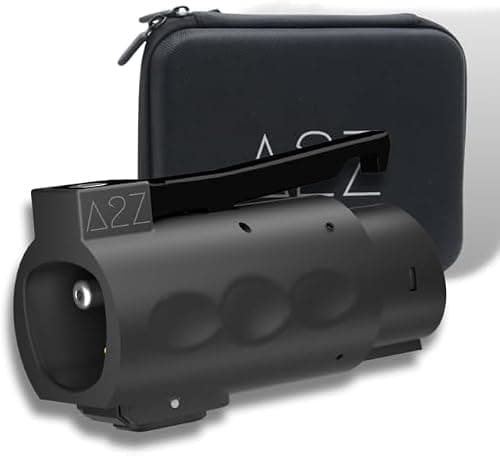
A2Z EV Stellar Plug NACS to J1772 AC Adapter
80 A / 19.2 kW rated, which is genuine headroom over any home charger. The part to buy if a Tesla charger is in the picture.
#ad Price as of October 5, 2026. How we make money
Which Bolt do you have?
| Model years | Onboard charger | Max amps | Charger to buy |
|---|---|---|---|
| 2017-2021 Bolt EV | 7.2 kW | 32 A | 32 A |
| 2022-2023 Bolt EV | 11.5 kW | 48 A | 40 A is plenty; 48 A if the circuit is easy |
| 2022-2023 Bolt EUV | 11.5 kW | 48 A | 40 A is plenty; 48 A if the circuit is easy |
If you have a 2017-2021 car, stop here and buy a 32 A charger on a 40 A breaker with 8 AWG copper. It matches the car exactly, the install is materially cheaper, and nothing is lost.
Why 40 amps is enough on the newer cars
| Charger | Power | Miles per hour (EUV) | Hours for 100 miles |
|---|---|---|---|
| 32 A | 7.7 kW | 24 | 4h 17m |
| 40 A | 9.6 kW | 29 | 3h 25m |
| 48 A | 11.5 kW | 35 | 2h 52m |
Replacing 100 miles takes under three and a half hours at 40 A. The Bolt's EPA range is 247 miles (EUV) and 259 miles (EV), so a full charge from very low at 40 A is comfortably an overnight job — EPA's own figure is 7.5 hours.
The 48 A row saves you about half an hour on 100 miles. Weigh that against 6 AWG copper and a 60 A breaker rather than 8 AWG and 50 A, and the 40 A charger usually wins on a Bolt.
The Bolt's DC limit is the relevant context
Worth knowing because it changes how you use the car: the Bolt's DC fast charging is limited to around 55 kW, which is modest. That makes home charging a larger share of a Bolt owner's total charging than it is for an 800-volt car.
Which is an argument for getting the home install right, not for buying more amps — the constraint on a road trip is the car's DC rate, and no home charger affects that.
The Dual Level Charge Cord
The Bolt EUV shipped with a Dual Level Charge Cord as standard (an option on the Bolt EV), which charges at both 120 V and 240 V at up to 7.2 kW. If you have one, you already own a usable 240 V charging solution — plug it into a verified NEMA 14-50 and you have 7.2 kW with no purchase at all.
That is 24 miles of range per hour on an EUV, which replaces a normal day's driving in under two hours. Before buying anything, check whether the cord in your trunk already solves your problem.
What to buy
The Bolt is the car where a budget charger is genuinely the right purchase rather than a compromise. A 40 A unit with a real ETL or UL listing, a decent cable, and no app does everything this car needs.
Our picks for a Bolt
A cheap 40 A portable and a metal-bodied 40 A wall unit. Neither has load management or an app, and on this car neither needs one.
The cheapest charger worth owning
Lectron Level 2 EV Charger (40 A, NEMA 14-50)
A 40 A ETL-certified portable charger for roughly half what the smart units cost. It does one thing, it does it at 9.6 kW, and for a household charging overnight on a flat rate that is the whole job.
#ad Price as of October 5, 2026. How we make money
An outdoor install, and anyone who distrusts apps
Grizzl-E Classic
A cast-aluminum 40 A charger with dip switches instead of a cloud account. Nothing about it is clever, which is exactly why it is the unit to buy for a driveway post in a cold climate.
The one part not to save money on
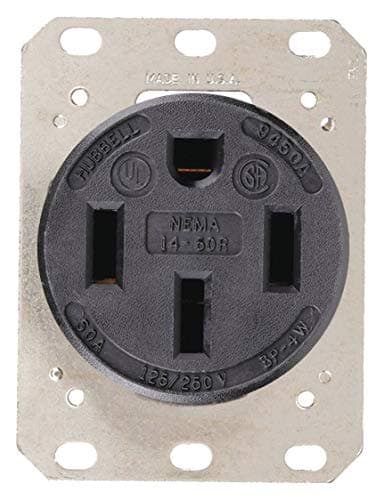
Hubbell HBL9450A NEMA 14-50 Receptacle (industrial)
An industrial-grade 14-50 receptacle. An EV draws 40 A continuously for hours, which is a duty cycle the cheap builder-grade receptacles were never designed for — this is the part that stops a plug-in install from browning its own contacts.
#ad Price as of October 5, 2026. How we make money
We earn commission on qualifying purchases at no cost to you. Affiliate disclosure.