The short answer
Buy the ChargePoint Home Flex unless space is the constraint: it steps through 16, 24, 32, 40, 48 and 50 A in the app, so one unit fits a 100 A panel now and a 200 A panel after an upgrade. Buy the Wallbox Pulsar Plus when the only mounting spot left is narrow — it is under 8 inches square and still delivers the full 48 A / 11.5 kW. The Wallbox costs more and is rated only to -22 degF, the narrowest cold limit of the units we recommend.
Quick picks
Ranked by fit for the stated use case first, then price, then warranty and support. Tap any row to jump to the full assessment. Commission rate plays no part in the order.
| # | Product | Best for | Score | Price |
|---|---|---|---|---|
| 1 | 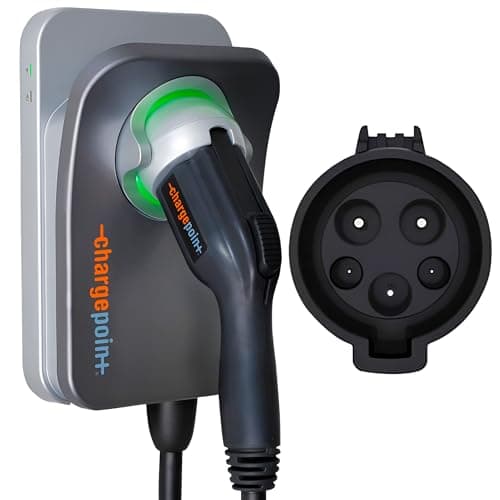 ChargePoint Home Flex (hardwired, 50 A)The most adjustable charger on this page: output steps through 16, 24, 32, 40, 48 and 50 A in the app, so one unit fits almost any panel and can be turned up later if you upgrade the service. | A house whose panel headroom is uncertain | 9.5 | |
| 2 | 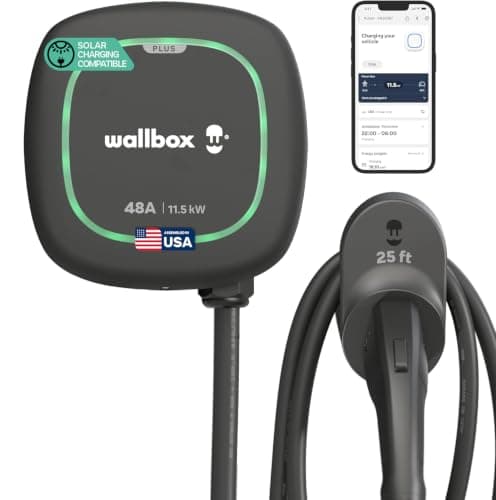 Wallbox Pulsar Plus 48 AA genuinely small 48 A charger — under 8 inches square — which is the deciding factor when the only spot left is a narrow strip of wall beside the panel. | The smallest 48 A unit on a wall | 9.2 | $689.99See the Wallbox Pulsar Plus 48 A $799.99 list · 14% off |
The specifications, side by side
| ChargePoint Home Flex | Wallbox Pulsar Plus 48 A | |
|---|---|---|
| Maximum output | 50 A / 12 kW | 48 A / 11.5 kW |
| Adjustable output | 16, 24, 32, 40, 48, 50 A in the app | Not published in the specifications we cite |
| Cable | 23 ft | 25 ft |
| Connector | J1772 (a NACS version is sold separately) | J1772 |
| Install | Hardwired, or a plug-in version with a NEMA 6-50 / 14-50 cord | Hardwired only |
| Enclosure | Rated for indoor or outdoor | NEMA Type 4 per UL 50E, indoor or outdoor |
| Operating temperature | Not published in the datasheet we cite | -22 degF to 104 degF |
| Size | Not published as a footprint figure | 7.8 in W x 3.9 in D x 7.9 in H |
| Weight | 13.8 lb | Not published in the specifications we cite |
| Warranty | Not published in the datasheet we cite | 3 years limited |
| Input voltage | 240 V | 240 / 208 V |
The case for the ChargePoint
The adjustable range is the whole argument and it is a strong one. Six output levels mean the Home Flex is the one charger you can buy before you know what your panel can support. Set it to 24 A today because the load calculation says so; set it to 48 A in three years when the service is upgraded. Nothing has to be replaced, and the breaker is simply sized at 125% of whatever you choose.
It is also the only unit in this pair with a 50 A / 12 kW ceiling, and the only one offered plug-in as well as hardwired. If the receptacle is already there — a NEMA 14-50 from a previous install, say — that is a meaningfully cheaper path: hardwired vs plug-in sets out the trade.
ChargePoint also has the largest installed base of any home charger in the US and the most mature app of the two, with Alexa and Google Home support. On a unit you will own for a decade, the probability that the company and the app are still there matters.
The case for the Wallbox
Size, and it is not a trivial advantage. At 7.8 by 3.9 by 7.9 inches the Pulsar Plus is the smallest 48 A unit we recommend, and in a crowded garage that is frequently the deciding specification. The strip of wall left beside a panel, between a door frame and a shelf, is the real constraint in more installs than people expect — and a charger that does not fit has no other features.
It delivers the full 48 A / 11.5 kW in that package, with a 25 ft cable — two feet longer than the ChargePoint's, which matters when the car parks nose-out. Its enclosure is specified as NEMA Type 4 per UL 50E, a more precise claim than most manufacturers publish.
The other quiet advantage is Bluetooth control that works without an internet connection, so a scheduled charge survives a Wi-Fi outage. On the ChargePoint, the amperage setting lives in the app and the app expects an account.
Where each one loses
| Unit | What is genuinely against it |
|---|---|
| ChargePoint Home Flex | 23 ft cable is the shortest of the premium units. The adjustable amperage lives in the app, so a phone and a working account stand between you and a setting change. Costs more than units that charge at an identical real-world rate. |
| Wallbox Pulsar Plus 48 A | -22 degF lower limit is the narrowest cold rating of the units we recommend. Hardwired only. Costs more than the Emporia Pro for the same charge rate and without an energy monitor. |
The cold rating is the one to take seriously if the charger lives outdoors or in an unheated garage. Minus 22 degF is comfortably below most winters and comfortably above a cold snap in Minnesota or Maine, which is exactly where it becomes a real question — cold weather EV charging at home covers what actually happens at the limit, and best EV chargers for cold weather ranks the units built for it.
Which one for which house
| Your situation | Buy | Why |
|---|---|---|
| Panel capacity is uncertain, or an upgrade may come later | ChargePoint Home Flex | Six output levels; set it low now and raise it later without replacing anything |
| The only spot left is a narrow strip of wall | Wallbox Pulsar Plus | Under 8 inches square and still a full 48 A |
| A NEMA 14-50 receptacle is already installed | ChargePoint Home Flex (plug-in) | The Wallbox is hardwired only |
| Unheated garage in a cold climate | Neither — look at the Autel AC Lite | Rated to -40 degF, against -22 degF on the Wallbox |
| Your panel is genuinely at its limit | Neither — look at the Emporia Pro | Whole-home load management with the monitor included; see the load-management roundup |
| Price is the deciding factor | Neither — the EVIQO 48 A | The cheapest route to a genuine 11.5 kW |
The verdict
How we compared them
Every unit here is currently purchasable, carries a real UL or ETL certification to an EVSE standard, and comes from a brand with an identifiable North American support path. We checked each one's published specifications against the manufacturer's own documentation on the date shown at the top of this page, and we only credit a charger with a load-management capability its own documentation describes. Reliability notes come from verified owner feedback and are labeled as owner reports — our methodology sets out the whole standard, criterion by criterion. Ranking order is fit for the stated use case first, then price, then warranty and support — commission rate plays no part in it.