The short answer
Buy the MaxiCharger AC Lite unless you already have a 60 A circuit and a car that accepts more than 9.6 kW. The AC Lite delivers 40 A / 9.6 kW on a 50 A breaker, adjusts from 6 to 40 A in 1 A steps, and is rated to -40 degF. The 50 A MaxiCharger raises the ceiling to 50 A, but 50 A continuous needs a 70 A breaker and 4 AWG copper under NEC 625.41, and almost no car on the road can use more than 48 A — so for most households the extra amps are theoretical and the extra circuit cost is not.
Quick picks
Ranked by fit for the stated use case first, then price, then warranty and support. Tap any row to jump to the full assessment. Commission rate plays no part in the order.
| # | Product | Best for | Score | Price |
|---|---|---|---|---|
| 1 | 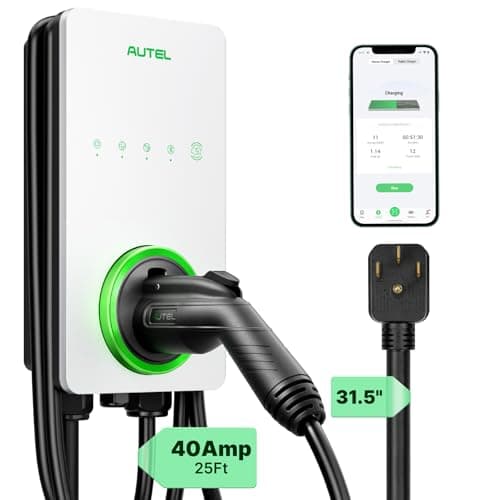 Autel MaxiCharger AC Lite (40 A)The widest output adjustment range here — 6 A to 40 A in the app — plus an operating range down to -40 degF, which makes it the practical pick for an unheated garage in the north. | Cold climates and 1 A output tuning | 9.3 | $424.00See the Autel MaxiCharger AC Lite $470.00 list · 10% off |
| 2 | 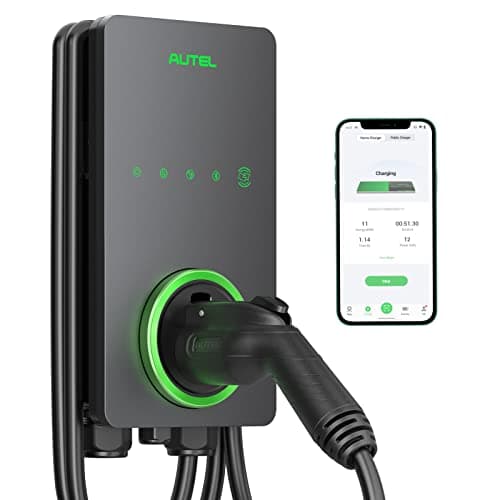 Autel MaxiCharger (50 A, hardwired)The 50 A hardwired MaxiCharger, for a house that has run 6 AWG to a 60 A breaker and wants every amp the circuit allows. | A 50 A circuit you want to use fully | 9.0 | $499.00See the Autel MaxiCharger 50 A $569.00 list · 12% off |
The difference is the circuit, not the charger
These two units share an app, an adjustment range and a manufacturer. What separates them is what has to be in the wall behind them, and that is where the money goes.
| MaxiCharger AC Lite | MaxiCharger 50 A | |
|---|---|---|
| Maximum output | 40 A / 9.6 kW | Up to 50 A |
| Breaker | 50 A dedicated 2-pole | Dedicated 2-pole sized at 125% of the output you set — 70 A at the full 50 A, 60 A if you set it to 48 A |
| Copper conductor at full output | 8 AWG | 4 AWG at 50 A; 6 AWG if you set it to 48 A |
| Adjustable output | 6-40 A via the app, in 1 A steps | Same app and adjustment range |
| Cable | 25 ft, J1772 | J1772 |
| Install | Hardwired or plug-in | Hardwired, indoor or outdoor |
| Enclosure | NEMA 4 | Indoor or outdoor rated |
| Operating temperature | -40 degF to +131 degF | Not published in the specifications we cite |
| Surge protection | Integrated | Not published in the specifications we cite |
| Ground-fault detection | 20 mA CCID | Not published in the specifications we cite |
| Warranty | 36 months | Not published in the specifications we cite |
| Smart | Bluetooth, Wi-Fi and Ethernet | Wi-Fi and Bluetooth |
What 10 extra amps actually buys
At 240 V, the difference between 40 A and 50 A is about 2.4 kW. That sounds like a lot until you check what the car will accept.
40 A x 240 V = 9.6 kW against 48 A x 240 V = 11.5 kW
About 1.9 kW, on a car that can take it
Almost no vehicle sold in the US accepts more than 11.5 kW on AC, so the 50 A unit's last two amps are unusable on nearly every car. Check yours against the onboard charger limits table before you pay for them.
On a car limited to 11.5 kW — which is most battery EVs — the honest gain from the bigger unit is the step from 9.6 kW to 11.5 kW, not from 9.6 kW to 12 kW. On a plug-in hybrid capped at 32 A or 7.2 kW, the gain is zero: both chargers will be throttled by the car. Best EV chargers for a plug-in hybrid covers that case properly.
Translated into the only unit that matters, overnight: a 40 A charger replaces roughly 30 miles of range per hour on a typical BEV, a 48 A one roughly 37. Both fill an empty battery between dinner and breakfast. If your charging window is eight hours, the difference is invisible.
What the AC Lite has that the bigger unit does not
This is the part that flips the decision for a lot of buyers. The AC Lite is the better-documented product, and three of its published specifications are genuinely differentiating:
- -40 degF to +131 degF operating range — the widest of any unit we recommend, and a real consideration for a detached or unheated garage in the north.
- Integrated surge protection, which most chargers leave to a panel-mounted device. If you were going to buy one of those anyway, factor the saving in — EV charger surge protection explains what it is for.
- 6 to 40 A in 1 A steps, the finest output adjustment on any charger we rank. When a load calculation comes back at 37 A, that precision is worth more than a higher ceiling you cannot use.
It also publishes a 25 ft cable, a NEMA 4 enclosure, 20 mA CCID ground-fault detection and a 36-month warranty. Autel does not publish equivalent figures for the 50 A unit in the material we cite, and we are not going to assume they carry over.
When the 50 A unit is the right buy
There is a real case for it, and it is narrow. Buy the 50 A MaxiCharger when all three of these are true:
- The circuit already exists — at least 6 AWG copper on a 60 A breaker, run for a previous charger or specified for one during a build. The expensive part is done, and you can set the unit to 48 A on it. The full 50 A needs 4 AWG on a 70 A breaker, which very few houses have.
- Your car accepts more than 9.6 kW. On a 48 A vehicle the step up is real; on a 32 A one it is nothing.
- You hardwire. The 50 A unit is hardwired, which is the correct install at this current anyway — a receptacle circuit carries only 80% of its rating continuously.
Which one for which house
| Your situation | Buy | Why |
|---|---|---|
| A new circuit, and a typical 48 A car | MaxiCharger AC Lite | 9.6 kW on 8 AWG and a 50 A breaker; the cheaper circuit is where the saving is |
| 6 AWG on a 60 A breaker already in the wall, and a car that takes 11.5 kW | MaxiCharger 50 A, set to 48 A | The expensive part is done — use the headroom you already paid for |
| A plug-in hybrid, or any 32 A car | MaxiCharger AC Lite | The car throttles both units to the same speed; see best chargers for a PHEV |
| Unheated garage, hard winters | MaxiCharger AC Lite | -40 degF rating; Autel does not publish an operating range for the 50 A unit |
| A load calculation that lands at an awkward number | Either — but set it in 1 A steps | Both share the app's 1 A granularity, which is the point of buying Autel |
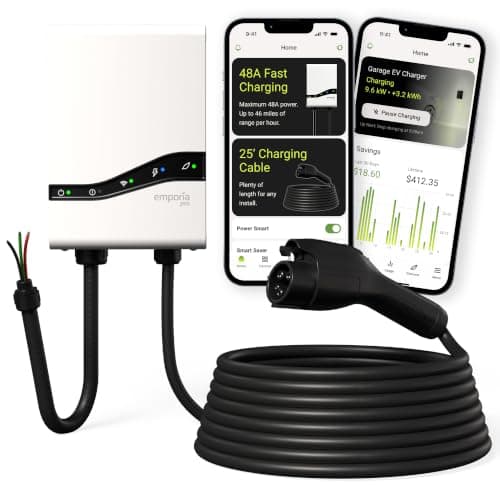
| A tight panel that needs real throttling | Neither — look at the Emporia Pro | Whole-home load management; see the load-management roundup |
The verdict
How we compared them
Every unit here is currently purchasable, carries a real UL or ETL certification to an EVSE standard, and comes from a brand with an identifiable North American support path. We checked each one's published specifications against the manufacturer's own documentation on the date shown at the top of this page, and we only credit a charger with a load-management capability its own documentation describes. Reliability notes come from verified owner feedback and are labeled as owner reports — our methodology sets out the whole standard, criterion by criterion. Ranking order is fit for the stated use case first, then price, then warranty and support — commission rate plays no part in it.