The short answer
The hardwired Autel MaxiCharger (50 A) is worth buying for the hardwiring and the weather rating, not for the 50 amps. It delivers up to 12 kW, but 50 A continuous requires a 70 A breaker and 4 AWG copper under NEC 625.41, and essentially no car on sale accepts more than 48 A. Set it to 40 or 48 and it is an excellent charger.
We checked this unit's published specifications against the manufacturer's own documentation on the date shown at the top of this page, and confirmed it is currently purchasable before writing a word of it. We verify specifications; we do not bench-test hardware — our methodology says so in plain terms, and anything in the "known issues" section below is labeled as owner reports rather than a finding of ours. Commission rate plays no part in the verdict or in which alternative we point you at.
What this unit actually is
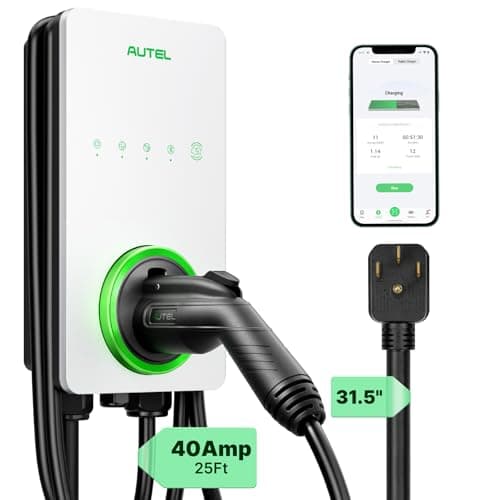
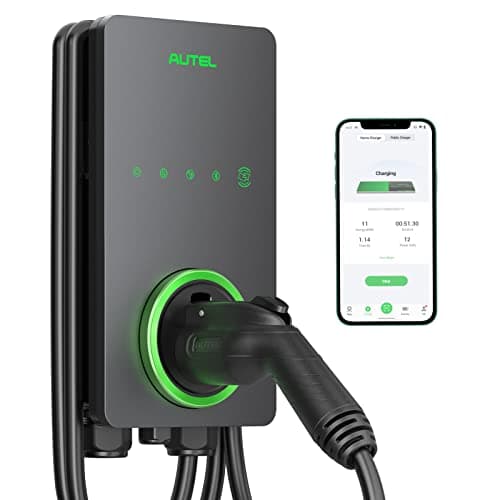
Autel sells the MaxiCharger home line in two shapes that look nearly identical on a wall. One is the plug-in [AC Lite](/chargers/autel-maxicharger-ac-lite-review), a 40 A unit on a NEMA 14-50 cord. The other is this one: the same enclosure and the same app, wired directly into a junction box, with the output ceiling raised to 50 A. There is no plug, no receptacle and no cord cap — the supply conductors land on terminals inside the unit.
Autel's current listing for this SKU specifies J1772, a 25 ft cable, Wi-Fi and Bluetooth app control, an indoor/outdoor rating, and an adjustable output range of 16 to 50 A. Autel's published specification sheet for the 12 kW MaxiCharger platform gives a NEMA 4 enclosure, an operating range of -40 degF to +131 degF, conformance to UL 2594, UL 2231-1 and UL 2231-2 with NEC Article 625, and a 36 month warranty.
The 50 amps is real. The circuit behind it is the catch.
This is the part of the listing that costs people money, so it goes near the top. EV charging is a continuous load under NEC 625.42, and NEC 625.41 requires the overcurrent device to be rated at not less than 125% of that load. Run the arithmetic for 50 A and the answer is not a 60 A breaker.
50 A x 1.25 = 62.5 A
62.5 A minimum, which rounds up to a 70 A two-pole breaker
62.5 A is not a standard overcurrent device size, so the next standard size up applies. A 60 A breaker carries 48 A continuous, not 50.
A 70 A breaker needs conductors with at least 70 A of ampacity. At 75 degC terminations, 6 AWG copper is good for 65 A and 4 AWG for 85 A — so the wire goes up a size too. That jump is where a 50 A install stops being a setting in an app and becomes a materially more expensive run: thicker conductors, a bigger conduit, longer labor, and in a lot of houses a load calculation that no longer passes.
| Output you set | Power at 240 V | Breaker | Copper at 75 degC |
|---|---|---|---|
| 32 A | 7.7 kW | 40 A | 8 AWG |
| 40 A | 9.6 kW | 50 A | 8 AWG |
| 48 A | 11.5 kW | 60 A | 6 AWG |
| 50 A | 12 kW | 70 A | 4 AWG |
And your car almost certainly cannot use it
The second half of the problem is on the other end of the cable. A charger never decides the charge rate on its own — it offers a current, and the car's onboard charger takes as much of it as it is built to take. The ceiling for nearly every BEV sold in the US is 11.5 kW, which is 48 A. A Tesla Model Y, a Hyundai Ioniq 5, a Kia EV6, a Ford Mustang Mach-E: all 48 A or less. Our onboard charger limits table lists every model we cover with the source for its figure.
(50 A - 48 A) x 240 V = 480 W, offered but not accepted
zero additional miles per hour
The car negotiates down to its own limit. The charger's higher ceiling is simply never reached.
So the honest read on the 50 A number is that it is a headroom specification, not a performance one. It matters if you are among the small number of households with a vehicle that accepts more than 11.5 kW on AC — some Ford F-150 Lightning Extended Range trims, for example — and a service big enough to feed it. For everyone else it is a line on a box.
What it needs from your electrical system
| Item | Requirement | Basis |
|---|---|---|
| Charger output | Adjustable, up to 50 A / 12 kW | Manufacturer published |
| Supply | Hardwired — no receptacle, no plug | Manufacturer published |
| Breaker at 48 A output | 60 A, two-pole | NEC 625.41 — 125% of a continuous load |
| Breaker at 50 A output | 70 A, two-pole | NEC 625.41, rounded to the next standard size |
| Copper conductor (conduit, 75 degC) | 6 AWG at 48 A, 4 AWG at 50 A | NEC Table 310.16 |
| GFCI breaker | Not required on a hardwired unit — the charger's own CCID handles ground-fault detection | NEC 625.54 applies to receptacle circuits |
| Enclosure rating | NEMA 4, indoor or outdoor | Autel specification sheet |
| Operating temperature | -40 degF to +131 degF | Autel specification sheet |
That GFCI row is one of the real reasons to buy this version rather than the plug-in AC Lite. NEC 625.54 puts a GFCI breaker on a receptacle circuit, and the interaction between a Class A breaker tripping at 5 mA and an EVSE with its own ground-fault detection is the single most common source of nuisance tripping in home charging. Hardwiring removes the receptacle, and with it the second ground-fault device. Our guide on why an EV charger trips the GFCI breaker covers the mechanism.
Where it beats the plug-in AC Lite
- No receptacle in the circuit. A NEMA 14-50 outlet is a mechanical connection carrying 40 A continuous for years, and a cheap one is a genuine heat risk. Hardwiring deletes that failure mode entirely — see hardwired vs plug-in.
- No GFCI breaker required. Less to nuisance-trip at 2am, and a cheaper breaker.
- Headroom above 48 A if your household ever has a vehicle and a service that can use it. The output is adjustable, so you can set it low now and raise it later.
- The same cold rating as the AC Lite. Autel publishes -40 degF on the MaxiCharger enclosure, the widest cold figure we have found in print and a real differentiator for an unheated garage in the north. Our cold weather charger roundup puts that in context.
Who should buy something else
Four honest cases, and we would rather lose the click than pretend they are edge cases:
- You want the charger to move house with you. Hardwired units stay on the wall. Renters and anyone with a move in sight should be reading best plug-in EV chargers instead.
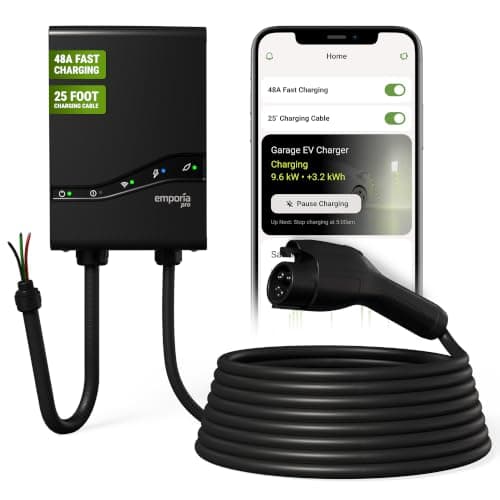
- You want 48 A for less money. Several units hardwire at the full 11.5 kW — the same speed every 48 A car will ever see. Start at best 48 amp EV chargers.
- You want the adjustable range, not the ceiling. The AC Lite adjusts from 6 A in 1 A steps, a finer bottom end than this unit's 16 A floor and genuinely useful when a load calculation lands awkwardly.
- Your panel is already tight. A 70 A circuit is a big ask of a 100 A service and often of a 200 A one. Run the numbers with our load calculation guide, or look at chargers for a 100 A panel.
Known issues, from owner reports
Labeled as owner reports rather than tested findings. These are the patterns that recur across the MaxiCharger line.
- People buy it for the 50 A and install a 60 A circuit. Then the app will not let them select 50, and the unit looks broken. It is not — a 60 A breaker is a 48 A circuit, and the charger is refusing to be set above what the supply supports.
- The app is the only way to change output. There is no dip switch and no physical selector. A phone, an account and a working radio stand between you and an amperage change, which is the opposite philosophy from a Grizzl-E.
- Wi-Fi setup is the common first-day complaint. The unit also speaks Bluetooth, which is the usual workaround when the garage sits at the edge of the house network.
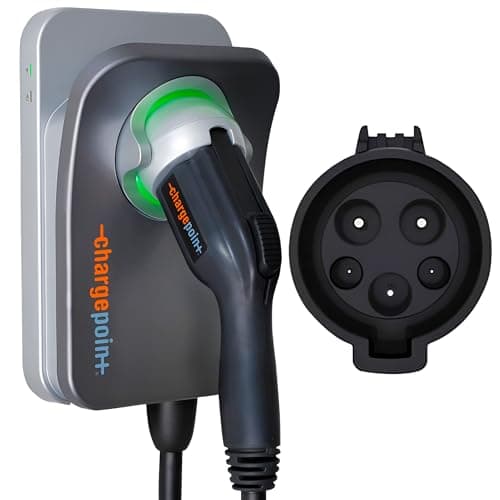
- Autel's North American consumer support is newer than ChargePoint's or Tesla's. The warranty term is competitive; the support path behind it has less history. Our warranty comparison explains why we weight that.
The verdict
A 50 A circuit you want to use fully
Autel MaxiCharger (50 A, hardwired)
Hardwired, NEMA 4, -40 degF rated, 25 ft cable, and adjustable output so you can match it to the circuit you can actually run.