Skip to content
EV & Charger

Our picks

Best 50 Amp EV Chargers

Three units genuinely deliver 50 amps. Doing it to code takes a 70 amp breaker and 4 AWG copper, and almost no car can use the result - so this page also covers when to stop at 48.

By Mike M.Published Last verified

A wall-mounted Level 2 EV charger installed on the exterior wall of a house

The short answer

The ChargePoint Home Flex is the best 50 amp EV charger — it is the only mainstream home unit with a 50 A level you can actually select, and it steps down through five lower levels if your panel cannot carry it. But read the circuit first: NEC 625.41 sizes overcurrent protection at 125% of a continuous load, so 50 A output needs a 70 amp breaker and 4 AWG copper, and essentially no car on sale accepts more than 48 A. For most households the honest answer is a 48 A charger on a 60 A circuit.

Quick picks

Ranked by fit for the stated use case first, then price, then warranty and support. Tap any row to jump to the full assessment. Commission rate plays no part in the order.

#ProductBest forScorePrice
1
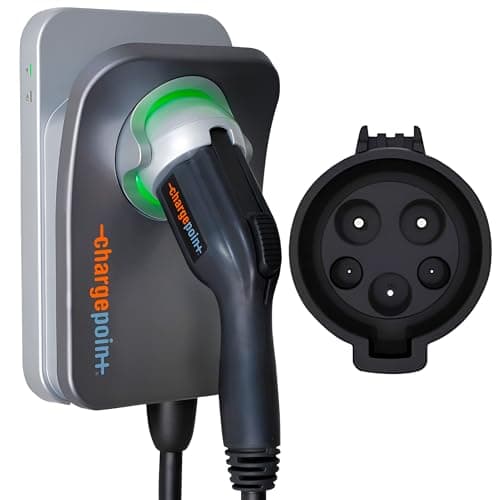
ChargePoint Home Flex (hardwired, 50 A)
ChargePoint Home Flex (hardwired, 50 A)The most adjustable charger on this page: output steps through 16, 24, 32, 40, 48 and 50 A in the app, so one unit fits almost any panel and can be turned up later if you upgrade the service.
A house whose panel headroom is uncertain8.9
2
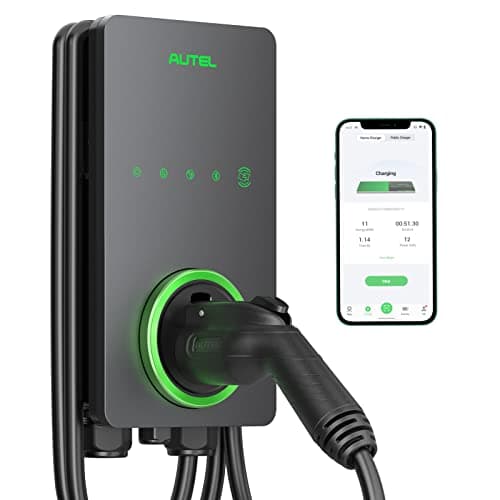
Autel MaxiCharger (50 A, hardwired)
Autel MaxiCharger (50 A, hardwired)The 50 A hardwired MaxiCharger, for a house that has run 6 AWG to a 60 A breaker and wants every amp the circuit allows.
A 50 A circuit you want to use fully8.2
$499.00View on Amazon

$569.00 list · 12% off

3
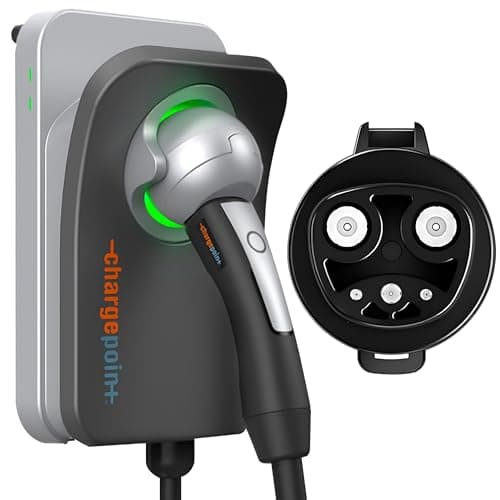
ChargePoint Home Flex NACS (hardwired)
ChargePoint Home Flex NACS (hardwired)A NACS-handled Home Flex: the same adjustable 16-50 A hardware with a Tesla-shaped plug, which removes the adapter from a Tesla owner's daily routine without locking them into Tesla's ecosystem.
A Tesla household that wants a non-Tesla app8.7
4
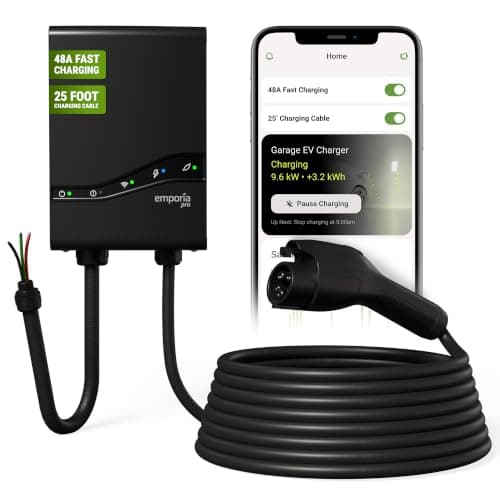
Emporia Pro Level 2 EV Charger
Emporia Pro Level 2 EV ChargerThe best-balanced 48 A charger for a typical US house: full 11.5 kW hardwired, and the only unit at this price that ships with a whole-home energy monitor so its load management is reading your actual panel rather than guessing.
Most households, and anyone with a tight panel9.0
5
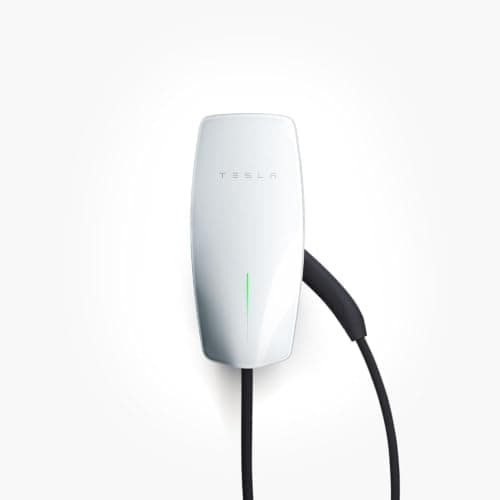
Tesla Wall Connector (Gen 3)
Tesla Wall Connector (Gen 3)If every car in the driveway is a Tesla, this is the cleanest answer: 48 A, a 24 ft cable, and a handle that opens the charge port for you — but it is NACS-only, so a J1772 car needs an adapter every single time.
A Tesla-only household8.8

"50 amp" means two completely different things

This is the most common mix-up in home charging and it is worth clearing up before you spend anything. When people search for a 50 amp EV charger they usually mean one of two things, and the two lead to different purchases.

Two meanings of "50 amp"
What you meanWhat you needWhere to go
A charger that outputs 50 AA 70 A breaker, 4 AWG copper, and a car that can use more than 11.5 kWThis page
A charger for a 50 A circuit or a NEMA 14-50 outletA 40 A charger — a receptacle circuit delivers only 80% of its rating continuouslyBest 40 A chargers
The fastest charger a normal house can run48 A hardwired on a 60 A breaker with 6 AWG copperBest 48 A chargers
The 80% figure is the continuous-load limit a receptacle circuit carries once NEC 625.41's 125% rule is applied in reverse: 80% of 50 A is 40 A, which is why every plug-in Level 2 charger sold in the US is capped at 40 A.

The circuit 50 amps actually requires

NEC 625.42 classifies EV charging as a continuous load, and 625.41 then requires overcurrent protection rated not less than 125% of that load. The arithmetic is the whole story on this page.

Breaker for 50 A continuous output

50 A x 1.25

62.5 A minimum, which rounds up to a 70 A breaker

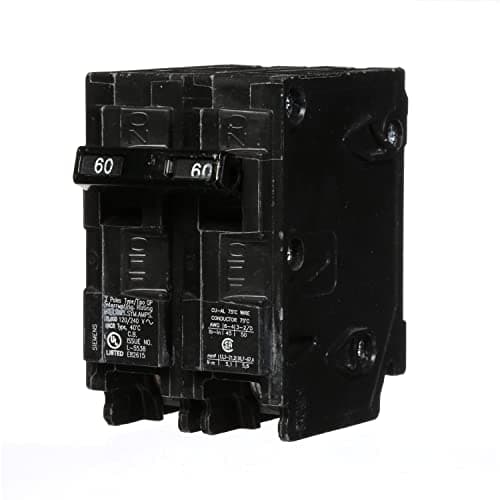
62.5 A is not a standard overcurrent device size, so the next standard size up applies. That is a 70 A two-pole breaker, not the 60 A a 48 A install uses.

What each output level costs you in the panel
Charger outputBreakerCopper in conduit (75 degC)Load added to your calculation
32 A / 7.7 kW40 A8 AWG40 A
40 A / 9.6 kW50 A8 AWG50 A
48 A / 11.5 kW60 A6 AWG60 A
50 A / 12 kW70 A4 AWG70 A
Breaker sizes per NEC 625.41's 125% rule with EV charging classified continuous by 625.42. Conductor sizes per NEC Table 310.16 at 75 degC terminations. The jump from 6 AWG to 4 AWG is where a 50 A install stops being a settings change and becomes a materially more expensive run.

Can your car use 50 amps? Almost certainly not

The onboard charger in the car is the real ceiling, not the wall unit. Feeding 50 A to a car that accepts 48 A just means the car draws 48 A.

Vehicles against a 50 A supply
Vehicle groupMax AC acceptedBenefits from 50 A?
Tesla Model Y, Model 3 Premium/Performance, Cybertruck11.5 kW / 48 ANo — 48 A is the ceiling
Rivian R1T/R1S, Equinox EV, Blazer EV, Bolt 2022+11.5 kW / 48 ANo
Ioniq 5 and 6, EV6, EV9, ID.4, i4, iX, Polestar10.5-11 kWNo — the car draws less than 48 A
Plug-in hybrids, Model 3 Standard RWD, Q4 35 e-tron7.2-7.7 kW / 32 ANo — buy 32 A
F-150 Lightning extended range, Hummer EV 2024+19.2 kW / 80 AYes, and they want more than 50 A — an 80 A unit on a 100 A circuit
Per-vehicle figures verified against each manufacturer's published specification; sources on the individual vehicle pages. The full table is on onboard charger limits by model.

That last row is the only honest case for buying above 48 A, and even then a 50 A charger is the wrong answer — a dual-onboard-charger truck wants the 80 A hardware its own manufacturer sells, on a circuit most houses cannot supply.

The picks, and who each is for

1. ChargePoint Home Flex — the only real 50 A choice

ChargePoint Home Flex (hardwired, 50 A)

A house whose panel headroom is uncertain

ChargePoint Home Flex (hardwired, 50 A)

Six selectable output levels — 16, 24, 32, 40, 48 and 50 A — so it is the one charger that can be wired for 32 A today and turned up after a service upgrade.

$549.00View on Amazon

#ad Price as of October 10, 2026. How we make money

The Home Flex is the reason this page exists. Its 12 kW ceiling is the highest of any mainstream home unit, and the output level is a setting rather than a model variant. If you genuinely want 50 A, this is the purchase. If you are not sure what your panel will take, it is also the purchase — the ability to commission at 32 A and raise it later is worth more than the 2 A at the top. The cable is 23 ft, the shortest of the premium units, so measure first: our mounting height and position guide covers the method.

2. Autel MaxiCharger 50 A — hardwired, finer steps

Autel MaxiCharger (50 A, hardwired)

A 50 A circuit you want to use fully

Autel MaxiCharger (50 A, hardwired)

The hardwired MaxiCharger with a 50 A ceiling and Autel's 1 A adjustment range, which matters when a load calculation lands on an odd number.

$499.00View on Amazon

$569.00 list · 12% off

#ad Price as of October 10, 2026. How we make money

Autel's adjustment granularity is the differentiator. Where the ChargePoint steps between six fixed levels, the MaxiCharger app sets output in 1 A increments — so if your electrician's calculation says 37 A is the most your service can carry, you can set exactly 37 A rather than dropping to 32. It is hardwired only, which removes the receptacle as a failure point and removes the GFCI requirement that comes with one.

3. ChargePoint Home Flex NACS — the same unit for a Tesla

ChargePoint Home Flex NACS (hardwired)

A Tesla household that wants a non-Tesla app

ChargePoint Home Flex NACS (hardwired)

Identical hardware and the same six output levels with a NACS handle, so a Tesla plugs in without an adapter.

$549.00View on Amazon

#ad Price as of October 10, 2026. How we make money

Mechanically the same charger with the connector swapped. Worth noting that for a mixed household this is the better NACS buy than a Tesla Wall Connector: a J1772 car needs an adapter either way, and the ChargePoint gives you output flexibility the Tesla does not. Our NACS home chargers roundup covers the full set.

4 and 5. The 48 A units most people should buy instead

What to buy if you decide 48 A is enough

A 48 A charger on a 60 A breaker gives you 11.5 kW, which is the exact onboard limit of most current battery EVs. The install is cheaper, the wire is one size smaller, and no car notices the difference.

Emporia Pro Level 2 EV Charger

Most households, and anyone with a tight panel

Emporia Pro Level 2 EV Charger

The best-balanced 48 A charger for a typical US house: full 11.5 kW hardwired, and the only unit at this price that ships with a whole-home energy monitor so its load management is reading your actual panel rather than guessing.

$599.00View on Amazon

#ad Price as of October 10, 2026. How we make money

Tesla Wall Connector (Gen 3)

A Tesla-only household

Tesla Wall Connector (Gen 3)

If every car in the driveway is a Tesla, this is the cleanest answer: 48 A, a 24 ft cable, and a handle that opens the charge port for you — but it is NACS-only, so a J1772 car needs an adapter every single time.

$883.99View on Amazon

#ad Price as of October 10, 2026. How we make money

We earn commission on qualifying purchases at no cost to you. Affiliate disclosure.

The Emporia Pro is our overall pick in this power class: 25 ft of cable, a 48 A hardwired output and load management that reads whole-home draw through an included energy monitor, which is the feature that lets a marginal panel take a charger at all. The Tesla Wall Connector is the cleaner answer for a Tesla-only driveway, with a 24 ft cable and a handle that opens the charge port. They are set against each other on Emporia Pro vs Tesla Wall Connector.

What we ranked on

  • A 50 A output you can actually select, not a 50 A nameplate on a unit that ships capped lower.
  • Step-down range, because the most valuable thing about a 50 A-capable charger is that it also works at 32 A on a panel that cannot take more.
  • Hardwired capability. 50 A cannot be delivered through a receptacle at all — no standard residential plug configuration carries 50 A continuously.
  • Cable length, where the ChargePoint's 23 ft is the weakest figure of any unit on this page.
  • Whether the extra output is honest. We will not rank a charger higher for a specification no vehicle can use.

How we picked

Every unit here is currently purchasable, carries a real UL or ETL certification to the relevant standard, and comes from a brand with an identifiable North American support path. We verified each one's published specifications against the manufacturer's own documentation on the date shown at the top of this page. We verify specifications; we do not bench-test hardware, and our methodology says so in plain terms. Ranking order is fit for the stated use case first, then price, then warranty and support — commission rate plays no part in it. On this page specifically, the ranking deliberately ends with two 48 A units, because recommending a 70 A circuit to someone whose car tops out at 48 A would be ranking the specification instead of the buyer.
In detail

Every pick, assessed

Top pick · A house whose panel headroom is uncertain

ChargePoint Home Flex (hardwired, 50 A)

ChargePoint Home Flex (hardwired, 50 A) charger

8.9/ 10

$549.00View on Amazon

#ad Price as of October 10, 2026. How we make money

Our verdict

The most adjustable charger on this page: output steps through 16, 24, 32, 40, 48 and 50 A in the app, so one unit fits almost any panel and can be turned up later if you upgrade the service.

What works

  • Six selectable output levels mean one unit fits a 100 A panel today and a 200 A panel after an upgrade
  • 12 kW ceiling is the highest here, which matters only for the handful of cars that accept more than 11.5 kW
  • Mature app with Alexa and Google Home support, and the largest installed base of any home charger in the US
  • Available in both J1772 and NACS, hardwired or plug-in

What doesn't

  • 23 ft cable is the shortest of the premium units — measure before you commit to a mounting spot
  • The adjustable amperage lives in the app, so a phone and a working account stand between you and a setting change
  • Costs more than units that charge at an identical real-world rate
ChargePoint Home Flex (hardwired, 50 A) specifications
Max output50 A / 12 kW (240 V x 50 A)
Adjustable output16, 24, 32, 40, 48, 50 A, set in the app
BreakerDedicated 2-pole rated 125% of the output you set — a 50 A breaker for 40 A output
Cable23 ft
ConnectorJ1772 (a NACS version is sold separately)
InstallHardwired, or NEMA 6-50 / NEMA 14-50 input cord on the plug-in version
Weight13.8 lb

Specifications checked against ChargePoint Home Flex datasheet. We verify published specifications; we do not bench-test hardware — how we assess products.

How it scored

Fit to a typical panel
9.6
Charge rate
9.3
Cable and reach
7.8
Smart features
9.0
Weather and build
8.8
Warranty and support
8.8
Pick 2 · A 50 A circuit you want to use fully

Autel MaxiCharger (50 A, hardwired)

Autel MaxiCharger (50 A, hardwired) charger

8.2/ 10

$499.00View on Amazon

$569.00 list · 12% off

#ad Price as of October 10, 2026. How we make money

Our verdict

The 50 A hardwired MaxiCharger, for a house that has run 6 AWG to a 60 A breaker and wants every amp the circuit allows.

What works

  • 50 A ceiling covers the few cars that accept more than 11.5 kW
  • Same app and adjustment range as the AC Lite
  • Hardwired, so no receptacle to heat up

What doesn't

  • Almost no car on the road can use more than 48 A, so the extra 2 A is theoretical
  • Needs a 63 A or larger breaker to run at 50 A, which many panels cannot give up
  • More expensive than the 40 A unit for a difference most drivers will never see
Autel MaxiCharger (50 A, hardwired) specifications
Max outputUp to 50 A
BreakerDedicated 2-pole sized at 125% of the output you set
ConnectorJ1772
InstallHardwired, indoor or outdoor
SmartWi-Fi and Bluetooth

Specifications checked against ENERGY STAR certified EVSE listing. We verify published specifications; we do not bench-test hardware — how we assess products.

Pick 3 · A Tesla household that wants a non-Tesla app

ChargePoint Home Flex NACS (hardwired)

ChargePoint Home Flex NACS (hardwired) charger

8.7/ 10

$549.00View on Amazon

#ad Price as of October 10, 2026. How we make money

Our verdict

A NACS-handled Home Flex: the same adjustable 16-50 A hardware with a Tesla-shaped plug, which removes the adapter from a Tesla owner's daily routine without locking them into Tesla's ecosystem.

What works

  • No adapter dangling off the handle for a Tesla, Cybertruck or 2025+ Ioniq 5
  • Keeps ChargePoint's app, scheduling and cost tracking
  • Steps down to 16 A for a small panel

What doesn't

  • A second, J1772 car in the house now needs the adapter instead
  • 23 ft cable
  • Costs the same as the J1772 version for hardware that is less universal
ChargePoint Home Flex NACS (hardwired) specifications
Max output50 A / 12 kW
Adjustable output16, 24, 32, 40, 48, 50 A
ConnectorNACS (J3400)
Cable23 ft
InstallHardwired
Non-Tesla carsNeeds a NACS-to-J1772 adapter

Specifications checked against ChargePoint Home Flex datasheet. We verify published specifications; we do not bench-test hardware — how we assess products.

Pick 4 · Most households, and anyone with a tight panel

Emporia Pro Level 2 EV Charger

Emporia Pro Level 2 EV Charger charger

9.0/ 10

$599.00View on Amazon

#ad Price as of October 10, 2026. How we make money

Our verdict

The best-balanced 48 A charger for a typical US house: full 11.5 kW hardwired, and the only unit at this price that ships with a whole-home energy monitor so its load management is reading your actual panel rather than guessing.

What works

  • Hardwires at the full 48 A for 11.5 kW — matches the onboard limit of most current BEVs exactly
  • PowerSmart load management reads whole-home draw through the included Vue monitor, so it can throttle instead of tripping a breaker
  • 25 ft cable reaches across a two-car garage without an extension
  • NEMA 4 enclosure and a real UL listing, not just an ETL mark

What doesn't

  • The energy monitor has to be installed in the panel to be useful, which means the electrician is in there longer
  • App-dependent for scheduling — there is no physical timer
  • At 40 A on the plug-in version you are paying for 48 A of hardware you cannot use
Emporia Pro Level 2 EV Charger specifications
Max output48 A / 11.5 kW hardwired; 40 A / 9.6 kW on a NEMA 14-50 plug
Breaker60 A dedicated 2-pole for 48 A; 50 A for 40 A
Cable25 ft
ConnectorJ1772 or NACS, chosen at purchase
EnclosureNEMA 4, indoor or outdoor
CertificationUL certified, ENERGY STAR
Warranty3 years
Load managementPowerSmart, with the Vue home energy monitor included

Specifications checked against Emporia Pro sell sheet. We verify published specifications; we do not bench-test hardware — how we assess products.

How it scored

Fit to a typical panel
9.4
Charge rate
9.0
Cable and reach
9.0
Smart features
9.2
Weather and build
8.6
Warranty and support
8.4
Pick 5 · A Tesla-only household

Tesla Wall Connector (Gen 3)

Tesla Wall Connector (Gen 3) charger

8.8/ 10

$883.99View on Amazon

#ad Price as of October 10, 2026. How we make money

Our verdict

If every car in the driveway is a Tesla, this is the cleanest answer: 48 A, a 24 ft cable, and a handle that opens the charge port for you — but it is NACS-only, so a J1772 car needs an adapter every single time.

What works

  • 24 ft cable, the longest of the mainstream premium units
  • Auto-sensing handle opens a Tesla charge port without touching the car
  • Power sharing lets two units share one circuit, which is rare at this price
  • Wi-Fi with over-the-air firmware updates

What doesn't

  • NACS only — every J1772 car in the household needs an adapter on the handle
  • Hardwired only, so it is not coming with you if you move out of a rental
  • Setup runs through Tesla's app flow even if you do not own a Tesla
Tesla Wall Connector (Gen 3) specifications
Max output48 A / 11.5 kW
Output range12-48 A
Input200-240 V AC single phase
Breaker60 A dedicated 2-pole for 48 A output
Cable24 ft
ConnectorNACS
InstallHardwired

Specifications checked against Tesla Gen 3 Wall Connector installation manual. We verify published specifications; we do not bench-test hardware — how we assess products.

How it scored

Fit to a typical panel
8.8
Charge rate
9.0
Cable and reach
9.6
Smart features
8.6
Weather and build
9.2
Universality
5.5

FAQ

Questions people actually ask

What is the best 50 amp EV charger?

The ChargePoint Home Flex. It is the only mainstream home charger with a selectable 50 A output level, and it also steps down to 16, 24, 32, 40 and 48 A, so one unit covers almost any panel.

What breaker does a 50 amp EV charger need?

A 70 amp two-pole breaker. NEC 625.41 requires overcurrent protection at not less than 125% of a continuous load, and 50 x 1.25 = 62.5 A, which rounds up to the next standard size of 70 A. Conductors are 4 AWG copper at 75 degC terminations.

Can I plug a 50 amp charger into a NEMA 14-50 outlet?

No. A receptacle circuit carries only 80% of its rating continuously, so a 50 A outlet supports a 40 A charger. Every plug-in Level 2 charger sold in the US is capped at 40 A for exactly this reason.

Is a 50 amp charger faster than a 48 amp charger?

On paper, by about 0.5 kW. In practice, no: almost every EV on sale accepts a maximum of 48 A or less, so the car draws the same current from either charger. The exceptions are the extended-range F-150 Lightning and the 2024-on Hummer EV, which want more than 50 A.

Why do installers set a 50 amp charger to 48 amps?

Because 48 A fits a 60 A breaker and 6 AWG copper, which most panels and most wall cavities can take, while 50 A needs a 70 A breaker and 4 AWG. The output difference is invisible to the car, so the smaller circuit is the better engineering.

Sources

What we checked this against

Read next

Disclosure. Some links on this page are affiliate links. If you buy through one, we earn a commission at no extra cost to you. We are a participant in the Amazon Services LLC Associates Program. Prices come from Amazon's live data and are shown with the date they were checked; where no live price is available we say "check price" rather than show an old number. Commission rate plays no part in which products we recommend or in what order — see our methodology and our full affiliate disclosure.