Skip to content
EV & Charger

Head to head

Tesla Wall Connector vs a NEMA 14-50 Outlet

Two ways to spend roughly the same money, with different ceilings, different code requirements and different ten-year failure modes.

By Mike M.Published Last verified

A wall-mounted Level 2 EV charger installed on the exterior wall of a house

The short answer

Hardwire the Wall Connector if you own the home: 48 A / 11.5 kW, no GFCI breaker required, and nothing in the current path that can loosen. Fit a NEMA 14-50 outlet if you want flexibility: capped at 40 A / 9.6 kW, it requires a GFCI breaker under NEC 625.54, and the receptacle is the component that eventually fails — but it takes any plug-in charger and any future one.

Hardwired Wall Connector against a NEMA 14-50 outlet
Hardwired Wall ConnectorNEMA 14-50 outlet + cordset
Max continuous output48 A / 11.5 kW40 A / 9.6 kW
Breaker60 A two-pole50 A two-pole, GFCI
Copper (conduit, 75 degC)6 AWG8 AWG
GFCI requiredNo — NEC 625.54 covers receptaclesYes
Nuisance tripping riskLowReal
Connections in the current pathOne terminal blockTerminal block, receptacle, plug
Ten-year failure modeRareReceptacle contacts heating and browning
FlexibilityOne charger, fixedAny plug-in charger, swappable
Moves with youNoThe charger does
Extra parts to buyNoneGFCI breaker, industrial receptacle, in-use cover if outdoors
Breaker sizes per NEC 625.41's 125% rule; conductor sizes per the 75 degC copper column of NEC Table 310.16. The 40 A ceiling on the receptacle is because EV charging is a continuous load under NEC 625.42 and a circuit carries only 80% of its rating continuously.

Why the outlet caps at 40 amps

This is the part that surprises people, and it is not a limitation of any particular charger. A NEMA 14-50 is a 50 A device, but NEC 625.42 classifies EV charging as a continuous load and a circuit may carry only 80% of its rating continuously. 80% of 50 A is 40 A.

So “I'll fit a 14-50 and run a 48 A charger” does not work regardless of which charger you buy. 48 A requires a 60 A circuit, and there is no common residential receptacle on one.

Hardwired against plug-in, the parts that differSide by side comparison showing a hardwired charger spliced directly to the branch circuit versus a plug-in charger on a NEMA 14-50 receptacle with a GFCI breaker.Hardwired60A48 Adirect spliceFull 48 A · no GFCI breaker required · nothing to loosenNEC 625.54 applies to receptacles, not to directly connected equipment.Plug-inGFCI14-5040 A40 A ceiling · GFCI breaker required · moves house with youThe receptacle and the GFCI breaker are the two parts that cause trouble.
The receptacle and the GFCI breaker are the whole difference — and both are failure points a hardwired install does not have.

The cost comparison is closer than it looks

People assume the outlet is the cheap option. It often is not, because of what it requires that hardwiring does not:

What each route needs in parts
PartHardwired14-50 outlet
BreakerStandard 60 A two-poleGFCI 50 A two-pole — several times the cost
Conductors6 AWG8 AWG — cheaper and easier to pull
ReceptacleNoneIndustrial-grade NEMA 14-50
In-use cover (outdoors)NoneExtra-duty cover
ChargerThe Wall ConnectorA plug-in charger or a Mobile Connector
The GFCI breaker and the industrial receptacle together often offset the conductor saving. Labor is comparable either way.

So the decision is rarely about money. It is about ceiling, reliability and flexibility.

The ten-year question

If you choose the outlet, these are not optional

An industrial-grade receptacle and a GFCI breaker. Together they cost a fraction of the charger and they are what decides whether the install ages well.
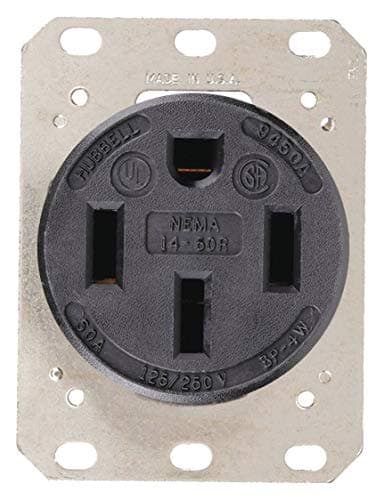
Hubbell HBL9450A NEMA 14-50 Receptacle (industrial)

The one part not to save money on

Hubbell HBL9450A NEMA 14-50 Receptacle (industrial)

An industrial-grade 14-50 receptacle. An EV draws 40 A continuously for hours, which is a duty cycle the cheap builder-grade receptacles were never designed for — this is the part that stops a plug-in install from browning its own contacts.

$64.99View on Amazon

#ad Price as of October 5, 2026. How we make money
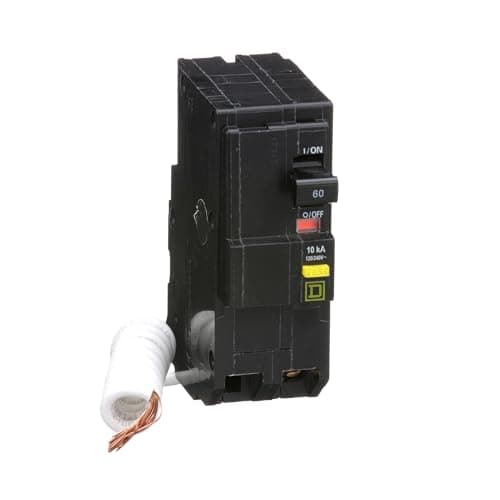
Square D QO260GFI 60 A 2-Pole GFCI Breaker

A plug-in charger on a 14-50 receptacle circuit

Square D QO260GFI 60 A 2-Pole GFCI Breaker

If your charger plugs into a receptacle, NEC 625.54 requires GFCI protection on that circuit, and this is the part that provides it. It is also the single most common cause of nuisance tripping in a home charging install.
$139.99View on Amazon

$157.72 list · 11% off

#ad Price as of October 5, 2026. How we make money

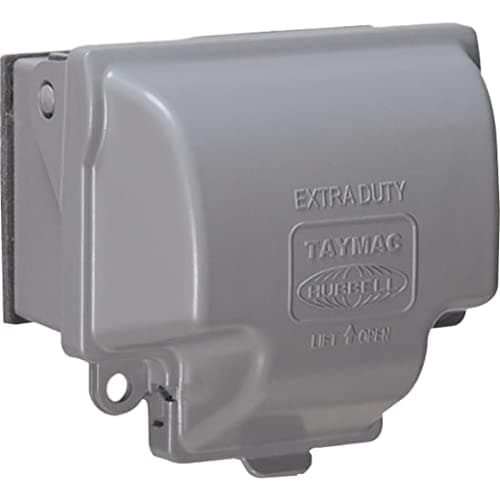
TayMac MX3300 RaynGuard Metal Weatherproof In-Use Cover

An outdoor 240 V receptacle with a charger plugged in

TayMac MX3300 RaynGuard Metal Weatherproof In-Use Cover

An outdoor receptacle with a plug in it needs an extra-duty in-use cover that closes over the plug — a flip-lid cover is not compliant and not weatherproof once something is plugged into it.

$16.29View on Amazon

#ad Price as of October 5, 2026. How we make money

We earn commission on qualifying purchases at no cost to you. Affiliate disclosure.

The flexibility argument for the outlet

A 14-50 outlet is not tied to one charger. It takes a Mobile Connector today, a different plug-in charger in three years, and a visitor's cordset in the meantime. It also serves an RV or a welder.

And if you sell the house, an outlet is a feature that works for whatever the next owner drives, whereas a NACS-handled Wall Connector only suits a Tesla household. That is a genuine point in the outlet's favor and it is not usually mentioned.
The verdict, naming a loser

Both units

The two, side by side

A Tesla-only household

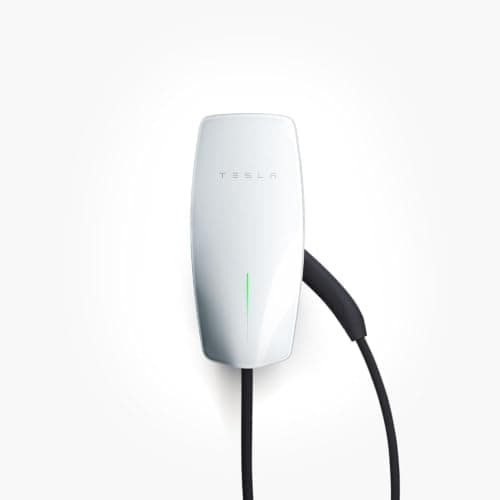
Tesla Wall Connector (Gen 3)

Tesla Wall Connector (Gen 3) charger

8.8/ 10

$885.00View on Amazon

#ad Price as of October 5, 2026. How we make money

Our verdict

If every car in the driveway is a Tesla, this is the cleanest answer: 48 A, a 24 ft cable, and a handle that opens the charge port for you — but it is NACS-only, so a J1772 car needs an adapter every single time.

What works

  • 24 ft cable, the longest of the mainstream premium units
  • Auto-sensing handle opens a Tesla charge port without touching the car
  • Power sharing lets two units share one circuit, which is rare at this price
  • Wi-Fi with over-the-air firmware updates

What doesn't

  • NACS only — every J1772 car in the household needs an adapter on the handle
  • Hardwired only, so it is not coming with you if you move out of a rental
  • Setup runs through Tesla's app flow even if you do not own a Tesla
Tesla Wall Connector (Gen 3) specifications
Max output48 A / 11.5 kW
Output range12-48 A
Input200-240 V AC single phase
Breaker60 A dedicated 2-pole for 48 A output
Cable24 ft
ConnectorNACS
InstallHardwired

Specifications checked against Tesla Gen 3 Wall Connector installation manual. We verify published specifications; we do not bench-test hardware — how we assess products.

How it scored

Fit to a typical panel
8.8
Charge rate
9.0
Cable and reach
9.6
Smart features
8.6
Weather and build
9.2
Universality
5.5
The one part not to save money on

Hubbell HBL9450A NEMA 14-50 Receptacle (industrial)

Hubbell HBL9450A NEMA 14-50 Receptacle (industrial) charger

9.4/ 10

$64.99View on Amazon

#ad Price as of October 5, 2026. How we make money

Our verdict

An industrial-grade 14-50 receptacle. An EV draws 40 A continuously for hours, which is a duty cycle the cheap builder-grade receptacles were never designed for — this is the part that stops a plug-in install from browning its own contacts.

What works

  • Industrial-grade contacts rated for the continuous duty an EV actually imposes
  • The failure mode of a cheap 14-50 is a melted face, and this is the fix
  • Specified by name in most reputable installers' quotes

What doesn't

  • Several times the cost of a builder-grade receptacle
  • Still a receptacle — hardwiring removes this failure point entirely
  • Needs a deep box
Hubbell HBL9450A NEMA 14-50 Receptacle (industrial) specifications
Rating50 A, 125/250 V
ConfigurationNEMA 14-50R, 3-pole 4-wire grounding
GradeIndustrial
CertificationUL listed

Specifications checked against Hubbell HBL9450A product specifications. We verify published specifications; we do not bench-test hardware — how we assess products.

A Tesla owner who rents, or a second car that barely drives

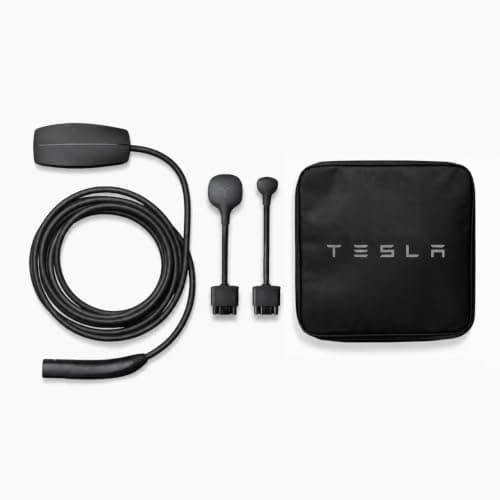
Tesla Mobile Connector bundle

Tesla Mobile Connector bundle charger

7.6/ 10

$400.00View on Amazon

#ad Price as of October 5, 2026. How we make money

Our verdict

A portable 32 A cordset, not a wall charger. It is the right tool if you cannot mount anything or your daily mileage is small, and the wrong tool if you are buying your only home charging solution.

What works

  • Goes in the trunk and works at a relative's house, which no wall unit does
  • 32 A is the exact ceiling of a Model 3 RWD and most PHEVs, so nothing is wasted
  • No installation to argue with a landlord about

What doesn't

  • 32 A ceiling means a Model Y charges a third slower than it could
  • Adapters for anything other than the included plug are sold separately
  • A cordset coiled on a garage floor wears out faster than a wall unit
Tesla Mobile Connector bundle specifications
Max outputUp to 32 A
Cable20 ft
ConnectorNACS
InstallPlugs into a 240 V receptacle with the matching adapter
GFCIRequired on the receptacle circuit — NEC 625.54

Specifications checked against Tesla Mobile Connector product page. We verify published specifications; we do not bench-test hardware — how we assess products.

FAQ

Questions people actually ask

Is a Tesla Wall Connector better than a NEMA 14-50 outlet?

For a homeowner with a daily-driven Tesla, yes — the full 48 A rather than 40 A, no GFCI breaker required, and no receptacle to degrade. The outlet wins on flexibility: it takes any plug-in charger, moves with no charger, and serves whatever the next owner drives.

Why is a 14-50 outlet limited to 40 amps for EV charging?

Because EV charging is a continuous load under NEC 625.42 and a circuit may carry only 80% of its rating continuously. 80% of a 50 A receptacle circuit is 40 A. Getting 48 A requires a 60 A circuit, which means hardwiring.

Is a 14-50 outlet cheaper than hardwiring?

Often not. It needs a GFCI breaker, which costs several times a standard one, plus an industrial-grade receptacle and an extra-duty in-use cover if it is outdoors. Those usually offset the saving from using 8 AWG instead of 6 AWG.

Which receptacle should I use for EV charging?

An industrial-grade NEMA 14-50 — the Hubbell HBL9450A is the part most commonly specified by name. A builder-grade receptacle was designed for an electric range's intermittent duty, not a nightly 40 A continuous draw, and it is the most documented failure point in plug-in installs.

Can I do both?

Yes, and some people do: hardwire the primary charger and fit a 14-50 elsewhere in the garage for a second car or a visitor. It is two circuits, so it needs the panel capacity for both.

Sources

What we checked this against

Read next

Disclosure. Some links on this page are affiliate links. If you buy through one, we earn a commission at no extra cost to you. We are a participant in the Amazon Services LLC Associates Program. Prices come from Amazon's live data and are shown with the date they were checked; where no live price is available we say "check price" rather than show an old number. Commission rate plays no part in which products we recommend or in what order — see our methodology and our full affiliate disclosure.