Skip to content
EV & Charger

Head to head

Autel MaxiCharger vs Emporia Pro

Rated to minus forty with single-amp adjustment, against 48 amps and an energy monitor in the box. Climate against panel.

By Mike M.Published Last verified

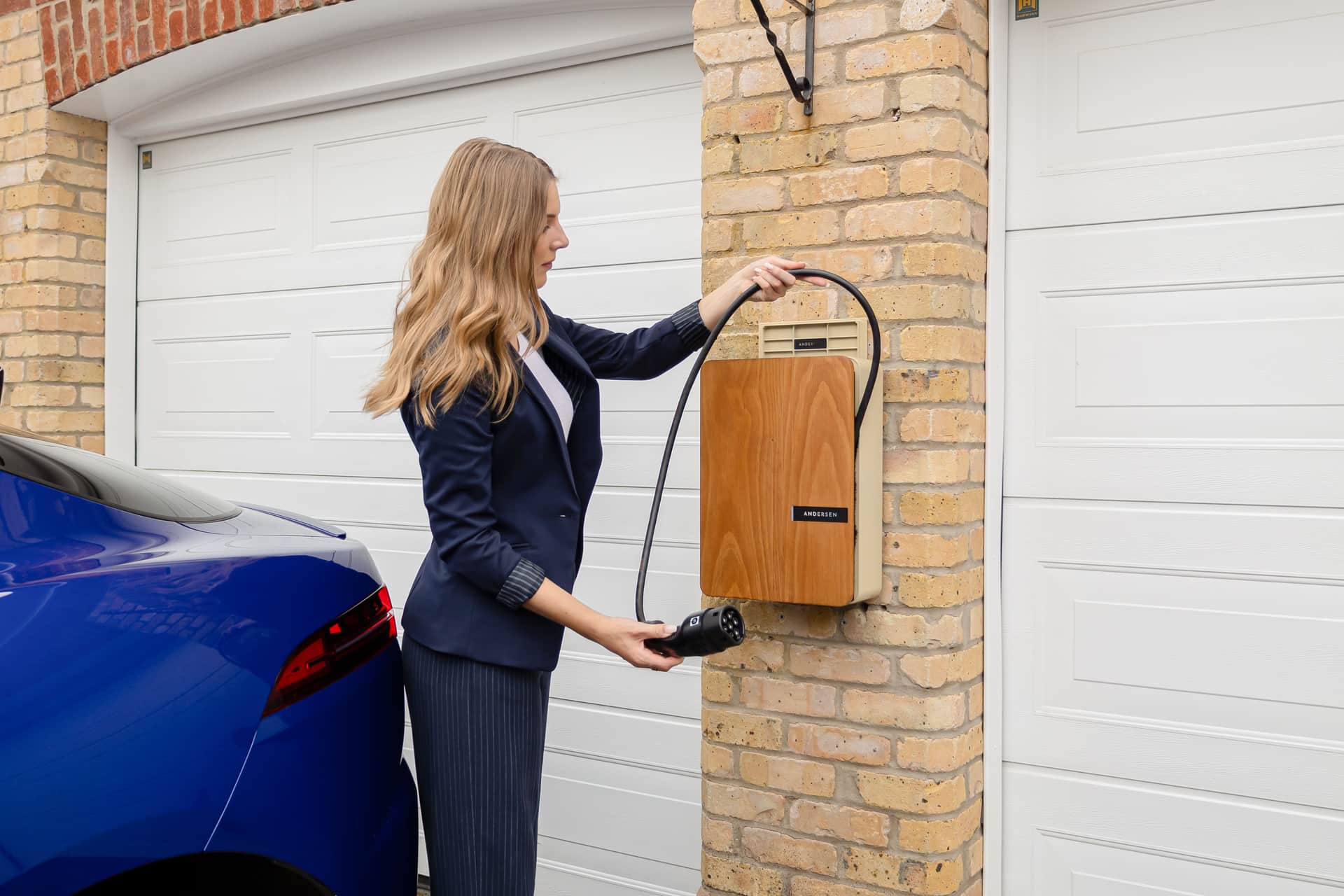
A wall-mounted Level 2 EV charger installed on the exterior wall of a house

The short answer

Buy the Autel MaxiCharger AC Lite for an unheated garage in the north, or when your load calculation lands at an awkward number: rated -40 degF to +131 degF, adjustable 6-40 A in 1 A steps, with integrated surge protection. Buy the Emporia Pro if you need 48 A or your panel is tight: full 11.5 kW and load management that measures whole-home draw through an included energy monitor.

Autel MaxiCharger AC Lite against Emporia Pro
Autel MaxiCharger AC LiteEmporia Pro
Max output40 A / 9.6 kW48 A / 11.5 kW hardwired
Adjustment6-40 A in 1 A stepsApp, preset levels
Operating temperature-40 degF to +131 degFManufacturer published
Cable25 ft25 ft
EnclosureNEMA 4NEMA 4
Load managementNoYes, with the Vue monitor included
Energy monitoringCharger onlyWhole-home and per-circuit
Surge protectionIntegratedNo
Ground-fault detection20 mA CCIDYes
InstallPlug-inHardwired or plug-in
Warranty36 months3 years
ConnectivityBluetooth, Wi-Fi, Ethernet, CAN, RS485Wi-Fi
Specifications per each manufacturer's own published documentation and the ENERGY STAR certified EVSE listing, checked October 5, 2026.

The two Autel specs that are genuinely distinctive

-40 degF to +131 degF

This is the widest operating range of any unit we recommend, and it is a real differentiator rather than a spec-sheet flourish. For context, the Wallbox Pulsar Plus is rated to -22 degF. Eighteen degrees is the difference between a charger that works and one that does not on a genuinely cold night in Minnesota, Maine or North Dakota.

One honest caveat: the cable stiffens regardless. No temperature rating makes 25 feet of EV cable pleasant to handle at 10 degF. What the rating protects is the electronics.

6 to 40 amps in 1 amp steps

Most adjustable chargers offer presets. The Emporia and ChargePoint step between standard levels; the Grizzl-E switches between four. The Autel does single amps.

That matters when a load calculation produces a number that is not a standard charger size. If your service supports 36 A of continuous capacity, a preset charger makes you choose 32 A and give away 4 A to rounding — 10% of your charge rate on a 40 A-capable car. The Autel sets to 36.

The Emporia advantages

  • 48 A against 40 A. 11.5 kW rather than 9.6 kW, which on a truck is nearly an hour on a 100-mile charge.
  • Whole-home load management with a monitor included. The Autel adjusts its own output; it does not watch your panel. On a marginal service only the second behavior helps.
  • Hardwired option. The Autel AC Lite is plug-in, which means a GFCI breaker under NEC 625.54 and the nuisance-tripping risk that brings.
  • Energy data beyond the charger. The Vue monitor shows whole-home and per-circuit consumption, which is useful well past the charging question.

Which problem do you have?

Matching the charger to the situation
Your situationBuyWhy
Unheated garage, properly cold wintersAutel-40 degF against the category norm
Load calculation at an awkward numberAutel1 A steps rather than presets
Tight panel needing real throttlingEmporia ProMeasured load management; NEC 625.42 permits limiting via controls
A 48 A car and the circuit for itEmporia ProThe Autel AC Lite is 40 A
You want to hardwireEmporia ProThe AC Lite is plug-in; Autel's 50 A model is the hardwired option
You want panel-level surge protection anywayEither — buy a panel SPDBetter value than either charger's internal protection
You want the longest brand track recordEmporia ProAutel's North American consumer presence is newer

On the integrated surge protection

The Autel's built-in surge protection is a genuine feature and it is not a substitute for a panel-mounted device. The charger's protection defends the charger; a panel SPD defends the HVAC, the range and everything else on the service — for less than either charger costs.

If you are weighing the Autel's internal protection as a buying reason, the better answer is to buy whichever charger suits you and fit a panel device while the panel is open for the circuit. EV charger surge protection.
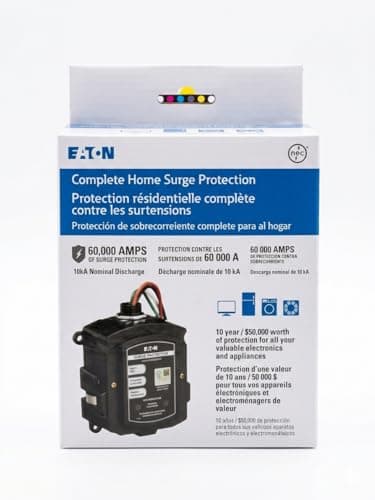
Eaton CHSPT2ULTRA Whole-Home Surge Protector

Protecting a charger that is wired into the panel

Eaton CHSPT2ULTRA Whole-Home Surge Protector

A Type 2 device at the panel, which protects everything on the service rather than one appliance. Fit it during the charger install; a separate call later costs more than the device.
$70.99View on Amazon

$79.99 list · 11% off

#ad Price as of October 5, 2026. How we make money

The verdict, naming a loser

Both units

The two, side by side

Cold climates and 1 A output tuning

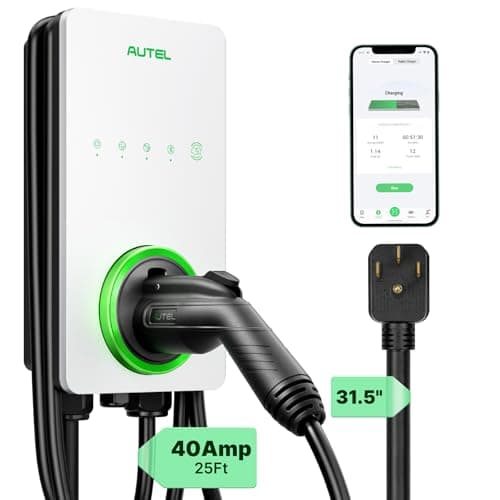
Autel MaxiCharger AC Lite (40 A)

Autel MaxiCharger AC Lite (40 A) charger

8.6/ 10

$470.00View on Amazon

#ad Price as of October 5, 2026. How we make money

Our verdict

The widest output adjustment range here — 6 A to 40 A in the app — plus an operating range down to -40 degF, which makes it the practical pick for an unheated garage in the north.

What works

  • 6-40 A in 1 A steps is the finest adjustment of any unit here — genuinely useful when a load calculation lands at 37 A
  • -40 degF to +131 degF rated, which is a real differentiator in Minnesota or Maine
  • Integrated surge protection, which most units leave to a panel-mounted device
  • 25 ft cable

What doesn't

  • 40 A ceiling
  • Bluetooth, Wi-Fi and Ethernet is more connectivity than a home needs and more surface to go wrong
  • Autel's North American consumer support is newer than ChargePoint's or Tesla's
Autel MaxiCharger AC Lite (40 A) specifications
Max output40 A / 9.6 kW (240 V x 40 A)
Adjustable output6-40 A via the app
Breaker50 A dedicated 2-pole
Cable25 ft, J1772
EnclosureNEMA 4
Operating temperature-40 degF to +131 degF
Protection20 mA CCID ground-fault detection, integrated surge protection
Warranty36 months

Specifications checked against ENERGY STAR certified EVSE listing. We verify published specifications; we do not bench-test hardware — how we assess products.

How it scored

Cold-weather fitness
9.8
Charge rate
7.6
Output adjustability
9.8
Cable and reach
9.2
Weather and build
9.0
Value
8.6
Most households, and anyone with a tight panel

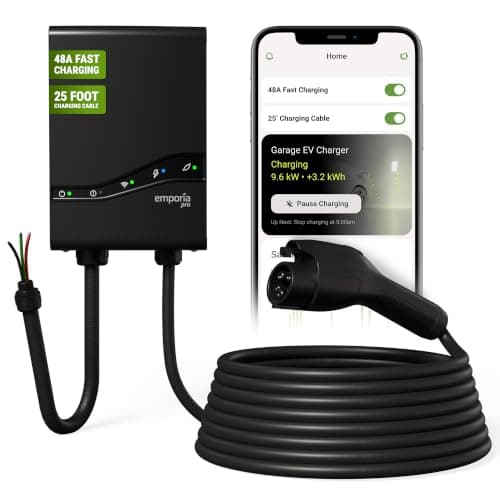
Emporia Pro Level 2 EV Charger

Emporia Pro Level 2 EV Charger charger

9.0/ 10

$599.00View on Amazon

#ad Price as of October 5, 2026. How we make money

Our verdict

The best-balanced 48 A charger for a typical US house: full 11.5 kW hardwired, and the only unit at this price that ships with a whole-home energy monitor so its load management is reading your actual panel rather than guessing.

What works

  • Hardwires at the full 48 A for 11.5 kW — matches the onboard limit of most current BEVs exactly
  • PowerSmart load management reads whole-home draw through the included Vue monitor, so it can throttle instead of tripping a breaker
  • 25 ft cable reaches across a two-car garage without an extension
  • NEMA 4 enclosure and a real UL listing, not just an ETL mark

What doesn't

  • The energy monitor has to be installed in the panel to be useful, which means the electrician is in there longer
  • App-dependent for scheduling — there is no physical timer
  • At 40 A on the plug-in version you are paying for 48 A of hardware you cannot use
Emporia Pro Level 2 EV Charger specifications
Max output48 A / 11.5 kW hardwired; 40 A / 9.6 kW on a NEMA 14-50 plug
Breaker60 A dedicated 2-pole for 48 A; 50 A for 40 A
Cable25 ft
ConnectorJ1772 or NACS, chosen at purchase
EnclosureNEMA 4, indoor or outdoor
CertificationUL certified, ENERGY STAR
Warranty3 years
Load managementPowerSmart, with the Vue home energy monitor included

Specifications checked against Emporia Pro sell sheet. We verify published specifications; we do not bench-test hardware — how we assess products.

How it scored

Fit to a typical panel
9.4
Charge rate
9.0
Cable and reach
9.0
Smart features
9.2
Weather and build
8.6
Warranty and support
8.4

FAQ

Questions people actually ask

Is the Autel MaxiCharger better than the Emporia Pro?

In a properly cold garage, yes — rated to -40 degF against the category norm, with 1 A adjustment steps that suit an awkward load calculation. Otherwise the Emporia Pro is the better charger: 48 A rather than 40, a hardwired option, and load management that measures whole-home draw.

Which is better for cold weather?

The Autel MaxiCharger AC Lite, rated -40 degF to +131 degF. That is 18 degrees colder at the bottom than the Wallbox Pulsar Plus. Note that the cable stiffens in deep cold regardless of the charger's rating.

Does the Autel have load management?

It adjusts its own output in 1 A steps, which is not the same as watching whole-home consumption and throttling in real time. The Emporia Pro does the latter, with an energy monitor included, and that is what makes a marginal load calculation work.

Is the Autel's built-in surge protection enough?

It protects the charger. A panel-mounted Type 2 device protects the HVAC, the range and everything else on the service for less than either charger costs, which is better value. Fit one while the panel is open for the circuit.

Can the Autel MaxiCharger AC Lite be hardwired?

The AC Lite is plug-in, which means a GFCI breaker under NEC 625.54 and a 40 A ceiling. Autel's 50 A model is the hardwired option in the range.

Sources

What we checked this against

Read next

Disclosure. Some links on this page are affiliate links. If you buy through one, we earn a commission at no extra cost to you. We are a participant in the Amazon Services LLC Associates Program. Prices come from Amazon's live data and are shown with the date they were checked; where no live price is available we say "check price" rather than show an old number. Commission rate plays no part in which products we recommend or in what order — see our methodology and our full affiliate disclosure.