The short answer
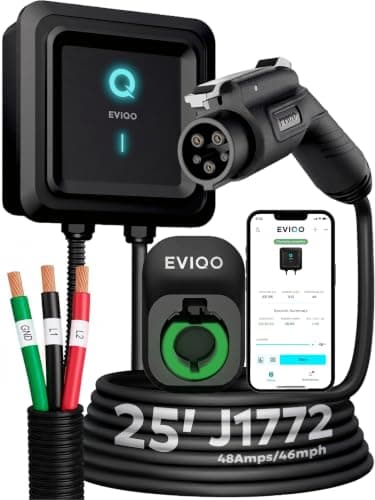
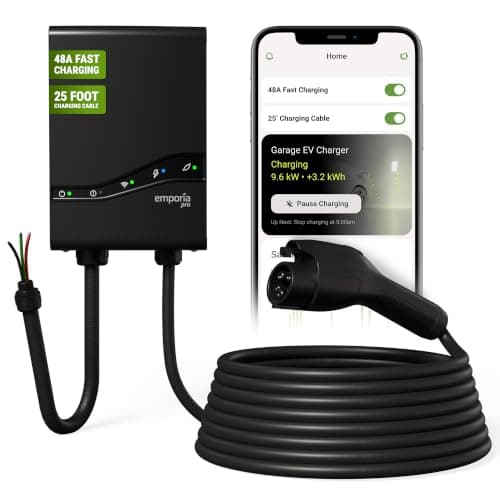
Buy the EVIQO 48 A if price is the constraint — it is the cheapest genuine 11.5 kW hardwired charger, with an IP66 and NEMA 4 enclosure and a 25 ft cable. Buy the Emporia Pro if your panel is marginal or you want the safer brand bet: it costs more but includes a whole-home energy monitor and real load management, and Emporia has the longer North American support record. One warning either way — the EVIQO ships set to 40 A and needs an internal switch changed to deliver the 48 A you paid for.
| EVIQO 48 A | Emporia Pro | |
|---|---|---|
| Max output | 48 A / 11.5 kW hardwired | 48 A / 11.5 kW hardwired |
| Ships set to | 40 A — must be changed | 48 A |
| Output adjustment | Internal physical switch: 16, 32, 40, 48 A | In the app |
| Cable | 25 ft | 25 ft |
| Connector | J1772 | J1772 or NACS, chosen at purchase |
| Install | Hardwired or plug-in (40 A) | Hardwired or plug-in (40 A) |
| Enclosure | IP66 / NEMA 4 | NEMA 4 |
| Whole-home load management | No | Yes — Vue monitor included |
| Certification | ETL certified, ENERGY STAR, FCC | UL certified, ENERGY STAR |
| Warranty | 3 years | 3 years |
| Brand record in North America | Newer | Longer |
Where they are the same
More than people expect. Both hardwire at 48 A for 11.5 kW, which exactly matches the onboard limit of most current battery EVs. Both have a 25 ft cable, the longest in this class. Both carry a NEMA 4 enclosure rating, both are ENERGY STAR certified, and both publish a three-year warranty. On a given car, on a given 60 A circuit, they charge at the same rate.
So this is not a performance comparison. It is a comparison of what the price difference buys.
The setting that catches people out
The Emporia has the mirror-image trade-off. Its output is set in the app, so nobody has to open the enclosure — but it also means a phone and a working account stand between you and a setting change. The EVIQO's physical switch survives an app outage, a new phone and a sold house; the Emporia's does not.
What the price difference buys
Three things, and whether they are worth it depends entirely on your panel.
- An energy monitor and real load management. The Emporia ships with a Vue monitor whose CTs read whole-home draw, so the charger throttles against measured capacity rather than a nameplate. NEC 625.42 lets a managed installation enter a load calculation at its managed figure, which on a 100 A service is sometimes the difference between a charger and a service upgrade.
- A UL certification rather than an ETL one. Both are legitimate NRTL marks and an inspector accepts either. It is not a safety difference; it is a procurement difference that occasionally matters to a utility rebate program.
- A longer brand record. A three-year warranty is worth exactly as much as the company behind it. Emporia has been selling into North America longer than EVIQO has.
Which one solves which problem
| Your situation | The answer | Why |
|---|---|---|
| Lowest price for real 11.5 kW | EVIQO 48 A | Cheapest genuine 48 A hardwired unit sold |
| Load calculation is marginal | Emporia Pro | Measured load management, monitor included |
| You want a Tesla handle | Emporia Pro (NACS) | EVIQO is J1772 only |
| You distrust apps | EVIQO 48 A | Amperage lives in a physical switch |
| Exposed outdoor wall | EVIQO 48 A | IP66 on top of NEMA 4 |
| You want the longest-lived warranty | Emporia Pro | Same term, longer-established company |
| You will not open the enclosure | Emporia Pro | The EVIQO needs its switch moved to reach 48 A |
If neither is right: the third option
The 40 A alternative worth considering
If your car tops out at 32 A or your panel cannot spare 60 A, neither 48 A unit is the right purchase and the money is better spent on build quality.
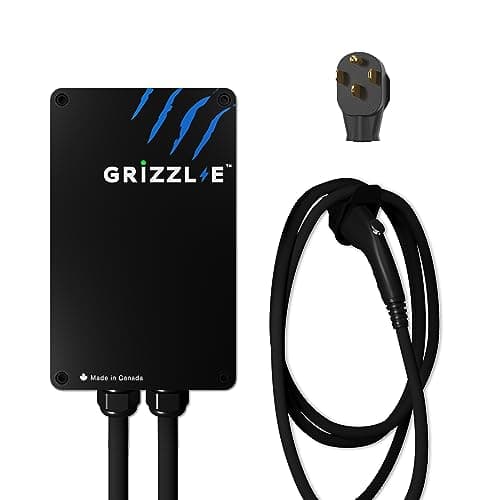
An outdoor install, and anyone who distrusts apps
Grizzl-E Classic
A cast-aluminum 40 A charger with dip switches instead of a cloud account. Nothing about it is clever, which is exactly why it is the unit to buy for a driveway post in a cold climate.
We earn commission on qualifying purchases at no cost to you. Affiliate disclosure.
The Grizzl-E Classic is 40 A rather than 48 A, which costs about 2 kW on a car that can use it — but it is cast aluminum, NEMA 4 and IP67, sets its amperage with physical switches, and runs on a 50 A breaker with 8 AWG copper rather than 60 A and 6 AWG. For a plug-in hybrid, an entry Model 3 RWD, or a panel with no headroom, that is the better-matched purchase. Our 40 A roundup has the full list, and Grizzl-E Classic vs Classic Connect covers the app question.