The short answer
Every BMW i4 and iX trim sold in the US accepts 11 kW on AC — about 46 A at 240 V — through a J1772 port. Buy a 48 A charger on a 60 A breaker with 6 AWG copper. The car will draw just under the charger's maximum, and no 46 A charger exists to buy.
BMW standardized the onboard charger across both model ranges, which makes this one of the simplest decisions on the site: an i4 eDrive35 and an iX M70 want exactly the same circuit.
The constraint: what this car accepts
Everything else on this page follows from one number. The BMW i4 and iX's onboard charger accepts a maximum of 11 kW, which is 48 amps at 240 volts. No wall charger can exceed it, and a charger rated above it delivers no extra speed.
| Specification | Value | Source |
|---|---|---|
| Maximum AC power accepted | 11 kW | BMW USA i4 and iX specifications |
| Maximum AC current at 240 V | 48 A | BMW USA i4 and iX specifications |
| Connector | J1772 | BMW USA electric charging information |
| EPA range (2026 i4 eDrive40 Gran Coupe (18 inch wheels)) | 333 mi | US DOE / EPA fueleconomy.gov |
| EPA efficiency | 28.5 kWh / 100 mi (118 MPGe) | US DOE / EPA fueleconomy.gov |
| EPA published 240 V charge time | 9 hours | US DOE / EPA fueleconomy.gov |
A second trim worth knowing about: EPA lists the 2026 iX xDrive45 (20 inch wheels) at 36 kWh per 100 miles, 312 miles of range, and 10 hours at 240 V. That spread is why the trim matters as much as the model when you are sizing a circuit.
The consequence: the circuit you actually need
Take the car's 48 A ceiling and work backwards. NEC 625.42 classifies EV charging as a continuous load, and NEC 625.41 requires overcurrent protection at not less than 125% of the maximum load — so a 48 A charger needs a 60 A two-pole breaker and 6 AWG copper at the 75 degC column of NEC Table 310.16.
| Item | This car | Why |
|---|---|---|
| Charger output | 48 A | Matches the car's 48 A ceiling exactly |
| Power delivered | 11.0 kW | The lower of the charger's output and the car's limit |
| Breaker | 60 A, two-pole | NEC 625.41 — 125% of a continuous load |
| Copper conductor (conduit, 75 degC) | 6 AWG | NEC Table 310.16 |
| A bigger charger would | deliver nothing extra — this is already the car's ceiling | The lower of the two numbers always wins |
Charge times, with the arithmetic shown
EPA rates the 2026 i4 eDrive40 Gran Coupe (18 inch wheels) at 28.5 kWh per 100 miles. That single figure lets you calculate any charge time you like, and it is why we show the formula rather than asserting a number.
hours = (miles x 28.5 / 100) / (kW x 0.9)
At 11.0 kW, this car gains about 35 miles of range per hour
The 0.9 allows for AC-to-DC conversion losses in the onboard charger — roughly 10% of what your meter records never reaches the battery. EPA efficiency figure from the US DOE / EPA fueleconomy.gov service, 2026 i4 eDrive40 Gran Coupe (18 inch wheels), queried 2026-10-05.
| Charger | Miles added per hour | Hours to add 100 miles |
|---|---|---|
| 16 A (3.8 kW) | 12 | 8h 20m |
| 24 A (5.8 kW) | 18 | 5h 28m |
| 32 A (7.7 kW) | 24 | 4h 07m |
| 40 A (9.6 kW) | 30 | 3h 18m |
| 48 A (11.5 kW) | 35 | 2h 53m |
For context, EPA's own published figure for a full charge at 240 V on this trim is 9 hours.
What to buy for a BMW i4 and iX
Our picks for the BMW i4 and iX
Both are 48 A units that reach this car's full 11.5 kW. The top pick is most households, and anyone with a tight panel; the alternative is there because the smallest 48 a unit on a wall.
Most households, and anyone with a tight panel
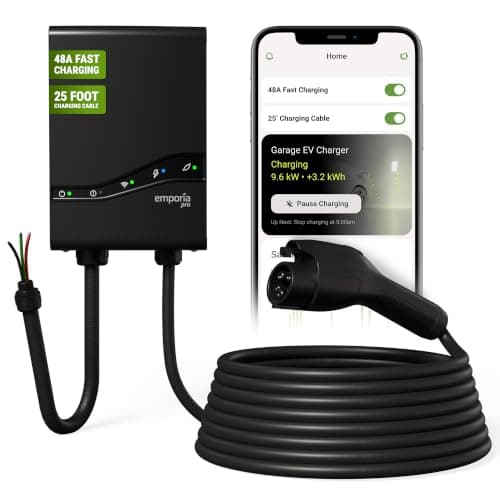
Emporia Pro Level 2 EV Charger
The best-balanced 48 A charger for a typical US house: full 11.5 kW hardwired, and the only unit at this price that ships with a whole-home energy monitor so its load management is reading your actual panel rather than guessing.
#ad Price as of October 5, 2026. How we make money
The smallest 48 A unit on a wall
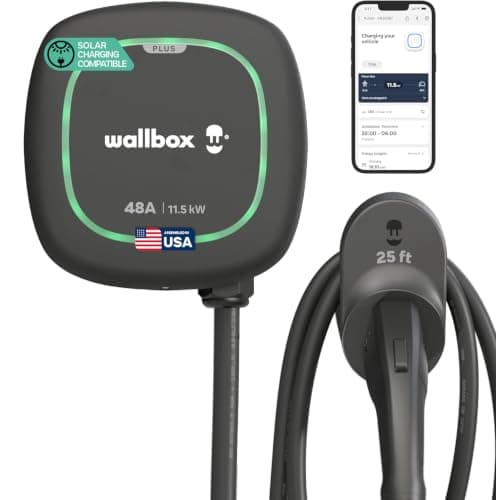
Wallbox Pulsar Plus 48 A
A genuinely small 48 A charger — under 8 inches square — which is the deciding factor when the only spot left is a narrow strip of wall beside the panel.
#ad Price as of October 5, 2026. How we make money
We earn commission on qualifying purchases at no cost to you. Affiliate disclosure.
Connector and adapters
The BMW i4 and iX uses a J1772 port for AC charging, which is what the large majority of home chargers in the US have. No adapter is needed for a J1772 charger.
You need a NACS to J1772 adapter only if you intend to use a Tesla Wall Connector, a Tesla Destination charger or a Tesla Mobile Connector. Rated headroom matters on a part carrying 48 A for eight hours — see best NACS to J1772 adapters.
A J1772 car on a Tesla Wall Connector or Destination charger
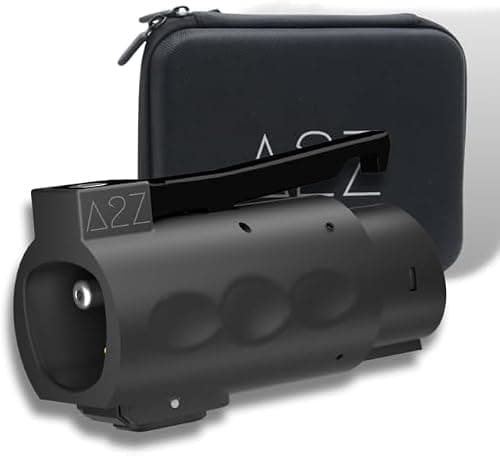
A2Z EV Stellar Plug NACS to J1772 AC Adapter
80 A / 19.2 kW rated, which is genuine headroom over any home charger. The part to buy if a Tesla charger is in the picture.
#ad Price as of October 5, 2026. How we make money
Both cars, every trim
| Trim | kWh / 100 mi | EPA range | EPA 240 V time | Miles per hour at 11 kW |
|---|---|---|---|---|
| i4 eDrive40 Gran Coupe (18in) | 28.5 | 333 mi | 9.0 h | 35 |
| i4 eDrive35 Gran Coupe (19in) | 30.8 | 251 mi | 7.0 h | 32 |
| i4 eDrive40 Gran Coupe (19in) | 31.1 | 307 mi | 9.0 h | 32 |
| i4 M60 xDrive (19in) | 34.4 | 278 mi | 9.0 h | 29 |
| iX xDrive45 (20in) | 36.0 | 312 mi | 10.0 h | 27 |
| iX xDrive45 (22in) | 40.3 | 279 mi | 10.0 h | 25 |
| iX M70 (21in) | 42.0 | 303 mi | 11.0 h | 24 |
The spread is wide — the i4 eDrive40 on 18-inch wheels needs 28.5 kWh per 100 miles against the iX M70's 42.0 — but the charge rate is identical across all of them. What differs is how much range an hour of charging buys.
Where 48 amps matters and where it does not
On an i4, with its efficient sedan body and relatively modest battery, 40 A is a perfectly sensible compromise. EPA's 9.0-hour figure drops to roughly 10h 30m at 40 A, which is still inside a long overnight window and the car is rarely arriving home empty.
On an iX M70 — 42 kWh per 100 miles and an 11-hour EPA charge time — we would take all 48 A. A large, heavy SUV with that appetite is the household where the extra 1.9 kW is doing real work.
| Vehicle | kWh / 100 mi | At 40 A | At 11 kW (48 A) | Difference |
|---|---|---|---|---|
| i4 eDrive40 (18in) | 28.5 | 4h 57m | 4h 19m | 38 min |
| iX M70 (21in) | 42.0 | 7h 17m | 6h 22m | 55 min |
Two cars, one charger
A practical advantage of the shared 11 kW ceiling: if an i4 and an iX live in the same garage, one 48 A charger serves both perfectly, and the two cars can alternate overnight without anyone having to think about it.
If both cars need charging simultaneously, a dual-cable unit shares the circuit — with the caveat that a 40 A dual charger gives each car about 20 A. For two BMWs that need meaningful charges on the same night, alternating on a single 48 A unit usually finishes faster. See EV charger splitters for the full comparison.
Connector
Both cars use J1772 for AC charging in North America, so any mainstream home charger plugs straight in. BMW participates in Supercharger access via a DC adapter, which is a separate part from the AC adapters here. A NACS-to-J1772 adapter is what you need for AC charging at a Tesla Wall Connector or Destination charger.
Our picks for a BMW i4 or iX
The Emporia Pro for load management, the Wallbox Pulsar Plus for the smallest 48 A footprint — which matters in a garage already holding two cars.
Most households, and anyone with a tight panel
Emporia Pro Level 2 EV Charger
The best-balanced 48 A charger for a typical US house: full 11.5 kW hardwired, and the only unit at this price that ships with a whole-home energy monitor so its load management is reading your actual panel rather than guessing.
#ad Price as of October 5, 2026. How we make money
The smallest 48 A unit on a wall
Wallbox Pulsar Plus 48 A
A genuinely small 48 A charger — under 8 inches square — which is the deciding factor when the only spot left is a narrow strip of wall beside the panel.
#ad Price as of October 5, 2026. How we make money
A J1772 car on a Tesla Wall Connector or Destination charger
A2Z EV Stellar Plug NACS to J1772 AC Adapter
Rated 80 A / 19.2 kW, which is well above any home charger's output and the margin you want in a part that carries 48 A continuously for eight hours a night.
#ad Price as of October 5, 2026. How we make money
We earn commission on qualifying purchases at no cost to you. Affiliate disclosure.