The short answer
The Chevrolet Blazer EV accepts 11.5 kW / 48 A on AC through a J1772 port. Buy a 48 A charger on a 60 A breaker with 6 AWG copper. EPA's published 240 V charge time for the 2026 FWD is 9.5 hours, and at 32.3 kWh per 100 miles the car gains roughly 32 miles of range per hour at full output.
The Blazer EV is a straightforward charger decision — no trim-level onboard charger complication like its Equinox sibling, and no 80 A outlier. One answer across the range, with the usual caveat about efficiency.
The constraint: what this car accepts
Everything else on this page follows from one number. The Chevrolet Blazer EV's onboard charger accepts a maximum of 11.5 kW, which is 48 amps at 240 volts. No wall charger can exceed it, and a charger rated above it delivers no extra speed.
| Specification | Value | Source |
|---|---|---|
| Maximum AC power accepted | 11.5 kW | Chevrolet Blazer EV specifications |
| Maximum AC current at 240 V | 48 A | Chevrolet Blazer EV specifications |
| Connector | J1772 | Chevrolet Blazer EV specifications |
| EPA range (2026 Blazer EV FWD) | 312 mi | US DOE / EPA fueleconomy.gov |
| EPA efficiency | 32.3 kWh / 100 mi (104 MPGe) | US DOE / EPA fueleconomy.gov |
| EPA published 240 V charge time | 9.5 hours | US DOE / EPA fueleconomy.gov |
The consequence: the circuit you actually need
Take the car's 48 A ceiling and work backwards. NEC 625.42 classifies EV charging as a continuous load, and NEC 625.41 requires overcurrent protection at not less than 125% of the maximum load — so a 48 A charger needs a 60 A two-pole breaker and 6 AWG copper at the 75 degC column of NEC Table 310.16.
| Item | This car | Why |
|---|---|---|
| Charger output | 48 A | Matches the car's 48 A ceiling exactly |
| Power delivered | 11.5 kW | The lower of the charger's output and the car's limit |
| Breaker | 60 A, two-pole | NEC 625.41 — 125% of a continuous load |
| Copper conductor (conduit, 75 degC) | 6 AWG | NEC Table 310.16 |
| A bigger charger would | deliver nothing extra — this is already the car's ceiling | The lower of the two numbers always wins |
Charge times, with the arithmetic shown
EPA rates the 2026 Blazer EV FWD at 32.3 kWh per 100 miles. That single figure lets you calculate any charge time you like, and it is why we show the formula rather than asserting a number.
hours = (miles x 32.3 / 100) / (kW x 0.9)
At 11.5 kW, this car gains about 32 miles of range per hour
The 0.9 allows for AC-to-DC conversion losses in the onboard charger — roughly 10% of what your meter records never reaches the battery. EPA efficiency figure from the US DOE / EPA fueleconomy.gov service, 2026 Blazer EV FWD, queried 2026-10-05.
| Charger | Miles added per hour | Hours to add 100 miles |
|---|---|---|
| 16 A (3.8 kW) | 11 | 9h 27m |
| 24 A (5.8 kW) | 16 | 6h 11m |
| 32 A (7.7 kW) | 21 | 4h 40m |
| 40 A (9.6 kW) | 27 | 3h 44m |
| 48 A (11.5 kW) | 32 | 3h 07m |
For context, EPA's own published figure for a full charge at 240 V on this trim is 9.5 hours.
What to buy for a Chevrolet Blazer EV
Our picks for the Chevrolet Blazer EV
Both are 48 A units that reach this car's full 11.5 kW. The top pick is most households, and anyone with a tight panel; the alternative is there because an outdoor install, and anyone who distrusts apps.
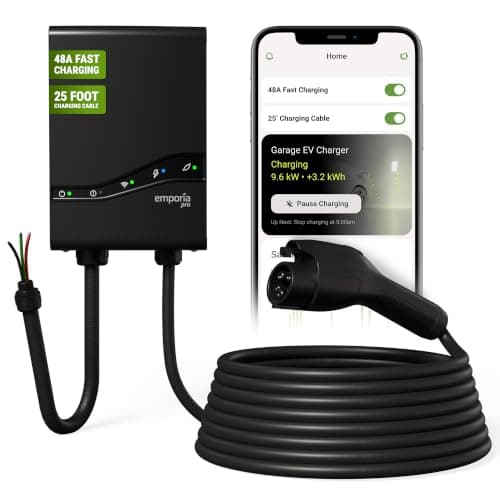
Most households, and anyone with a tight panel
Emporia Pro Level 2 EV Charger
The best-balanced 48 A charger for a typical US house: full 11.5 kW hardwired, and the only unit at this price that ships with a whole-home energy monitor so its load management is reading your actual panel rather than guessing.
#ad Price as of October 5, 2026. How we make money
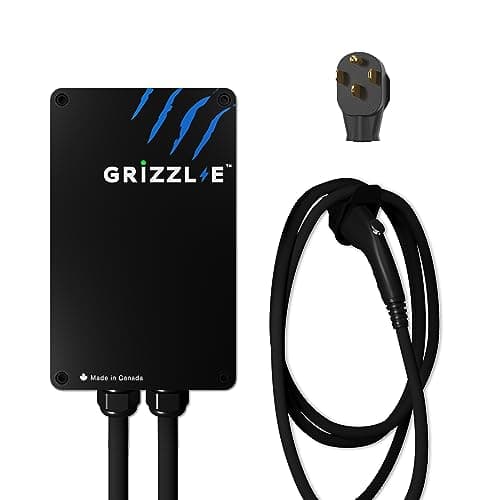
An outdoor install, and anyone who distrusts apps
Grizzl-E Classic
A cast-aluminum 40 A charger with dip switches instead of a cloud account. Nothing about it is clever, which is exactly why it is the unit to buy for a driveway post in a cold climate.
We earn commission on qualifying purchases at no cost to you. Affiliate disclosure.
Connector and adapters
The Chevrolet Blazer EV uses a J1772 port for AC charging, which is what the large majority of home chargers in the US have. No adapter is needed for a J1772 charger.
You need a NACS to J1772 adapter only if you intend to use a Tesla Wall Connector, a Tesla Destination charger or a Tesla Mobile Connector. Rated headroom matters on a part carrying 48 A for eight hours — see best NACS to J1772 adapters.
A J1772 car on a Tesla Wall Connector or Destination charger
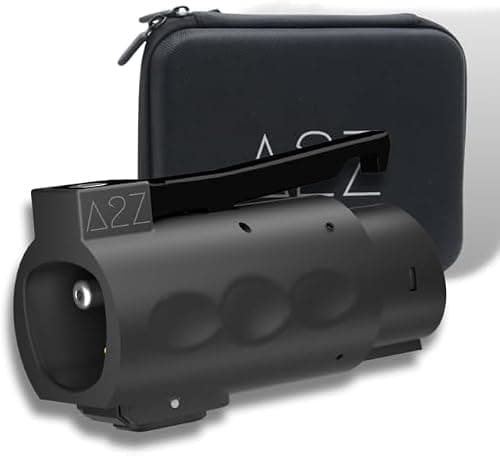
A2Z EV Stellar Plug NACS to J1772 AC Adapter
80 A / 19.2 kW rated, which is genuine headroom over any home charger. The part to buy if a Tesla charger is in the picture.
#ad Price as of October 5, 2026. How we make money
Trim and efficiency
| Trim | kWh / 100 mi | EPA range | EPA 240 V time | Miles per hour at 48 A |
|---|---|---|---|---|
| Blazer EV FWD | 32.3 | 312 mi | 9.5 h | 32 |
| Blazer EV FWD (22in tires) | 35.6 | 283 mi | 9.5 h | 29 |
| Blazer EV AWD | 35.7 | 283 mi | 9.5 h | 29 |
| Blazer EV AWD SS | 39.7 | 302 mi | 11.2 h | 26 |
The SS is the row that changes the advice. At 39.7 kWh per 100 miles with a longer EPA charge time of 11.2 hours, it is the one Blazer where we would not compromise to 40 A. The other three trims are comfortably served by either.
What 40 amps costs you
150 mi x 0.323 kWh/mi = 48.5 kWh; at 11.5 kW x 0.9 = 4h 41m; at 9.6 kW x 0.9 = 5h 37m
A 56-minute difference
EPA efficiency figure from the US DOE / EPA fueleconomy.gov service, 2026 Blazer EV FWD, queried October 5, 2026.
Just under an hour on a 150-mile day, in the middle of the night. If a 40 A circuit is substantially cheaper or easier on your panel, that is a reasonable trade for everything except the SS.
22-inch wheels cost more than the charger choice
Notice that going from the standard FWD to the 22-inch tire version costs 10% of the car's efficiency — a larger effect on your overnight charging than choosing 40 A over 48 A. The same pattern shows up on the Ioniq 6 and it is worth knowing when you specify a car rather than when you specify a charger.
GM's charging ecosystem
The Blazer EV uses J1772 for AC charging, so any mainstream home charger plugs in directly. GM sells its own branded charger and participates in installer programs with electricians; neither is a technical requirement, and a third-party 48 A unit with load management or solar tracking offers capabilities GM's does not.
GM has arranged Supercharger access through a DC adapter, which is a different part from the AC adapters covered on this site. For AC charging at a Tesla Wall Connector or Destination charger you need a NACS-to-J1772 adapter.
What to buy
Our picks for a Blazer EV
A 48 A smart unit with load management, and the metal-bodied Grizzl-E as the simple alternative for anyone who would rather not have an app involved.
Most households, and anyone with a tight panel
Emporia Pro Level 2 EV Charger
The best-balanced 48 A charger for a typical US house: full 11.5 kW hardwired, and the only unit at this price that ships with a whole-home energy monitor so its load management is reading your actual panel rather than guessing.
#ad Price as of October 5, 2026. How we make money
An outdoor install, and anyone who distrusts apps
Grizzl-E Classic
A cast-aluminum 40 A charger with dip switches instead of a cloud account. Nothing about it is clever, which is exactly why it is the unit to buy for a driveway post in a cold climate.
A J1772 car on a Tesla Wall Connector or Destination charger
A2Z EV Stellar Plug NACS to J1772 AC Adapter
Rated 80 A / 19.2 kW, which is well above any home charger's output and the margin you want in a part that carries 48 A continuously for eight hours a night.
#ad Price as of October 5, 2026. How we make money
We earn commission on qualifying purchases at no cost to you. Affiliate disclosure.