The short answer
The Volkswagen ID.4 accepts 11 kW on AC — about 46 A at 240 V — through a J1772 port. A 48 A charger on a 60 A breaker is the correct size, but EPA's published 240 V charge time is just 8.0 hours, which means a 40 A charger on a 50 A breaker is a genuinely sensible compromise if it saves you money on the circuit.
The ID.4 sits in a comfortable place: efficient enough at 29.8 kWh per 100 miles, with a battery sized for real-world driving rather than for spec sheets. That combination means the charger decision has slack in it, which is not true of every car on this site.
The constraint: what this car accepts
Everything else on this page follows from one number. The Volkswagen ID.4's onboard charger accepts a maximum of 11 kW, which is 48 amps at 240 volts. No wall charger can exceed it, and a charger rated above it delivers no extra speed.
| Specification | Value | Source |
|---|---|---|
| Maximum AC power accepted | 11 kW | Volkswagen USA ID.4 specifications |
| Maximum AC current at 240 V | 48 A | Volkswagen USA ID.4 specifications |
| Connector | J1772 | Volkswagen USA ID.4 specifications |
| EPA range (2026 ID.4) | 291 mi | US DOE / EPA fueleconomy.gov |
| EPA efficiency | 29.8 kWh / 100 mi (113 MPGe) | US DOE / EPA fueleconomy.gov |
| EPA published 240 V charge time | 8 hours | US DOE / EPA fueleconomy.gov |
The consequence: the circuit you actually need
Take the car's 48 A ceiling and work backwards. NEC 625.42 classifies EV charging as a continuous load, and NEC 625.41 requires overcurrent protection at not less than 125% of the maximum load — so a 48 A charger needs a 60 A two-pole breaker and 6 AWG copper at the 75 degC column of NEC Table 310.16.
| Item | This car | Why |
|---|---|---|
| Charger output | 48 A | Matches the car's 48 A ceiling exactly |
| Power delivered | 11.0 kW | The lower of the charger's output and the car's limit |
| Breaker | 60 A, two-pole | NEC 625.41 — 125% of a continuous load |
| Copper conductor (conduit, 75 degC) | 6 AWG | NEC Table 310.16 |
| A bigger charger would | deliver nothing extra — this is already the car's ceiling | The lower of the two numbers always wins |
Charge times, with the arithmetic shown
EPA rates the 2026 ID.4 at 29.8 kWh per 100 miles. That single figure lets you calculate any charge time you like, and it is why we show the formula rather than asserting a number.
hours = (miles x 29.8 / 100) / (kW x 0.9)
At 11.0 kW, this car gains about 33 miles of range per hour
The 0.9 allows for AC-to-DC conversion losses in the onboard charger — roughly 10% of what your meter records never reaches the battery. EPA efficiency figure from the US DOE / EPA fueleconomy.gov service, 2026 ID.4, queried 2026-10-05.
| Charger | Miles added per hour | Hours to add 100 miles |
|---|---|---|
| 16 A (3.8 kW) | 11 | 8h 43m |
| 24 A (5.8 kW) | 18 | 5h 43m |
| 32 A (7.7 kW) | 23 | 4h 18m |
| 40 A (9.6 kW) | 29 | 3h 27m |
| 48 A (11.5 kW) | 33 | 3h 01m |
For context, EPA's own published figure for a full charge at 240 V on this trim is 8 hours.
What to buy for a Volkswagen ID.4
Our picks for the Volkswagen ID.4
Both are 48 A units that reach this car's full 11.5 kW. The top pick is most households, and anyone with a tight panel; the alternative is there because the cheapest charger worth owning.
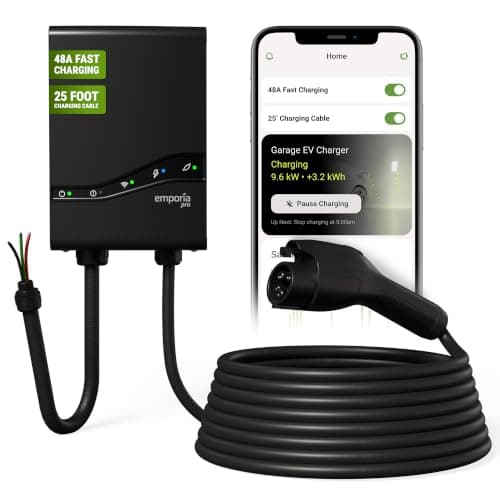
Most households, and anyone with a tight panel
Emporia Pro Level 2 EV Charger
The best-balanced 48 A charger for a typical US house: full 11.5 kW hardwired, and the only unit at this price that ships with a whole-home energy monitor so its load management is reading your actual panel rather than guessing.
#ad Price as of October 5, 2026. How we make money
The cheapest charger worth owning
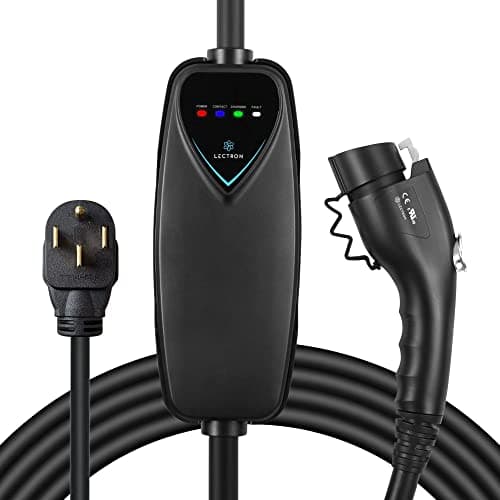
Lectron Level 2 EV Charger (40 A, NEMA 14-50)
A 40 A ETL-certified portable charger for roughly half what the smart units cost. It does one thing, it does it at 9.6 kW, and for a household charging overnight on a flat rate that is the whole job.
#ad Price as of October 5, 2026. How we make money
We earn commission on qualifying purchases at no cost to you. Affiliate disclosure.
Connector and adapters
The Volkswagen ID.4 uses a J1772 port for AC charging, which is what the large majority of home chargers in the US have. No adapter is needed for a J1772 charger.
You need a NACS to J1772 adapter only if you intend to use a Tesla Wall Connector, a Tesla Destination charger or a Tesla Mobile Connector. Rated headroom matters on a part carrying 48 A for eight hours — see best NACS to J1772 adapters.
A J1772 car on a Tesla Wall Connector or Destination charger
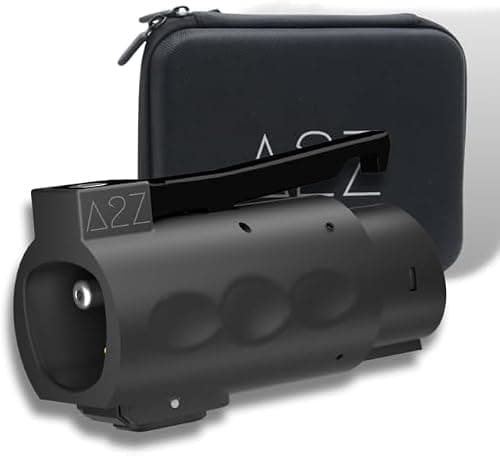
A2Z EV Stellar Plug NACS to J1772 AC Adapter
80 A / 19.2 kW rated, which is genuine headroom over any home charger. The part to buy if a Tesla charger is in the picture.
#ad Price as of October 5, 2026. How we make money
EPA data for the US range
| Trim | kWh / 100 mi | EPA range | EPA 240 V time | Miles per hour at 11 kW |
|---|---|---|---|---|
| ID.4 (RWD) | 29.8 | 291 mi | 8.0 h | 33 |
| ID.4 AWD | 33.0 | 263 mi | 8.0 h | 30 |
Eight hours for a full charge from empty, on either drivetrain. In practice you are almost never charging from empty — a typical day uses 30-40% of the pack, which at 11 kW is back in under three hours.
Why 40 amps is a real option here
150 mi x 0.298 kWh/mi = 44.7 kWh; at 11 kW x 0.9 = 4h 31m; at 9.6 kW x 0.9 = 5h 10m
A 39-minute difference
EPA efficiency figure from the US DOE / EPA fueleconomy.gov service, 2026 ID.4, queried October 5, 2026.
Thirty-nine minutes, at 3am, on a 150-mile day that most ID.4 owners do not have. Against that, a 40 A circuit uses 8 AWG copper rather than 6 AWG and a 50 A breaker rather than 60 A — which on a long run through finished walls is real money and real labor.
This is a genuine recommendation rather than a hedge: if your electrician quotes materially less for a 40 A circuit, take it. See 40 A vs 48 A for the full comparison.
A 40 A charger can also be a plug-in one
The other advantage of choosing 40 A: it is the ceiling of a NEMA 14-50 receptacle circuit, so a 40 A charger can be a plug-in unit. That means no hardwiring, and a charger that unplugs and moves house with you.
The trade is a GFCI breaker (NEC 625.54 requires it for EV charging receptacles) and an industrial-grade receptacle you should not economize on. The full comparison.
The MEB platform, shared with the Audi Q4
The ID.4 shares Volkswagen's MEB platform with the Audi Q4 e-tron, and the charging architecture is closely related — an 11 kW AC ceiling, J1772 in North America. If you are cross-shopping, the home charging decision is effectively the same.
Connector and adapters
The ID.4 uses J1772 for AC charging, so any mainstream home charger plugs straight in. Volkswagen has arranged Supercharger access via a DC adapter, which is a separate part from the AC adapters covered here. For AC charging at a Tesla Wall Connector or Destination charger you need a NACS-to-J1772 adapter.
Our picks for an ID.4
A 48 A unit if the circuit is easy, and a cheap 40 A portable if it is not — because on this car the 40 A compromise genuinely costs very little.
Most households, and anyone with a tight panel
Emporia Pro Level 2 EV Charger
The best-balanced 48 A charger for a typical US house: full 11.5 kW hardwired, and the only unit at this price that ships with a whole-home energy monitor so its load management is reading your actual panel rather than guessing.
#ad Price as of October 5, 2026. How we make money
The cheapest charger worth owning
Lectron Level 2 EV Charger (40 A, NEMA 14-50)
A 40 A ETL-certified portable charger for roughly half what the smart units cost. It does one thing, it does it at 9.6 kW, and for a household charging overnight on a flat rate that is the whole job.
#ad Price as of October 5, 2026. How we make money
The one part not to save money on
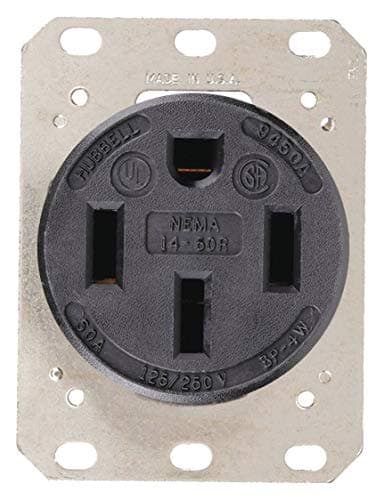
Hubbell HBL9450A NEMA 14-50 Receptacle (industrial)
An industrial-grade 14-50 receptacle. An EV draws 40 A continuously for hours, which is a duty cycle the cheap builder-grade receptacles were never designed for — this is the part that stops a plug-in install from browning its own contacts.
#ad Price as of October 5, 2026. How we make money
We earn commission on qualifying purchases at no cost to you. Affiliate disclosure.