The short answer
A Tesla Mobile Connector on a standard 120 V household outlet is doing Level 1 charging — per the US DOE, approximately 5 miles of range per hour. With a NEMA 14-50 adapter it draws up to 32 A / about 7.7 kW, roughly a threefold improvement. That adapter is the cheapest meaningful upgrade available to a Mobile Connector owner. The receptacle it plugs into still needs GFCI protection under NEC 625.54.
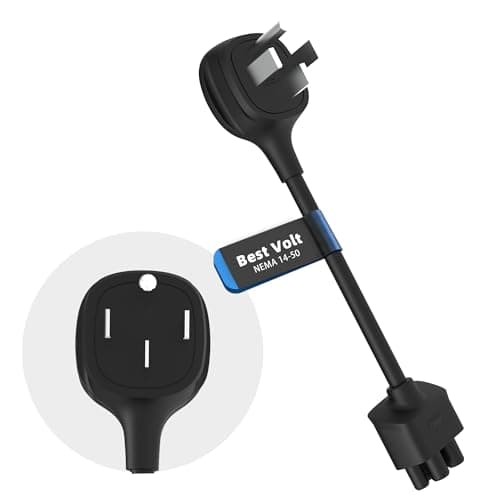
Getting 32 A out of a Mobile Connector
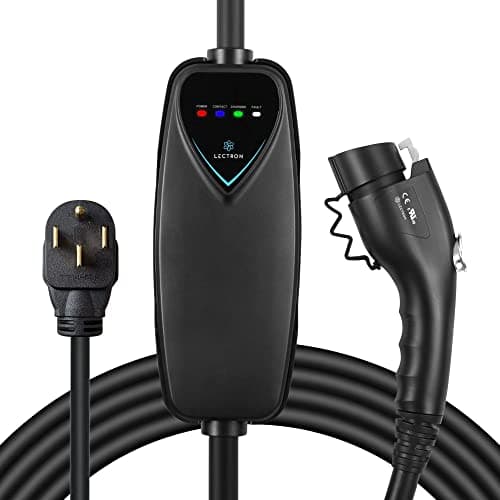
NEMA 14-50 Adapter for Tesla Mobile Connector
The adapter that unlocks 32 A from a NEMA 14-50 outlet. If you own a Mobile Connector and have a 14-50 available, this is the single highest-value purchase in your charging setup.
#ad Price as of October 5, 2026. How we make money
What each outlet delivers
| Outlet | Voltage | Mobile Connector draws | Power | Range per hour |
|---|---|---|---|---|
| NEMA 5-15 (standard household) | 120 V | 12 A | about 1.4 kW | approximately 5 miles |
| NEMA 5-20 | 120 V | 16 A | about 1.9 kW | approximately 6 miles |
| NEMA 6-20 | 240 V | 16 A | about 3.8 kW | approximately 12 miles |
| NEMA 14-30 (dryer) | 240 V | 24 A | about 5.8 kW | approximately 19 miles |
| NEMA 14-50 | 240 V | 32 A | about 7.7 kW | approximately 25 miles |
Read the first and last rows together. The same cordset, with a different adapter, goes from 5 miles of range per hour to 25 — which for most drivers is the difference between a trickle and genuinely sufficient charging.
The 32 amp ceiling, and what it means
The Mobile Connector maxes out at 32 A regardless of the outlet. On a car that accepts 48 A — a Model Y, a Cybertruck, a Model 3 Premium or Performance — that is two thirds of the available rate.
| Vehicle (EPA trim) | kWh / 100 mi | Wall Connector (48 A) | Mobile Connector (32 A) |
|---|---|---|---|
| Tesla Model 3 Premium RWD (2026) | 24.6 | 3h 34m | 5h 20m |
| Tesla Model Y Long Range AWD (2026) | 27.5 | 3h 59m | 5h 57m |
| Tesla Cybertruck AWD (2026) | 42.9 | 6h 13m | 9h 17m |
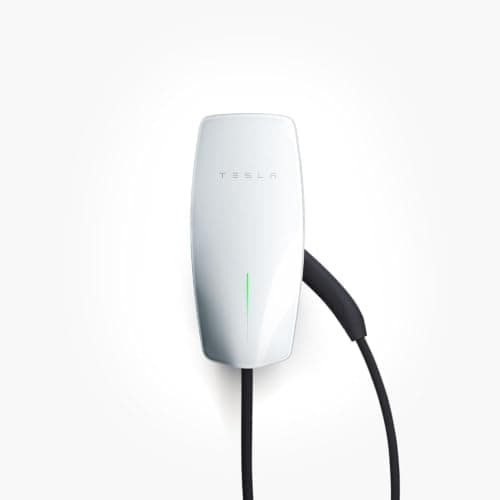
On a Model 3 Standard RWD, which accepts 32 A, the Mobile Connector matches a wall charger exactly. That is the one case where it is genuinely sufficient as a primary home charger — see the Model 3 page.
What the receptacle needs, whichever adapter you use
And one more: the receptacle grade. A builder-grade 14-50 was designed for an electric range's intermittent duty, not a nightly 32 A continuous draw. An industrial-grade receptacle is the part not to economize on — full detail.
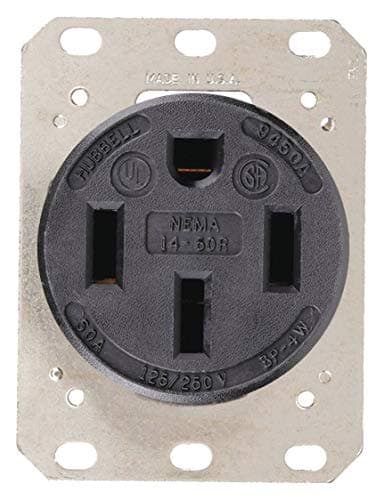
The one part not to save money on
Hubbell HBL9450A NEMA 14-50 Receptacle (industrial)
The industrial-grade 14-50 electricians specify by name for EV service. A browned, heat-damaged receptacle is the best-documented failure in plug-in charging, and this is the fix.
#ad Price as of October 5, 2026. How we make money
A note on third-party adapters
Tesla sells its own adapters, and third-party versions are widely available at lower prices. The honest position: this is a current-carrying part in a continuous-load path, and the usual rules apply — a documented rating and a certification matter more than the saving.
Where a third-party adapter publishes its rating (240 V, 32 A for a 14-50) and comes from a brand you can reach, it is a reasonable purchase. Where it does not, buy Tesla's.
When to stop adapting and buy a wall charger
The Mobile Connector plus a 14-50 adapter is a genuinely good setup for a renter, a travel charger, or a 32 A car. It is a compromise for a daily-driven 48 A Tesla, and the signs you have outgrown it are:
- You are regularly not full in the morning. The clearest signal.
- The cordset lives coiled on the garage floor. It will wear out, and a wall unit with a holster will not.
- You are managing adapters daily. A wall charger has one cable and no adapters.
- You have a 48 A car and a 60 A circuit available. You are leaving a third of the capability unused.
Our Wall Connector against Mobile Connector comparison works through the full decision.